Skip to content
You can now search across every topic, entity and event.What's new
European Energy Markets
13JUL

Four LNG terminals at lowest utilisation since 2023

2 min read
10:12UTC

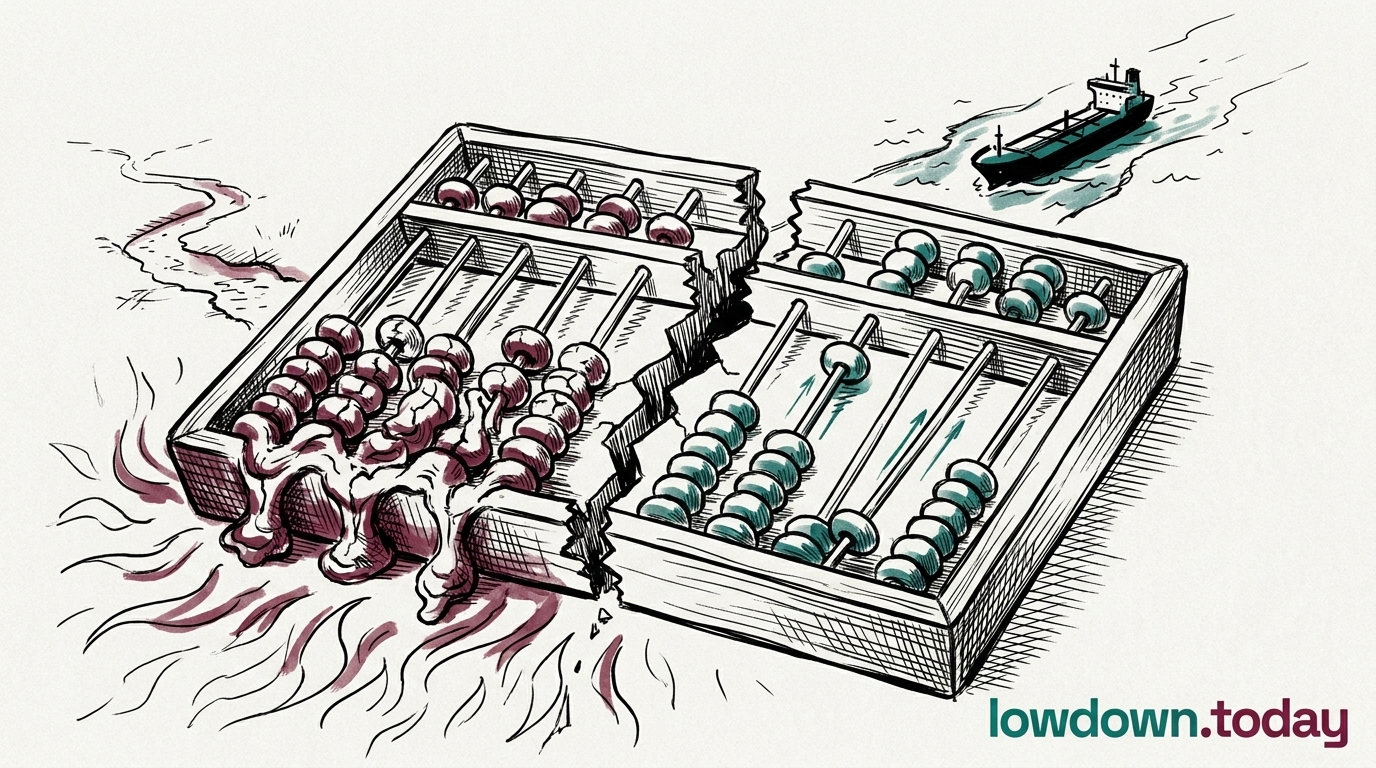
IEEFA identified four EU LNG terminals recording their lowest utilisation since 2023 in Q1 2026: Panigaglia (Italy), EemsEnergy (Netherlands), Fos Cavaou (France) and Sines (Portugal).

EconomicDeveloping
Key takeaway

LNG cargo concentration at fewer hubs leaves four terminals underutilised and deepens the locational supply imbalance across the EU.

IEEFA data for Q1 2026 found four LNG terminals at their lowest utilisation since 2023: Panigaglia near La Spezia, EemsEnergy at Eemshaven in the Netherlands, Fos Cavaou in southern France, and the Sines terminal on Portugal's Atlantic coast. The finding sits alongside the Russian LNG quarterly record reported in the same dataset, which means overall import volumes rose while terminal throughput concentrated at fewer facilities.

The concentration pattern has a geographic logic. Post-Hormuz, LNG cargoes are overwhelmingly Atlantic-sourced (US at 63% of EU imports in Q1). Atlantic cargoes route preferentially to large-capacity terminals on the Atlantic and North Sea coasts: Zeebrugge, Gate Rotterdam, Montoir. Smaller or Mediterranean-facing terminals that historically received Qatari or spot Middle Eastern cargoes are losing throughput because those cargoes no longer exist in sufficient volume. The terminals recording low utilisation are precisely the ones most exposed to the loss of eastern and southern supply routes .

For infrastructure operators, low utilisation feeds directly into the revenue assumptions underpinning terminal investment cases. For gas consumers served by those terminals, lower throughput means less local supply, which reinforces the hub premium that ACER identified in Central European markets. The EU built LNG import capacity to diversify away from pipeline dependency; in practice, the new dependency concentrates at a handful of hubs.


Deep Analysis

In plain English

Europe has built many specialised ports and facilities to receive tankers carrying supercooled liquid natural gas, which is then warmed up and pumped into pipelines. Four of these facilities in Italy, the Netherlands, France, and Portugal are currently running at their lowest levels since 2023, even as Russia has been shipping more gas to Europe than ever. This suggests that the gas arrivals are going to a small number of favoured ports rather than being spread across all available infrastructure, which creates a vulnerability if those preferred ports become unavailable.

What could happen next?
  • Consequence

    The four underutilised terminals represent latent regasification capacity that becomes immediately available for replacement LNG procurement after the 1 January 2027 Russian cargo ban, but commercial reactivation costs (maintenance, reactivation fees) have not been publicly modelled.

First Reported In

Update #13 · Storage on track by 45 GWh; one outage away

Euronews· 29 May 2026
Read original
Causes and effects
This Event
Four LNG terminals at lowest utilisation since 2023
Low utilisation alongside a Russian LNG quarterly record implies cargoes are concentrating at fewer hubs rather than distributing across the terminal estate, deepening the locational basis problem for Central European consumers.
Different Perspectives
EU carbon and storage regulators
EUA carbon broke EUR 81/tonne on 13 July as the ETS Market Stability Reserve's scheduled withdrawals met fresh fuel-switching demand from France's nuclear curtailment. Brussels' mandatory storage-fill rule kept German and French injection running regardless of the TTF swings, the mechanism working as designed four years after the 2022 shock.
Equinor
Equinor
Equinor returned its Asgard field from maintenance on 11 July, lifting Gassco's exit nominations to 319.8 mcm/day just as TTF round-tripped on Hormuz risk. The restart gave Norway spare pipeline capacity to help Europe absorb the gas rally without drawing down storage, reinforcing its role as the post-2022 swing supplier.
Germany
Germany
Germany briefly became the cheaper leg of the FR-DE spread on 12 July as French reactors went offline, while its own storage injection tripled to 723 GWh on 11 July under the EU's mandatory fill rule. Berlin's CCGT fleet absorbed the extra load at a time when EUA's climb past EUR 81 is raising its own marginal cost too.
EDF
EDF
EDF took Chooz, Golfech and Bugey fully offline on 12 July under river-cooling discharge limits, then secured a temperature exemption for Bugey to 20 July rather than wait for the rivers to cool. The government's willingness to relax the environmental ceiling shows French grid security now outweighs the permit breach when reactor hardware itself is undamaged.
Storage and injection-pace desk
EU storage sat at 51.1% on 8 July, still running below the pace needed for an 80% November target, and the JKM-TTF Asia premium of roughly USD 1.4-2.4/MMBtu was already pulling marginal cargoes east before Qatar's withdrawal compounded the gap. October's top-up remains the binding constraint, not this week's price level.
EDF / France
EDF / France
EDF added Chooz to its heat-curtailment watch list as a precaution against the second heat dome peaking 9-14 July, alongside standing warnings at Blayais, Bugey, Golfech and Saint-Alban. No output cut has been confirmed at any site as of 10 July.
