Skip to content
Welcome, thoughtbot's Giant Robots listeners!Start here
European Energy Markets
22JUN

Treasury names a Hormuz insurance racket

3 min read
13:56UTC

OFAC designated the two bodies selling IRGC-approved transit cover in the Strait of Hormuz, payable in Bitcoin, alongside four shadow-fleet tankers and a front that crowdsourced targeting tips.

EconomicAssessed
Key takeaway

Tehran collects a Hormuz toll through insurance paperwork, with no gunboat and no signed agreement.

The Office of Foreign Assets Control (OFAC), the US Treasury unit that administers American sanctions, designated Persian Gulf Marine Insurance Company and HormuzSafe Marine Services Authority on Wednesday 29 July under Executive Order 13902⁠1. The scheme those two bodies run makes cover compulsory: a vessel transiting the Strait of Hormuz must buy IRGC-approved insurance against risks Iran itself creates. HormuzSafe accepts Bitcoin and other digital assets, and the sanctioned financier Babak Zanjani promoted it on social media.

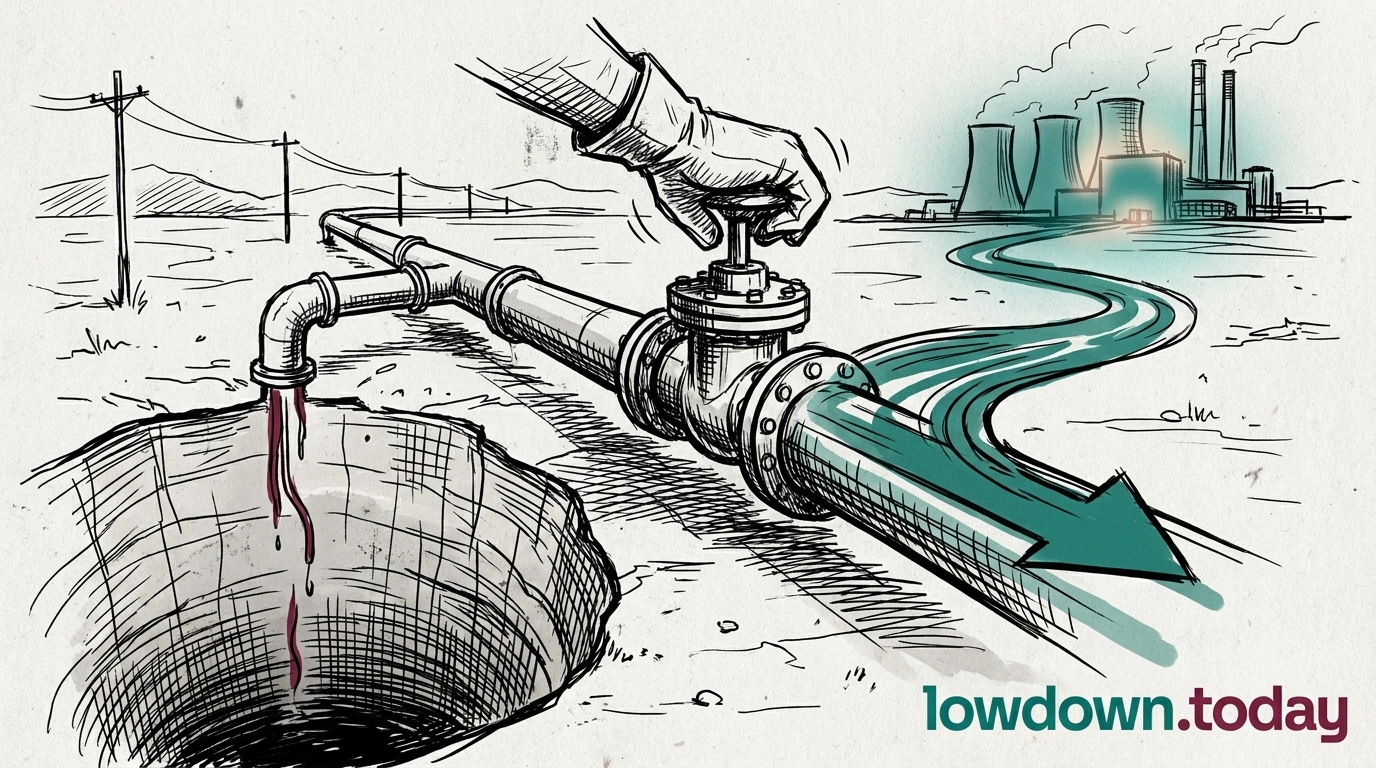
HormuzSafe collects without putting a boarding party on a single deck. No port accepts an uninsured hull and no charterer books one; cargo owners, classification societies and flag states all demand valid cover before a ship moves. Forcing transits to buy Iranian-approved paper therefore extracts payment through the commercial liability chain, at the point where a refusal costs the shipowner the voyage rather than the ship. Washington's answer to a Hormuz toll has been that nobody may charge for passage at all, and this scheme collects without ever putting the question to a negotiator.

OFAC named eight shadow-fleet tankers in the same action, hulls that disguise Iranian crude through flag-of-convenience registration, opaque ownership and ship-to-ship transfers, among them WELL SAIL, LILY, AL SALMI and BREEZE V. That takes Treasury past 100 vessels designated this year⁠2. A separate release the following day, under Executive Order 13224, named six targets across China, India, Russia and Iran⁠3.

DadeNegar Startup Studio neither moves cargo nor sells tickets. The IRGC-affiliated front ran a public website soliciting crowdsourced locations of American and Israeli equipment and relayed strike requests to the Guard⁠4. Iran has used front companies to procure components for decades, and the Zanjani network drew its own designation on 24 July. Buying targeting information from passers-by is a different function from buying centrifuge parts, and it places anyone who photographed a convoy inside the kill chain.


Deep Analysis

In plain English

The US Treasury's sanctions arm, OFAC, added two Iranian shipping insurance companies and eight tankers to its blacklist on 29 July, and an Iranian tech investment firm called DadeNegar Startup Studio the following day. This is part of a long-running effort to stop Iran from selling oil by cutting off the insurance and financial services that let its ships keep operating despite sanctions. The tankers and companies named will struggle to get insurance, dock at most ports, or use the international banking system.

What could happen next?
  • Consequence

    The four newly sanctioned tankers will likely re-flag and seek alternative insurance within weeks, following the pattern of prior 2026 designation rounds.

  • Meaning

    Naming the insurance company directly, rather than only the tankers, targets the mechanism that has let sanctioned vessels keep operating.

First Reported In

Update #164 · The pause ends, and the map moves west

US Department of the Treasury· 31 Jul 2026
Read original →
Different Perspectives
Cross-border power traders
The France-Germany day-ahead spread flipped from a EUR 17.20 German premium on 1 August to a EUR 4.15 French premium on 3 August, the same day French curtailment peaked. They cannot yet attribute the flip to curtailment alone, since a like-for-like overnight comparison shows French nuclear output rising while wind fell and demand returned on the weekday step.
EDF
EDF
River-cooling limits took 7.6 GW, 12 per cent of its fleet, offline on 3 August, the highest curtailment since the heatwave began, with an easing forecast to 4.3 GW on 4 August and 3 GW after. It manages the cut as a recurring seasonal constraint, expecting it to lift with river temperature, not repair.
Gasunie
Gasunie
TTF, the Dutch hub it operates, drifted to roughly EUR 55 to 58 per MWh across the window, staying inside its recent range through both the German spark reversal and the French curtailment. It reads a flat hub price as evidence that neither event this window carried enough weight to move the fuel leg on its own.
German gas-fired generators
Record German solar of 18,761 MW on 2 August pushed the clean spark spread to minus 18.48 EUR/MWh, a loss-making day, before it returned to plus 16.20 on 3 August. They now price dispatch against post-solar residual load rather than wind alone, since the sign flipped inside 48 hours on unchanged fuel and carbon costs.
European Commission (DG Energy)
Its implementing-measures register logged transposition notices from only Portugal and Slovakia against Wednesday's Article 94 deadline for Directive (EU) 2024/1788, with 25 states silent. It expects the register to fill only gradually, since filing routinely lags legislating and any infringement track against non-notifying states runs on a slower clock than the deadline itself.
Spain's LNG terminal operators
Spain's 9,145 GWh terminal inventory is the largest single stock in the EU LNG network, an option value that can reroute cargoes wherever the winter strip pays best rather than a cavern gas obligation tied to a fixed date. That flexibility matters more as Germany's cavern shortfall pushes more of the winter security question onto import infrastructure.
