Skip to content
You can now search across every topic, entity and event.What's new
European Energy Markets
22JUN

Riyadh holds fire at Baghdad's request

2 min read
13:56UTC

Saudi Arabia's Foreign Ministry said it would refrain from an immediate response to the pipeline attack at the request of Iraq's prime minister, while reserving the right to take all necessary measures.

EconomicDeveloping

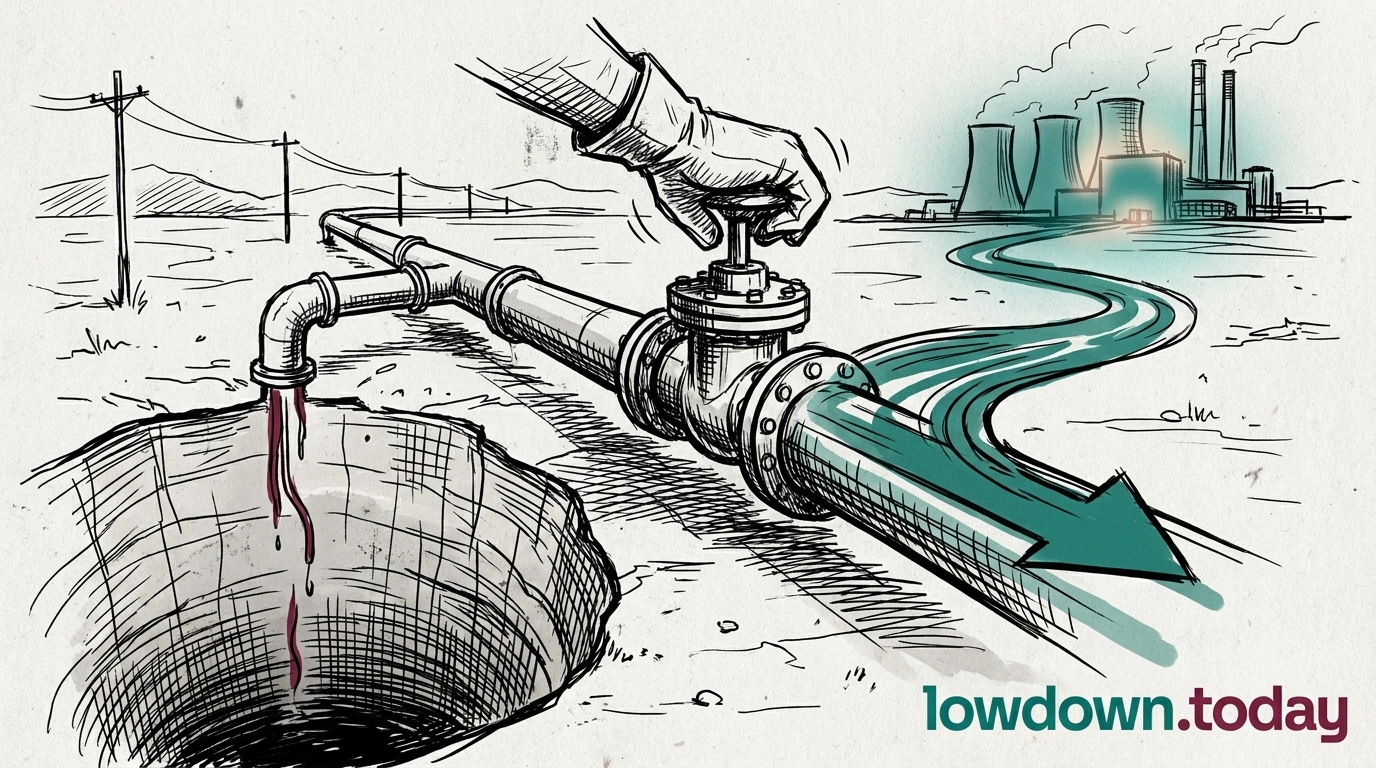
The Saudi Ministry of Foreign Affairs said The Kingdom would refrain from an immediate response to the attack on Petroline at the request of Iraq's prime minister, to give Baghdad room to stop further attacks, while reserving the right to take all necessary measures to protect Saudi sovereignty, security, facilities and residents 1. The ministry called Iraq a "brotherly" government in the same statement 2.

Riyadh answered a comparable attack differently in late July. Saudi jets struck militia targets inside Iraq at 05:00 GMT on Wednesday 29 July, in coordination with US Central Command and citing self-defence under Article 51 of the United Nations Charter . The instrument used this time is a statement, and the party being asked to act is the Iraqi government rather than the militias.

Condemnation was the other option on the table, and Saudi Arabia has already used it: The Kingdom joined the United Arab Emirates and Qatar in condemning Iranian attacks on their neighbours on 2 September . Reserving the right records in public that The Kingdom has not waived a response, and it puts a clock on Baghdad's investigation without naming a date on which the clock runs out.


Deep Analysis

In plain English

When a country's oil infrastructure is attacked, the usual expectation is that it strikes back at whoever it blames. Saudi Arabia has said it will not do that yet. Iraq's prime minister asked for time to stop further attacks from Iraqi soil, and the Saudi foreign ministry agreed to wait while saying it keeps the right to act later. That matters because the drones were launched from Iraq, not from Iran. Hitting back would mean hitting a neighbour Saudi Arabia is not at war with, over an attack that neighbour says it did not order.

Deep Analysis
Root Causes

Saudi Arabia is not a declared belligerent in this war, and its exposed surface is oil infrastructure rather than deployed forces. Every retaliation option it holds would make it one.

The attack came from the soil of a state Riyadh is not fighting, mounted by actors that state says it does not control. Striking Iraq punishes a government that is cooperating; striking Iran needs an attribution nobody has published. Riyadh's statement sits in the gap between those two options.

Baghdad's position rests on the same structure in reverse. A prime minister who cannot prevent launches from his own territory is a prime minister whose neighbours start treating that territory as the address of the problem.

Escalation

Pause rather than de-escalation. The trigger that would end it is a second launch from Iraqi territory, or an Iraqi investigative council that reports without naming anyone, and the Saudi statement sets no date for either.

What could happen next?
  • Meaning

    By naming Iraq's prime minister as the reason for waiting, Riyadh has made Baghdad answerable for the next launch rather than the people who mount it.

    Immediate · Assessed
  • Risk

    A second attack from Iraqi territory would leave the kingdom having publicly spent its one round of patience.

    Short term · Assessed
  • Opportunity

    The statement keeps a Saudi channel to Baghdad open at a point when most regional payment and trade channels with Iran have closed.

    Medium term · Suggested
First Reported In

Update #178 · Saudi bypass hit, and Riyadh holds fire

Gulf News· 13 Sept 2026
Read original
Different Perspectives
Cross-border power traders
The France-Germany day-ahead spread flipped from a EUR 17.20 German premium on 1 August to a EUR 4.15 French premium on 3 August, the same day French curtailment peaked. They cannot yet attribute the flip to curtailment alone, since a like-for-like overnight comparison shows French nuclear output rising while wind fell and demand returned on the weekday step.
EDF
EDF
River-cooling limits took 7.6 GW, 12 per cent of its fleet, offline on 3 August, the highest curtailment since the heatwave began, with an easing forecast to 4.3 GW on 4 August and 3 GW after. It manages the cut as a recurring seasonal constraint, expecting it to lift with river temperature, not repair.
Gasunie
Gasunie
TTF, the Dutch hub it operates, drifted to roughly EUR 55 to 58 per MWh across the window, staying inside its recent range through both the German spark reversal and the French curtailment. It reads a flat hub price as evidence that neither event this window carried enough weight to move the fuel leg on its own.
German gas-fired generators
Record German solar of 18,761 MW on 2 August pushed the clean spark spread to minus 18.48 EUR/MWh, a loss-making day, before it returned to plus 16.20 on 3 August. They now price dispatch against post-solar residual load rather than wind alone, since the sign flipped inside 48 hours on unchanged fuel and carbon costs.
European Commission (DG Energy)
Its implementing-measures register logged transposition notices from only Portugal and Slovakia against Wednesday's Article 94 deadline for Directive (EU) 2024/1788, with 25 states silent. It expects the register to fill only gradually, since filing routinely lags legislating and any infringement track against non-notifying states runs on a slower clock than the deadline itself.
Spain's LNG terminal operators
Spain's 9,145 GWh terminal inventory is the largest single stock in the EU LNG network, an option value that can reroute cargoes wherever the winter strip pays best rather than a cavern gas obligation tied to a fixed date. That flexibility matters more as Germany's cavern shortfall pushes more of the winter security question onto import infrastructure.



