Skip to content
You can now search across every topic, entity and event.What's new
European Energy Markets
22JUN

Al-Zaidi gives Tehran a seat at the inquiry

2 min read
13:56UTC

Ali al-Zaidi approved an Iranian request for a joint Iraq-Iran investigation into the platforms used to launch the drones that struck the Saudi pipeline.

EconomicDeveloping

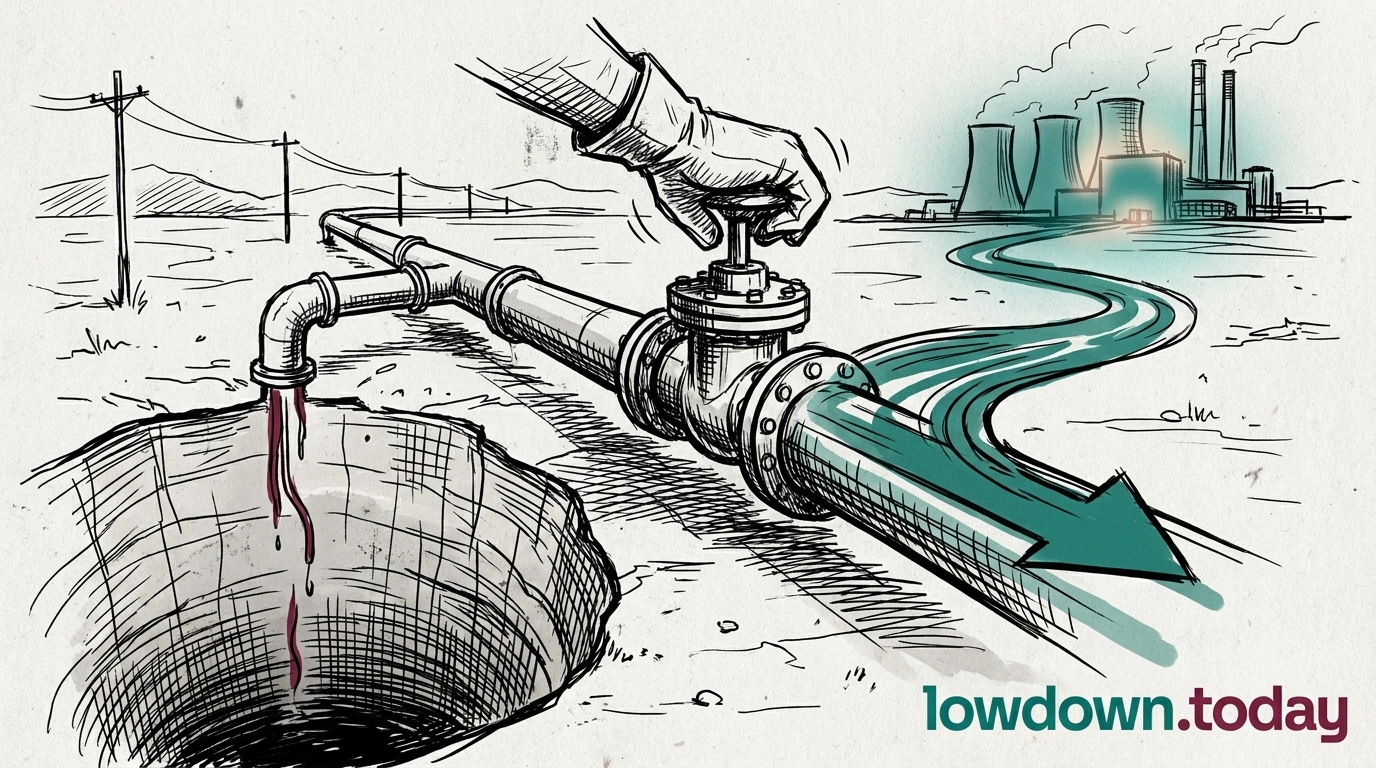
Iraqi Prime Minister Ali al-Zaidi approved an Iranian request for a joint Iraq-Iran investigation into the platforms used to launch the drones that struck Saudi Arabia's export pipeline, on Saturday 12 September 2026 1. The approval followed his dismissal of two Maysan security chiefs over the same launches 2.

A joint inquiry commits neither government to a finding, sets no timetable on its own, and gives each side sight of what the other collects. Iran asked for the access and Baghdad granted it, which places Tehran inside the examination of an attack launched from Iraqi territory towards a third country.

The two capitals already run errands for each other. Iraq's parliament speaker asked Iran's Majlis speaker on 19 August for special consideration for Iraqi oil exports through the Strait of Hormuz , a favour requested in the opposite direction weeks earlier. Baghdad is now paying in procedure for an attack it says came from its own ground, and the investigative council it created keeps running in parallel.


Deep Analysis

In plain English

After drones launched from Iraq hit a Saudi oil pipeline, Iraq began investigating who fired them and from where. Iran asked to take part in examining the launch platforms, and Iraq's prime minister said yes. That means Iranian investigators get to see the physical evidence from an attack that was fired at Saudi Arabia from Iraqi ground. Iran does not come to this as a neutral party. Saudi Arabia has accused Iran-linked groups of running this kind of campaign, so letting Iranian investigators near the hardware is a decision with consequences for what the inquiry can eventually say.

Deep Analysis
Root Causes

Iraq needs a finding fast enough to satisfy Riyadh and survivable enough to keep Tehran cooperating, and no single inquiry does both cleanly.

A joint investigation costs Baghdad least of the instruments available. It commits neither government to a conclusion, sets no timetable on its own, and gives each side sight of what the other collects.

Baghdad also has less to concede than it looks. The special investigative council it appointed on 12 September runs in parallel and answers to the prime minister alone, so approving Iranian access adds a channel rather than replacing the Iraqi one.

Escalation

Sideways. The approval keeps Tehran inside the process rather than outside objecting to it, and the point that would tip it is the first published finding from either the joint examination or the Iraqi council.

What could happen next?
  • Consequence

    Iranian investigators gain access to hardware that could identify the makers and operators of the launch platforms.

    Immediate · Reported
  • Risk

    A joint finding that names nobody would leave Riyadh with an Iraqi answer that Tehran co-signed, which is weaker than either government producing one alone.

    Short term · Assessed
  • Precedent

    Iraq has established that a state implicated in an attack from its territory can be seated at the inquiry into it.

    Long term · Suggested
First Reported In

Update #178 · Saudi bypass hit, and Riyadh holds fire

Al Jazeera· 13 Sept 2026
Read original
Causes and effects
This Event
Al-Zaidi gives Tehran a seat at the inquiry
Iran gains a formal role in examining an attack fired from Iraqi soil, alongside the Iraqi council already investigating it.
Different Perspectives
Cross-border power traders
The France-Germany day-ahead spread flipped from a EUR 17.20 German premium on 1 August to a EUR 4.15 French premium on 3 August, the same day French curtailment peaked. They cannot yet attribute the flip to curtailment alone, since a like-for-like overnight comparison shows French nuclear output rising while wind fell and demand returned on the weekday step.
EDF
EDF
River-cooling limits took 7.6 GW, 12 per cent of its fleet, offline on 3 August, the highest curtailment since the heatwave began, with an easing forecast to 4.3 GW on 4 August and 3 GW after. It manages the cut as a recurring seasonal constraint, expecting it to lift with river temperature, not repair.
Gasunie
Gasunie
TTF, the Dutch hub it operates, drifted to roughly EUR 55 to 58 per MWh across the window, staying inside its recent range through both the German spark reversal and the French curtailment. It reads a flat hub price as evidence that neither event this window carried enough weight to move the fuel leg on its own.
German gas-fired generators
Record German solar of 18,761 MW on 2 August pushed the clean spark spread to minus 18.48 EUR/MWh, a loss-making day, before it returned to plus 16.20 on 3 August. They now price dispatch against post-solar residual load rather than wind alone, since the sign flipped inside 48 hours on unchanged fuel and carbon costs.
European Commission (DG Energy)
Its implementing-measures register logged transposition notices from only Portugal and Slovakia against Wednesday's Article 94 deadline for Directive (EU) 2024/1788, with 25 states silent. It expects the register to fill only gradually, since filing routinely lags legislating and any infringement track against non-notifying states runs on a slower clock than the deadline itself.
Spain's LNG terminal operators
Spain's 9,145 GWh terminal inventory is the largest single stock in the EU LNG network, an option value that can reroute cargoes wherever the winter strip pays best rather than a cavern gas obligation tied to a fixed date. That flexibility matters more as Germany's cavern shortfall pushes more of the winter security question onto import infrastructure.



