Skip to content
You can now search across every topic, entity and event.What's new
European Energy Markets
18JUN

The August trap: three clocks, one week

4 min read
09:57UTC

General License X expires on 21 August, the Persian Gulf Strait Authority starts charging Hormuz fees around 17 August, and Iran's dollar-free payment corridor finishes Stage 3 the same month.

EconomicAssessed
Key takeaway

Iran's relief window is the exact window it uses to make sanctions optional.

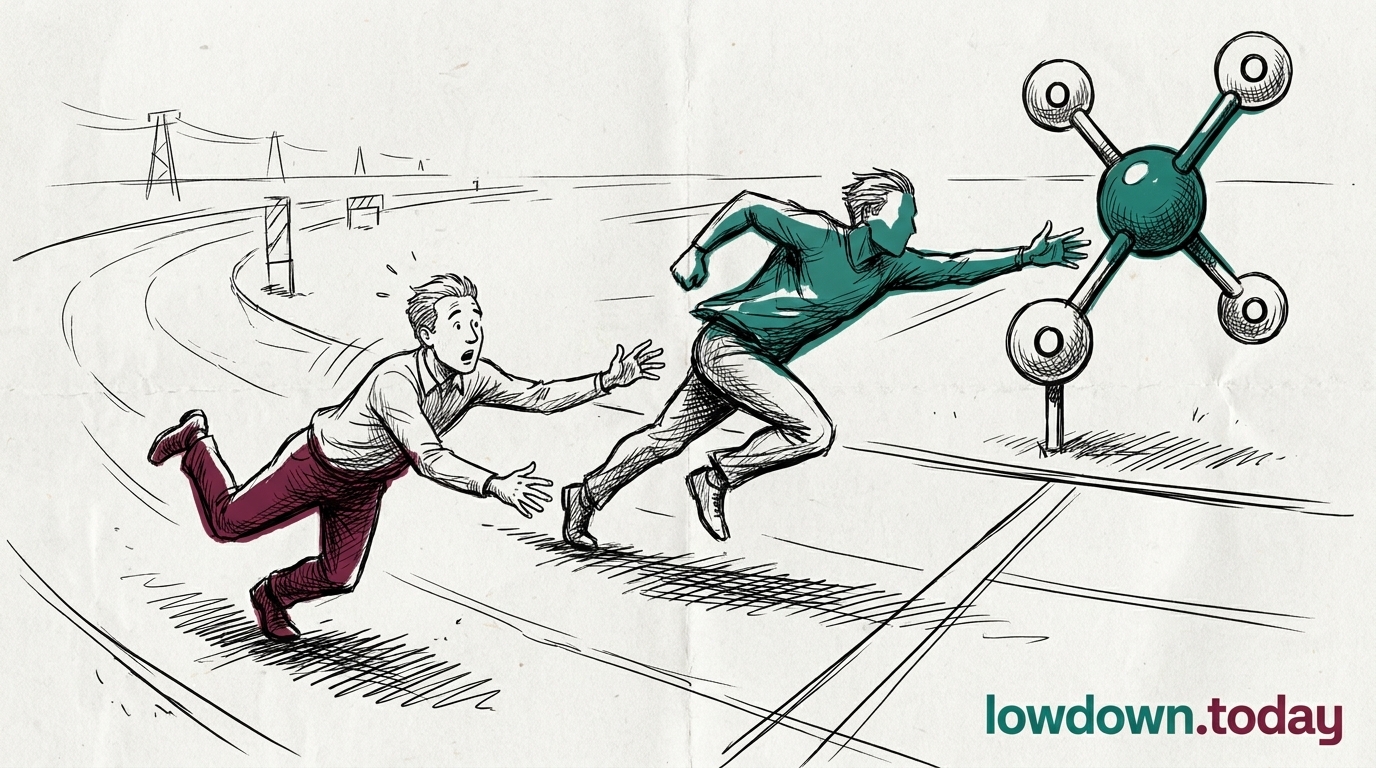
General License X expires on 21 August 2026, four days after the Persian Gulf Strait Authority (PGSA) begins charging Hormuz transit fees around 17 August . The PGSA is the IRGC body that controls strait access. A third clock lands in the same week: Shetab-Mir, Iran's dollar-independent payment corridor built with Moscow, is set to finish its third integration stage around August . Three deadlines set by three different actors fall within four days of each other.

Read the sequence as a mechanism. The 60-day relief window is precisely the window in which Iran completes the infrastructure that makes the next round of sanctions survivable. If the nuclear sub-talks fail by mid-August, the licence expires, the oil sanctions GL X just lifted snap back automatically, the PGSA starts billing every transit as IRGC revenue, and Iran's payment rails are live just as the dollar squeeze returns.

Two of these clocks are not this desk's to read. The freight and fee economics of a fee-charged, dark-corridor Hormuz belong to the European oil desk. So does the parallel sanctions track: Shetab-Mir is an Iran-Russia build, and GL X's amendment of the Russia-related General License 134 ties this licence to Moscow's sanctions story, which the Russia-ukraine desk owns. Lowdown reads the convergence for what it does to the deal's credibility. The MOU's 60-day nuclear window was meant to be a deadline for Iran; tied to a payment-rails completion date, it becomes a deadline for Washington's leverage instead.


Deep Analysis

In plain English

Three different deadlines all land in the third week of August, and each one matters. First, the US oil-sanctions permission slip expires on 21 August. Second, Iran's Revolutionary Guard has set around 17 August as when ships crossing the Strait of Hormuz must start paying mandatory transit fees. Third, Iran is finishing the last stage of a joint payment system with Russia, called Shetab-Mir, that lets them move money without using US dollars at all. The striking thing is the timing: the 60-day period Washington gave Iran to sell oil is almost exactly the period Iran needs to finish building the financial plumbing that makes future US sanctions less painful. Whether that overlap is coincidence or calculation is disputed, but the effect is the same.

Deep Analysis
Root Causes

The three-clock convergence in August reflects Iran's deliberate use of the ceasefire's diplomatic bandwidth to advance its infrastructure while the other side's attention is on the nuclear and Lebanon files.

The PGSA fee schedule, reserved from around 17 August, was publicly announced by the IRGC on 20 June , two days before GL X was issued. Iran did not suspend or delay the PGSA timeline when GL X arrived, confirming that the fee structure and the oil-relief licence are parallel, not competing, tracks. Iran earns from the PGSA whether or not GL X continues; GL X earns Iran an additional revenue stream without displacing it.

Shetab-Mir's Stage 3 timeline, confirmed by Central Bank Governor Hemmati in Moscow on 16 June , predates GL X by six days. The payment infrastructure was already on a fixed August schedule that GL X did not accelerate or change. Washington issued the relief instrument without conditioning it on a pause or extension of Shetab-Mir integration, meaning the 60-day window simultaneously provides dollar revenue today and dollar-independent infrastructure for tomorrow.

What could happen next?
  • Risk

    The 60-day window gives Iran time to complete Shetab-Mir Stage 3, making a GL X snap-back on 21 August less economically damaging to Tehran than the original sanctions regime.

    Short term · Assessed
  • Consequence

    PGSA mandatory fees beginning around 17 August convert a military-controlled transit point into a permanent IRGC revenue instrument, regardless of what happens to GL X or nuclear talks.

    Medium term · Reported
  • Meaning

    The three-clock convergence signals that Iran is treating the 60-day window as infrastructure time, not compliance time, which changes the incentive structure for any GL X renewal negotiation.

    Immediate · Assessed
First Reported In

Update #136 · Trump's first Iran paper is an oil licence

OFAC/US Treasury· 23 Jun 2026
Read original
Different Perspectives
Cross-border power traders
The France-Germany day-ahead spread flipped from a EUR 17.20 German premium on 1 August to a EUR 4.15 French premium on 3 August, the same day French curtailment peaked. They cannot yet attribute the flip to curtailment alone, since a like-for-like overnight comparison shows French nuclear output rising while wind fell and demand returned on the weekday step.
EDF
EDF
River-cooling limits took 7.6 GW, 12 per cent of its fleet, offline on 3 August, the highest curtailment since the heatwave began, with an easing forecast to 4.3 GW on 4 August and 3 GW after. It manages the cut as a recurring seasonal constraint, expecting it to lift with river temperature, not repair.
Gasunie
Gasunie
TTF, the Dutch hub it operates, drifted to roughly EUR 55 to 58 per MWh across the window, staying inside its recent range through both the German spark reversal and the French curtailment. It reads a flat hub price as evidence that neither event this window carried enough weight to move the fuel leg on its own.
German gas-fired generators
Record German solar of 18,761 MW on 2 August pushed the clean spark spread to minus 18.48 EUR/MWh, a loss-making day, before it returned to plus 16.20 on 3 August. They now price dispatch against post-solar residual load rather than wind alone, since the sign flipped inside 48 hours on unchanged fuel and carbon costs.
European Commission (DG Energy)
Its implementing-measures register logged transposition notices from only Portugal and Slovakia against Wednesday's Article 94 deadline for Directive (EU) 2024/1788, with 25 states silent. It expects the register to fill only gradually, since filing routinely lags legislating and any infringement track against non-notifying states runs on a slower clock than the deadline itself.
Spain's LNG terminal operators
Spain's 9,145 GWh terminal inventory is the largest single stock in the EU LNG network, an option value that can reroute cargoes wherever the winter strip pays best rather than a cavern gas obligation tied to a fixed date. That flexibility matters more as Germany's cavern shortfall pushes more of the winter security question onto import infrastructure.



