Skip to content
You can now search across every topic, entity and event.What's new
European Energy Markets
18JUN

Putin: war ending, summit needs treaty first

3 min read
09:57UTC

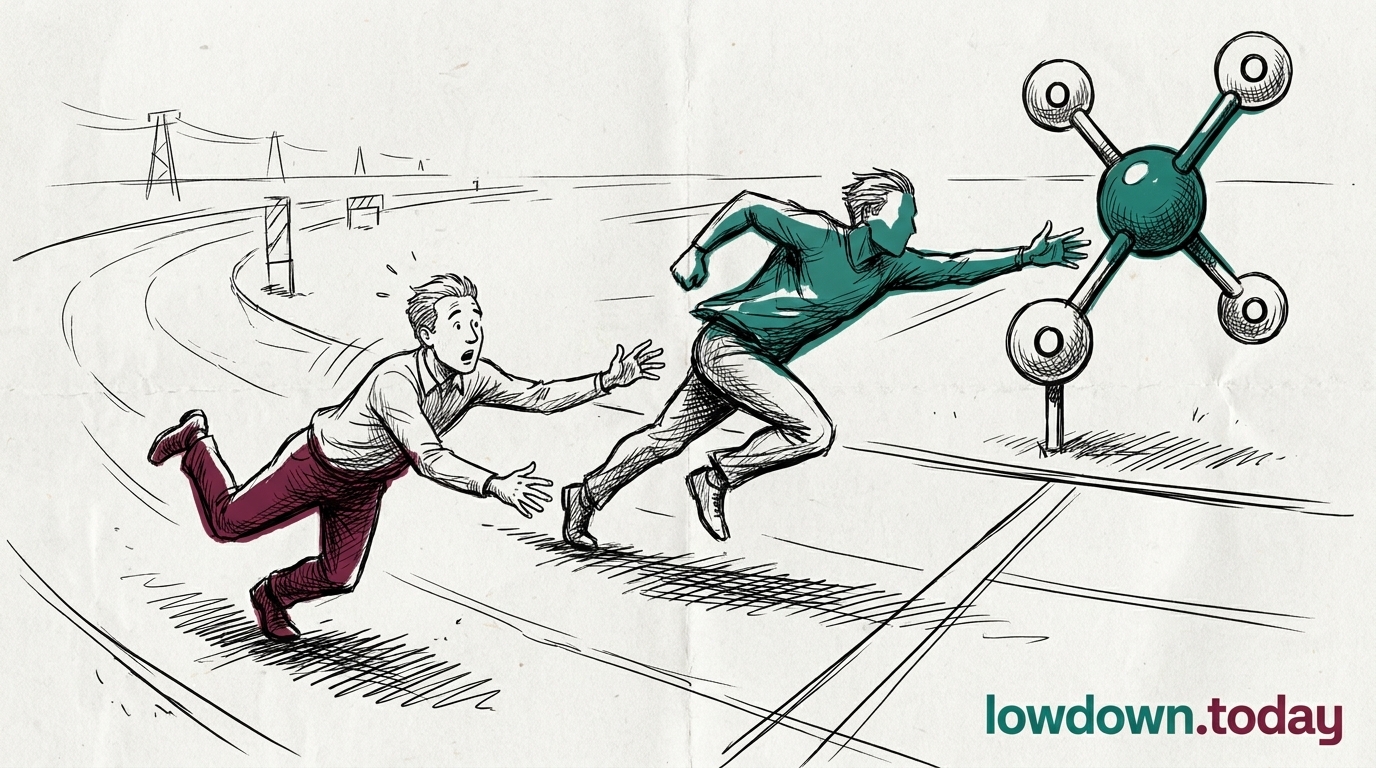
Putin told reporters on 9 May the war is 'coming to an end', then conditioned any meeting with Zelenskyy on a comprehensive peace treaty being finalised beforehand, asking the outcome to precede the negotiation.

EconomicDeveloping
Key takeaway

Putin's summit pre-condition requires a completed peace treaty before any meeting can occur.

Vladimir Putin told reporters on 9 May 2026 that 'I think the matter is coming to an end' 1. His statement carried a structural condition that makes it something other than a diplomatic opening. Any summit with Volodymyr Zelenskyy requires a comprehensive peace treaty already finalised beforehand, not a meeting to negotiate one. Kremlin spokesman Dmitry Peskov confirmed the same day that Russia's territorial demands are unchanged: full Ukrainian withdrawal from all four annexed regions 2.

Every successful peace negotiation in post-Soviet conflicts ran in the opposite order: a meeting first, a framework agreed at the meeting, a text drafted afterward. Putin's formulation asks the negotiated outcome to exist before the negotiation begins. Ukraine cannot withdraw from four annexed regions without a negotiated instrument; the negotiated instrument cannot exist without a meeting; the meeting is conditional on the instrument. The structure ensures the status quo without requiring Russia to formally reject talks.

Putin had proposed the Victory Day ceasefire in a 29 April call to Trump . Zelenskyy had characterised the concept as theatrical on 30 April . The 9 May statement confirms that Zelenskyy's read was structurally correct: the verbal content of 'coming to an end' sits alongside unchanged territorial maximalism. Trump's 11-13 May statements that peace is 'getting very close' 3 adopt the framing of the 9 May statement without accounting for the pre-condition. The diplomatic week produces a consistent public narrative from Washington while Russia's operational and positional ledgers move in a different direction.


Deep Analysis

In plain English

On 9 May 2026, Putin said the war is almost over. But he also said he will only meet Zelenskyy after a full peace agreement has already been written and finalised. That is a contradiction. In normal diplomacy, leaders meet to reach an agreement, with their teams doing the groundwork. Putin has flipped that: he wants the agreement done first, then a meeting to sign it. But Russia's own conditions, such as requiring Ukraine to hand over four entire regions, make a 'done deal' almost impossible before talks even start. Putin made both statements on 9 May: 'the matter is coming to an end', and a summit requires a pre-finalised treaty. Moscow designed this combination so that the optimistic framing travels internationally while the impossible condition ensures no summit can occur.

Deep Analysis
Root Causes

Putin's summit pre-condition follows a structural logic driven by three factors. First, Russia's domestic political economy requires any peace to be framed as a Russian victory; a summit where Zelenskyy is a co-equal interlocutor contradicts that framing without prior concessions validating Russian territorial gains.

Second, Russia's military position in April 2026, with a net territorial loss and a 70% advance-rate deceleration, makes the current moment a poor time for Russia to freeze lines. Delaying any formal diplomatic process until the military position improves is therefore rational from Moscow's perspective.

Third, the pre-condition transfers the burden of movement entirely to Kyiv and Washington. Russia makes no concession by offering a summit subject to conditions Kyiv cannot meet.

What could happen next?
  • Consequence

    By placing the treaty-first pre-condition on the table publicly, Putin has raised the political cost for any future European leader who tries to broker a meeting without Russian terms being satisfied first.

  • Risk

    If Trump accepts the pre-condition framing and begins pressing Kyiv for concessions 'to get a summit', the US becomes the implementer of Russian sequencing rather than a neutral mediator.

First Reported In

Update #16 · 800 drones, three ceasefires, one cliff

AP· 13 May 2026
Read original
Different Perspectives
Cross-border power traders
The France-Germany day-ahead spread flipped from a EUR 17.20 German premium on 1 August to a EUR 4.15 French premium on 3 August, the same day French curtailment peaked. They cannot yet attribute the flip to curtailment alone, since a like-for-like overnight comparison shows French nuclear output rising while wind fell and demand returned on the weekday step.
EDF
EDF
River-cooling limits took 7.6 GW, 12 per cent of its fleet, offline on 3 August, the highest curtailment since the heatwave began, with an easing forecast to 4.3 GW on 4 August and 3 GW after. It manages the cut as a recurring seasonal constraint, expecting it to lift with river temperature, not repair.
Gasunie
Gasunie
TTF, the Dutch hub it operates, drifted to roughly EUR 55 to 58 per MWh across the window, staying inside its recent range through both the German spark reversal and the French curtailment. It reads a flat hub price as evidence that neither event this window carried enough weight to move the fuel leg on its own.
German gas-fired generators
Record German solar of 18,761 MW on 2 August pushed the clean spark spread to minus 18.48 EUR/MWh, a loss-making day, before it returned to plus 16.20 on 3 August. They now price dispatch against post-solar residual load rather than wind alone, since the sign flipped inside 48 hours on unchanged fuel and carbon costs.
European Commission (DG Energy)
Its implementing-measures register logged transposition notices from only Portugal and Slovakia against Wednesday's Article 94 deadline for Directive (EU) 2024/1788, with 25 states silent. It expects the register to fill only gradually, since filing routinely lags legislating and any infringement track against non-notifying states runs on a slower clock than the deadline itself.
Spain's LNG terminal operators
Spain's 9,145 GWh terminal inventory is the largest single stock in the EU LNG network, an option value that can reroute cargoes wherever the winter strip pays best rather than a cavern gas obligation tied to a fixed date. That flexibility matters more as Germany's cavern shortfall pushes more of the winter security question onto import infrastructure.



