Skip to content
You can now search across every topic, entity and event.What's new
European Energy Markets
18JUN

Munir in Tehran; Vance's walkout explained

4 min read
09:57UTC

Pakistan's army chief flew to Tehran on 16 April to revive the channel JD Vance closed on 12 April, as fresh reporting explains how the talks collapsed.

EconomicDeveloping
Key takeaway

The rupture was a readout mismatch; the army chief is the instrument Islamabad sent to repair it.

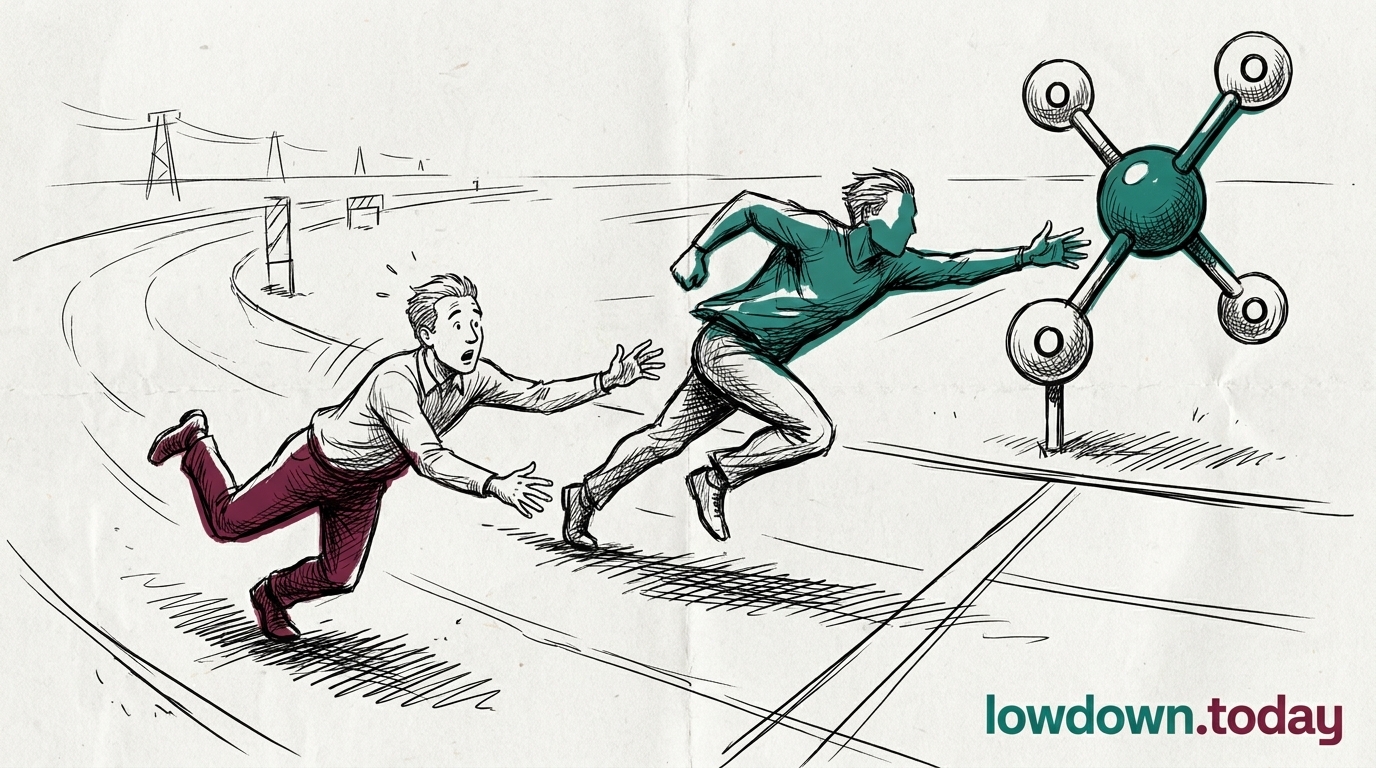
Pakistan Army Chief Field Marshal Syed Asim Munir travelled personally to Tehran on 16 April, Islamabad's highest-level shuttle since the first formal US-Iran negotiating round ended on 12 April without agreement. Regional officials told Bloomberg and the Associated Press that the two governments had reached an in-principle agreement to extend the 22 April ceasefire by two weeks. White House press secretary Karoline Leavitt said the United States had not formally requested an extension. The Associated Press and Axios published reconstruction of the 12 April rupture: Iranian negotiators believed they were close to an initial agreement when Vice-President JD Vance called a press conference blaming Iran and announcing the US delegation's departure.

Munir is the senior-most military officer in a state that has mediated every significant US-Iran channel of the past two decades. His personal visit is Pakistan executing the mandate its foreign ministry reaffirmed after the Islamabad talks ended, confirming Islamabad would "continue to play its role" . The rupture he is attempting to repair is the one Vance walked out of . The AP and Axios reconstruction reconciles Abbas Araghchi's partial-progress framing with Vance's no-deal announcement: both principals were reading different internal states of the same negotiation, and the American side chose a public readout that foreclosed the path the Iranian side had understood to be open.

Mediation at the general-officer level is a specific diplomatic instrument. Civilian foreign ministries exchange positions; army chiefs exchange deadlines and red lines. Munir's Tehran visit signals that Islamabad believes the issues blocking agreement are deconfliction items rather than doctrinal ones, and that the channel needs senior military weight rather than another foreign-ministry round. Leavitt's denial that the US has "formally requested" an extension is consistent with a pattern in which Pakistan drafts and shuttles while Washington decides whether to accept the text.

A ceasefire extension signed before 22 April avoids a cascade in which the Iran-crude licence GL-U expires three days earlier than the ceasefire itself, and the congressional War Powers clock runs out the following week with no signed US instrument on any of it. Without an extension, every event in this week stacks on the next. With one, the Paris conference on 17 April inherits space to produce a signed framework rather than a framework built around a fresh collapse.


Deep Analysis

In plain English

Pakistan has been acting as a go-between in negotiations between the US and Iran since direct talks are diplomatically difficult for both countries. The Pakistani Army Chief, Field Marshal Asim Munir, flew personally to Tehran on 16 April, the highest-level Pakistani official to visit since the formal talks ended on 12 April. Those talks ended badly. According to AP and Axios reporting, the Iranian negotiating team believed they were close to a preliminary agreement when US Vice-President JD Vance called a press conference out of the blue, announced the US delegation was leaving, and blamed Iran. The Iranian side was apparently caught off-guard. Munir's visit to Tehran is an attempt to repair the trust broken by that departure and extend the ceasefire that expires on 22 April.

Deep Analysis
Root Causes

The Vance rupture reflects a specific structural problem in the US negotiating posture: Washington sent its second-highest official to Islamabad, which signals the negotiation is at a stage requiring political-level authorisation, but Vance's domestic political position requires him to be visibly hard on Iran. These two requirements are incompatible at the same press conference.

The AP and Axios reconstruction reveals that the Iranian side believed a deal was close on the Sunday morning before Vance's departure announcement. This is not a misreading; the Iranian delegation was reading a negotiating dynamic that the US principal then terminated by choosing a domestic-communications framing over a negotiating-process framing. Munir's visit is an attempt to re-establish the channel at a level of trust that sidesteps the principal-communications gap.

Escalation

The 22 April ceasefire expiry is the operative deadline. An in-principle ceasefire extension reportedly exists between Iran and Pakistan. The US has not formally requested one. The gap between the in-principle deal and the formal US request is the space Munir's shuttle is trying to close. Failure to close it before 22 April means a ceasefire lapse coinciding with the GL-U expiry on 19 April and the WPR clock running toward 29 April.

What could happen next?
  • Risk

    The Vance press-conference pattern, announcing a US position publicly before informing the Iranian delegation, has destroyed the interpretive common ground both sides need to maintain back-channel talks through Pakistan.

  • Consequence

    Pakistan's position as the sole active mediating state is now structurally vulnerable: if Munir's visit fails to produce a ceasefire extension, Pakistan's mediation mandate ends without a successor channel.

First Reported In

Update #70 · Europe signs what America won't

PBS NewsHour / AP· 16 Apr 2026
Read original
Different Perspectives
Cross-border power traders
The France-Germany day-ahead spread flipped from a EUR 17.20 German premium on 1 August to a EUR 4.15 French premium on 3 August, the same day French curtailment peaked. They cannot yet attribute the flip to curtailment alone, since a like-for-like overnight comparison shows French nuclear output rising while wind fell and demand returned on the weekday step.
EDF
EDF
River-cooling limits took 7.6 GW, 12 per cent of its fleet, offline on 3 August, the highest curtailment since the heatwave began, with an easing forecast to 4.3 GW on 4 August and 3 GW after. It manages the cut as a recurring seasonal constraint, expecting it to lift with river temperature, not repair.
Gasunie
Gasunie
TTF, the Dutch hub it operates, drifted to roughly EUR 55 to 58 per MWh across the window, staying inside its recent range through both the German spark reversal and the French curtailment. It reads a flat hub price as evidence that neither event this window carried enough weight to move the fuel leg on its own.
German gas-fired generators
Record German solar of 18,761 MW on 2 August pushed the clean spark spread to minus 18.48 EUR/MWh, a loss-making day, before it returned to plus 16.20 on 3 August. They now price dispatch against post-solar residual load rather than wind alone, since the sign flipped inside 48 hours on unchanged fuel and carbon costs.
European Commission (DG Energy)
Its implementing-measures register logged transposition notices from only Portugal and Slovakia against Wednesday's Article 94 deadline for Directive (EU) 2024/1788, with 25 states silent. It expects the register to fill only gradually, since filing routinely lags legislating and any infringement track against non-notifying states runs on a slower clock than the deadline itself.
Spain's LNG terminal operators
Spain's 9,145 GWh terminal inventory is the largest single stock in the EU LNG network, an option value that can reroute cargoes wherever the winter strip pays best rather than a cavern gas obligation tied to a fixed date. That flexibility matters more as Germany's cavern shortfall pushes more of the winter security question onto import infrastructure.



