Skip to content
You can now search across every topic, entity and event.What's new
European Energy Markets
18JUN

Iran deal signed, no register entry

3 min read
09:57UTC

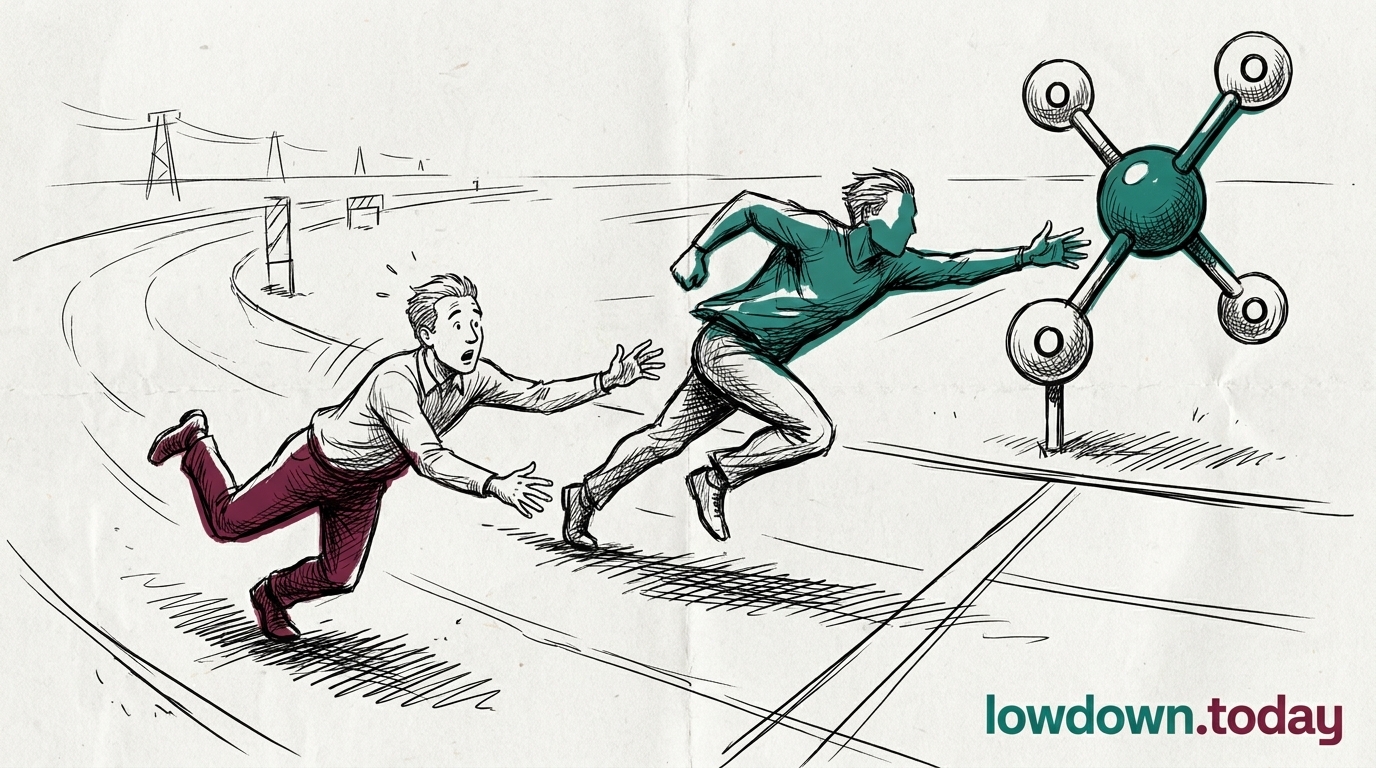
Vance and Ghalibaf digitally signed the Islamabad Memorandum on Monday 15 June, the first Iran instrument either side has put a signature to in 108 days of war. A day later the White House actions index, OFAC and the Federal Register still carried nothing on Iran.

EconomicDeveloping
Key takeaway

Vance and Ghalibaf signed the memorandum, but no US register carries the paperwork that would lift sanctions.

JD Vance and Iranian parliament speaker Mohammad Bagher Ghalibaf executed a digital signature on Monday 15 June, formally naming the document the Islamabad Memorandum of Understanding. 1 It is the first Iran instrument either side has signed in 108 days of war. The two had been publicly named as signatories the day before , so the signature itself was expected; what followed was not.

Twenty-four hours later the White House Presidential Actions index listed a cyber-security memo, a Flag Day proclamation and a batch of nominations, and nothing on Iran. 2 OFAC, the US Treasury's sanctions-enforcement office, had logged no new Iran designation, and the Federal Register, the government's daily journal of executive orders and rules, carried no Iran entry either. Trump had declared the deal done on Truth Social the day before the signing ; the digital signature is the act that declaration described.

US law does not treat a Memorandum of Understanding as self-executing. Sanctions relief runs through OFAC general licences and, for anything statutory, through waivers the President must sign and publish. None of that machinery has moved, which leaves the instrument doing far less than the announcement that preceded it. The document runs to roughly a page and a half, stays secret until a formal ceremony in Geneva on Friday 19 June, and parks the nuclear question for 60 days while leaving sanctions, missiles and Iran's regional proxies out of the text entirely.


Deep Analysis

In plain English

The United States and Iran announced a deal, and two senior officials digitally signed a document named the Islamabad Memorandum of Understanding on 15 June. But in the US government, a deal only becomes real law when it appears in official publications like the Federal Register or when the president signs a formal order. None of that happened in the 24 hours after the signing. Think of it like a tenant and landlord verbally agreeing on rent, but neither has signed the actual lease. The handshake exists; the binding paperwork does not. Until the US publishes the formal orders, Iran's bank accounts stay frozen, oil sanctions stay in place, and the Strait of Hormuz stays blocked in legal terms, whatever the leaders said in public.

Deep Analysis
Root Causes

Three structural conditions produced the blank-register outcome. First, the Trump administration has conducted 108 days of war-time Iran policy without a single signed presidential instrument, relying on verbal orders and social media posts; publishing a Federal Register notice for the MOU would break that pattern and create a reviewable legal record subject to congressional challenge under the War Powers Resolution.

Second, under Iran's constitution (Article 110), major foreign policy instruments require Supreme Leader endorsement; Mojtaba Khamenei has communicated by sealed courier only since 8 March, meaning no high-speed ratification process exists on the Iranian side. Ghalibaf signed without confirmed Khamenei authorisation.

Third, the MOU defers nuclear, sanctions, missile and proxy issues to a 60-day window . Publishing a sanctions waiver before those issues are resolved would give Congress and US courts a concrete target to challenge before the Geneva ceremony.

What could happen next?
  • Risk

    Without a published sanctions waiver, US banks and firms face criminal liability for acting on the MOU, meaning no practical relief flows until Washington publishes the instrument.

    Immediate · Assessed
  • Consequence

    The Geneva ceremony on 19 June becomes the first real test of whether the US intends to publish implementing instruments; its outcome will determine whether the MOU was a declaration or the opening of a legal process.

    Short term · Assessed
  • Precedent

    If the MOU is accepted internationally without US domestic publication, it establishes that presidential social media posts can substitute for Federal Register instruments, removing a key accountability check on executive war-time diplomacy.

    Long term · Suggested
First Reported In

Update #129 · Iran deal signed, but no paper to show

NBC News· 16 Jun 2026
Read original
Different Perspectives
Cross-border power traders
The France-Germany day-ahead spread flipped from a EUR 17.20 German premium on 1 August to a EUR 4.15 French premium on 3 August, the same day French curtailment peaked. They cannot yet attribute the flip to curtailment alone, since a like-for-like overnight comparison shows French nuclear output rising while wind fell and demand returned on the weekday step.
EDF
EDF
River-cooling limits took 7.6 GW, 12 per cent of its fleet, offline on 3 August, the highest curtailment since the heatwave began, with an easing forecast to 4.3 GW on 4 August and 3 GW after. It manages the cut as a recurring seasonal constraint, expecting it to lift with river temperature, not repair.
Gasunie
Gasunie
TTF, the Dutch hub it operates, drifted to roughly EUR 55 to 58 per MWh across the window, staying inside its recent range through both the German spark reversal and the French curtailment. It reads a flat hub price as evidence that neither event this window carried enough weight to move the fuel leg on its own.
German gas-fired generators
Record German solar of 18,761 MW on 2 August pushed the clean spark spread to minus 18.48 EUR/MWh, a loss-making day, before it returned to plus 16.20 on 3 August. They now price dispatch against post-solar residual load rather than wind alone, since the sign flipped inside 48 hours on unchanged fuel and carbon costs.
European Commission (DG Energy)
Its implementing-measures register logged transposition notices from only Portugal and Slovakia against Wednesday's Article 94 deadline for Directive (EU) 2024/1788, with 25 states silent. It expects the register to fill only gradually, since filing routinely lags legislating and any infringement track against non-notifying states runs on a slower clock than the deadline itself.
Spain's LNG terminal operators
Spain's 9,145 GWh terminal inventory is the largest single stock in the EU LNG network, an option value that can reroute cargoes wherever the winter strip pays best rather than a cavern gas obligation tied to a fixed date. That flexibility matters more as Germany's cavern shortfall pushes more of the winter security question onto import infrastructure.



