Skip to content
You can now search across every topic, entity and event.What's new
European Energy Markets
18JUN

Iran counters Oman with a lane demand

2 min read
09:57UTC

Kazem Gharibabadi answered Muscat's voluntary-fee proposal by asking that Iran control its own territorial lane and part of the opposite one.

EconomicDeveloping
Key takeaway

A voluntary fee and a controlled lane are not two prices for the same arrangement.

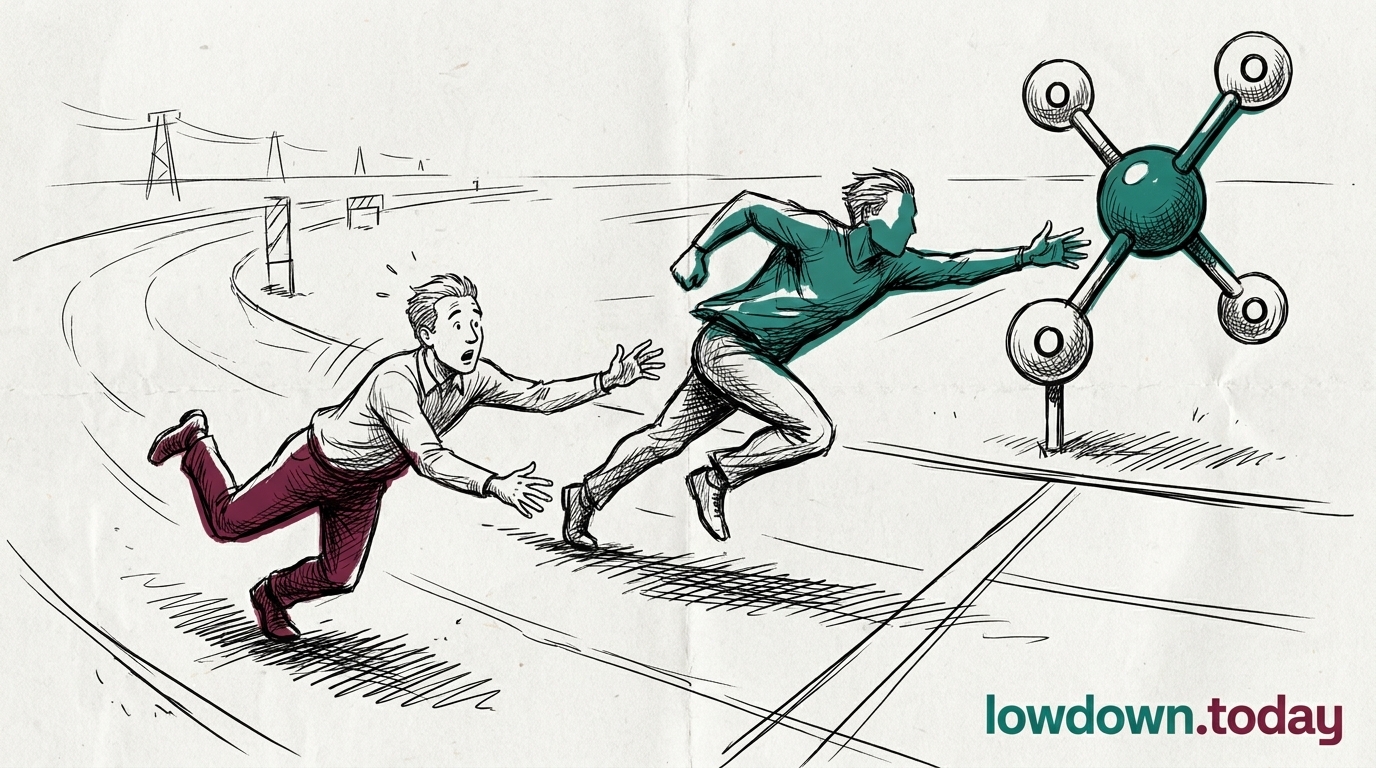
Iran's deputy foreign minister Kazem Gharibabadi countered Oman's Hormuz proposal by asking that Iran control its own territorial lane plus part of the opposite one 1. Muscat had put forward a voluntary-fee mechanism modelled on the arrangement in the Malacca and Singapore Straits, where shipowners contribute to navigation aids and rescue services and face no penalty for declining . Iran's foreign ministry spokesman Esmaeil Baghaei said on Monday 27 July that recent discussions had been "exclusively with Oman", and that "we have no negotiations with the United States at present" 2.

the strait is roughly 21 nautical miles across at its narrowest, and its shipping lanes run in two directions: inbound traffic hugs the Omani side, outbound traffic the Iranian side, both under the transit-passage regime that applies to international straits. Gharibabadi's request would place both lanes wholly or partly under Iranian control, which is why the gap between the two proposals is not one of price.

A voluntary contribution assumes an international waterway that no state may condition. A controlled lane assumes a sovereign one whose owner may set terms. Tehran has held the second position throughout the war, and no mediator's draft has yet found language that lets both governments sign the same paragraph.

What the exchange does show is that the negotiating table has shrunk to two littoral states in the same week the shooting reached a fourth and fifth country. Neither Baghaei's denial nor the American account of deep conversations with Tehran settles what is actually passing through Muscat, and the Islamic Republic's domestic politics require that any engagement with Washington look imposed rather than sought.


Deep Analysis

In plain English

Oman suggested a plan where ships would pay a small voluntary fee to help fund safety patrols through the Strait of Hormuz, the narrow waterway between Iran and Oman that a large share of the world's oil passes through. Iran's deputy foreign minister, Kazem Gharibabadi, rejected that idea and instead said Iran should control its own side of the strait plus part of the other side too. This is a much bigger demand than Oman's plan, since it would give Iran authority over shipping lanes it does not currently control.

Deep Analysis
Root Causes

Iran's demand rests on treating the Strait of Hormuz's international transit-passage regime, established under the UN Convention on the Law of the Sea, as negotiable, even though Iran never ratified that convention and instead relies on its own 2024 domestic maritime law to assert jurisdiction over the corridor.

Oman's voluntary-fee model depends on all littoral and user states accepting a shared, non-exclusive mechanism; Iran's counter-demand for control of part of the opposite lane removes the voluntary character Oman built the proposal around, making the two positions structurally incompatible rather than a gap that a compromise fee schedule could bridge.

Escalation

Direction: hardening. Gharibabadi's demand goes further than Araghchi's earlier claim to Hormuz oversight , moving from asserting authority over Iran's own lane to claiming part of the opposite one as well.

What could happen next?
  • Risk

    Iran's demand for the opposite lane could make Oman's voluntary-fee proposal unworkable, since the mechanism assumes no single state controls both lanes.

  • Precedent

    If Iran secures partial control of the opposite lane, other littoral states in contested straits could cite the precedent to press similar claims.

First Reported In

Update #164 · The pause ends, and the map moves west

Trading Economics· 31 Jul 2026
Read original
Different Perspectives
Cross-border power traders
The France-Germany day-ahead spread flipped from a EUR 17.20 German premium on 1 August to a EUR 4.15 French premium on 3 August, the same day French curtailment peaked. They cannot yet attribute the flip to curtailment alone, since a like-for-like overnight comparison shows French nuclear output rising while wind fell and demand returned on the weekday step.
EDF
EDF
River-cooling limits took 7.6 GW, 12 per cent of its fleet, offline on 3 August, the highest curtailment since the heatwave began, with an easing forecast to 4.3 GW on 4 August and 3 GW after. It manages the cut as a recurring seasonal constraint, expecting it to lift with river temperature, not repair.
Gasunie
Gasunie
TTF, the Dutch hub it operates, drifted to roughly EUR 55 to 58 per MWh across the window, staying inside its recent range through both the German spark reversal and the French curtailment. It reads a flat hub price as evidence that neither event this window carried enough weight to move the fuel leg on its own.
German gas-fired generators
Record German solar of 18,761 MW on 2 August pushed the clean spark spread to minus 18.48 EUR/MWh, a loss-making day, before it returned to plus 16.20 on 3 August. They now price dispatch against post-solar residual load rather than wind alone, since the sign flipped inside 48 hours on unchanged fuel and carbon costs.
European Commission (DG Energy)
Its implementing-measures register logged transposition notices from only Portugal and Slovakia against Wednesday's Article 94 deadline for Directive (EU) 2024/1788, with 25 states silent. It expects the register to fill only gradually, since filing routinely lags legislating and any infringement track against non-notifying states runs on a slower clock than the deadline itself.
Spain's LNG terminal operators
Spain's 9,145 GWh terminal inventory is the largest single stock in the EU LNG network, an option value that can reroute cargoes wherever the winter strip pays best rather than a cavern gas obligation tied to a fixed date. That flexibility matters more as Germany's cavern shortfall pushes more of the winter security question onto import infrastructure.



