Skip to content
You can now search across every topic, entity and event.What's new
European Energy Markets
15JUN

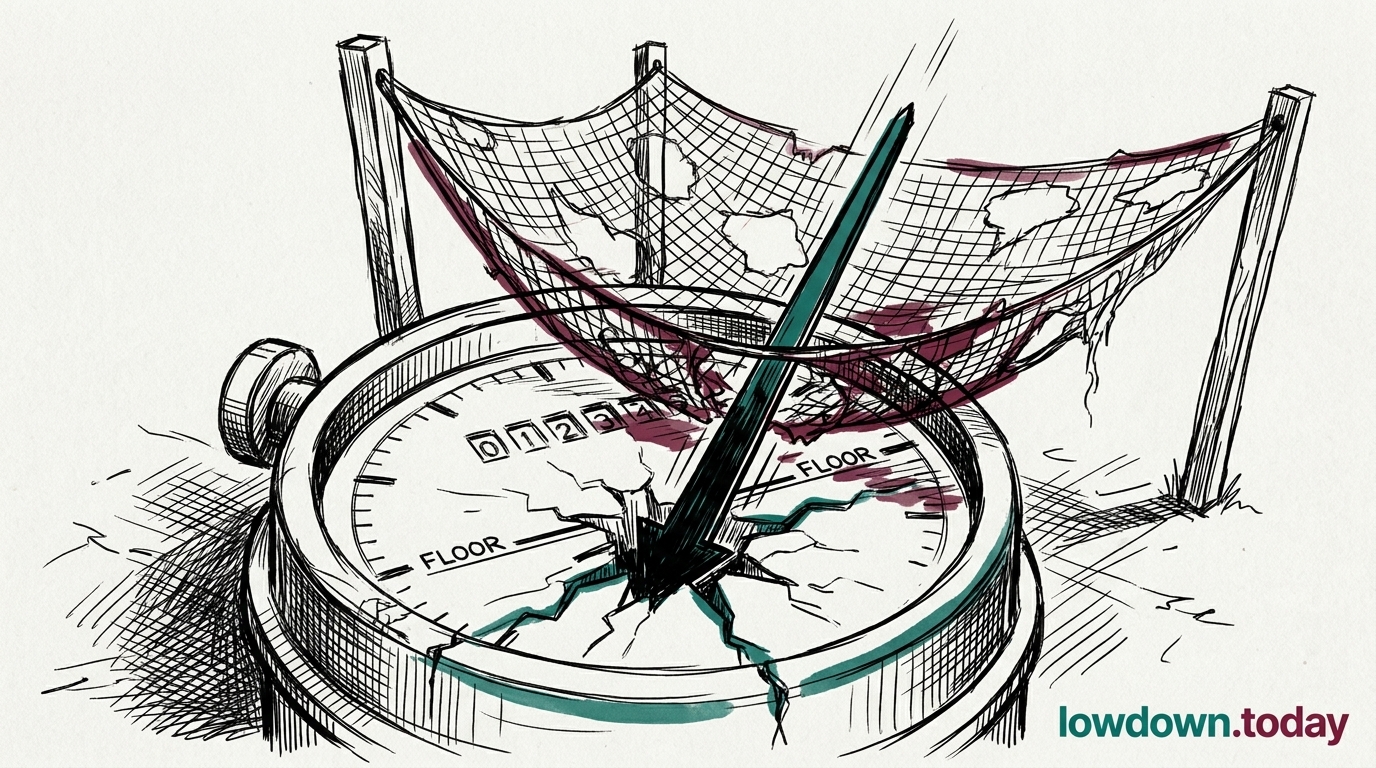
Baltic strikes cut Russian oil by 43%

2 min read
12:23UTC

Four drone strikes on Baltic terminals collapsed Russia's seaborne crude shipments by 43%, costing Moscow roughly $1 billion in seven days.

EconomicDeveloping
Key takeaway

Ukraine physically halved Russian oil exports in one week, replacing weakened sanctions with infrastructure destruction.

Ukrainian drones struck Ust-Luga and Primorsk, Russia's two largest Baltic oil export terminals, at least four times between 22 and 31 March. Together these ports handle roughly 60% of Russia's seaborne oil flow. Weekly crude exports fell from 4.07 million barrels per day to 2.32 million bpd, a 43% collapse 1. Bloomberg data shows this is the steepest single-week drop in modern Russian export history. Revenue fell from $2.45 billion to $1.44 billion.

On 26 and 27 March, no ships recorded loading oil at any of Russia's three Baltic ports. Two consecutive zero-loading days had not occurred since 2022. President Zelenskyy framed the campaign as deliberate policy: "Unlike most countries, Ukraine has its own sanctions: its long-range capabilities." The logic is strategic. On 12 March, the US Treasury waived sanctions on approximately 124 million barrels of Russian oil at sea , valued by Zelenskyy at roughly $10 billion. That waiver expires on 11 April. When international enforcement weakens, Ukraine destroys the pipes.

The contrast with the revenue picture two weeks earlier is sharp. CREA data showed Russia earning €510 million per day in fossil fuel revenues during the Iran war's first fortnight . The Urals benchmark has since risen $11.30 to $73.24 per barrel, well above the $59 budget assumption. High prices mean nothing if tankers cannot load. Ukrainian strikes on the Labinsk oil depot targeted inland storage; the Baltic campaign targets the revenue stream itself.


Deep Analysis

In plain English

Russia earns most of its money from selling oil and gas. The two big Baltic Sea oil ports, Ust-Luga and Primorsk, are where roughly 60% of Russia's oil tankers fill up before sailing to buyers in India, China, and elsewhere. Ukraine struck those ports with drones at least four times in ten days. For two days in a row, not a single tanker loaded oil at any Russian Baltic port. In one week, Russia's oil shipments fell by 43%, costing Moscow roughly $1 billion. Why target these ports? Three weeks earlier, the US government had temporarily waived oil sanctions, allowing Russia to sell oil that had been blocked. Ukraine is destroying the ports that ship that oil, compensating for weakened financial pressure with physical damage.

Deep Analysis
Root Causes

Ukraine's decision to target Baltic export infrastructure stems from the 12 March US Treasury sanctions waivers, which released 124 million barrels of Russian oil and provided an estimated $10 billion in revenue. Zelenskyy explicitly linked the two: if international mechanisms cannot enforce financial pressure, Ukraine will enforce it physically.

The tactical opportunity arose from Russia's post-2022 export concentration. Having lost European pipeline markets, Russia routed 60% of seaborne crude through Ust-Luga and Primorsk. That concentration, a consequence of Western sanctions forcing rerouting, created the target Ukraine exploited.

Escalation

Ukraine has escalated from striking military and logistics targets to directly targeting Russia's primary hard-currency revenue stream. This crosses a threshold. Russia's asymmetric response options include intensified grid attacks on Ukraine's own energy export capacity and accelerated Shahed barrages, but neither matches the $1 billion weekly revenue impact.

What could happen next?
  • Consequence

    Russia's seaborne crude export capacity may remain suppressed for months if Ust-Luga and Primorsk cannot resume full operations before the 11 April sanctions waiver expires.

    Short term · 0.75
  • Risk

    Russia may retaliate against Ukrainian energy export infrastructure, including Odesa port facilities, to impose a symmetric revenue cost.

    Immediate · 0.65
  • Precedent

    Ukraine has established that drone strikes on export infrastructure can substitute for sanctions enforcement, a model other non-state and state actors may adopt.

    Long term · 0.7
First Reported In

Update #9 · Ukraine halves Russia's Baltic oil exports

Bloomberg via Moscow Times· 1 Apr 2026
Read original
Different Perspectives
Spain's LNG terminal operators
Spain's 9,145 GWh terminal inventory is the largest single stock in the EU LNG network, an option value that can reroute cargoes wherever the winter strip pays best rather than a cavern gas obligation tied to a fixed date. That flexibility matters more as Germany's cavern shortfall pushes more of the winter security question onto import infrastructure.
European Commission
European Commission
Brussels holds the bloc to 90% on a flexible window while Germany, holding roughly a quarter of EU storage capacity, tracks toward missing its own lower 80% figure by 21 points. A national shortfall this size in the anchor market matters more to bloc security than the flexible timetable alone can absorb.
French power exporters and CRE
French day-ahead rose in step with Germany but by less, reopening a EUR 7-17 premium that makes northward export flows commercially attractive again after the EUR 43.09 discount evaporated in days. CRE separately authorised RTE and Enedis to buy flexibility locally, betting the coming winter's binding constraint is grid congestion rather than a shortage of firm capacity.
TTF trading desk
TTF trading desk
A visible national shortfall like Germany's 21-point gap is a directional signal, not noise, for a desk holding the summer-winter spread. TTF's flat EUR 58-60 range through this week's German price swings says the market has not yet chosen to reprice refill risk into the front of the curve.
German cavern and CCGT operators
German caverns kept buying prompt gas at TTF near EUR 58-60 through the inversion; the wind collapse to 2.4 GW then flipped the spark spread to plus EUR 29 and put turbines back in the same queue. Every day turbines win that bid, injection at a third of the 877 GWh/day pace needed falls further behind.
Slovakia
Slovakia
Slovakia says it dropped its hold-out on the 21st sanctions package only after Ursula von der Leyen personally signed written gas-price and supply guarantees. The Council of the European Union's own 17,238-character release on the package names neither Slovakia nor any guarantee, leaving Bratislava's account unconfirmed by the institutional record.



