Skip to content
You can now search across every topic, entity and event.What's new
European Energy Markets
15JUN

Putin and Wang condemn; nothing follows

2 min read
12:23UTC

Russia and China delivered their harshest joint denunciation of US military action in over two decades, then offered Tehran nothing beyond words.

EconomicDeveloping
Key takeaway

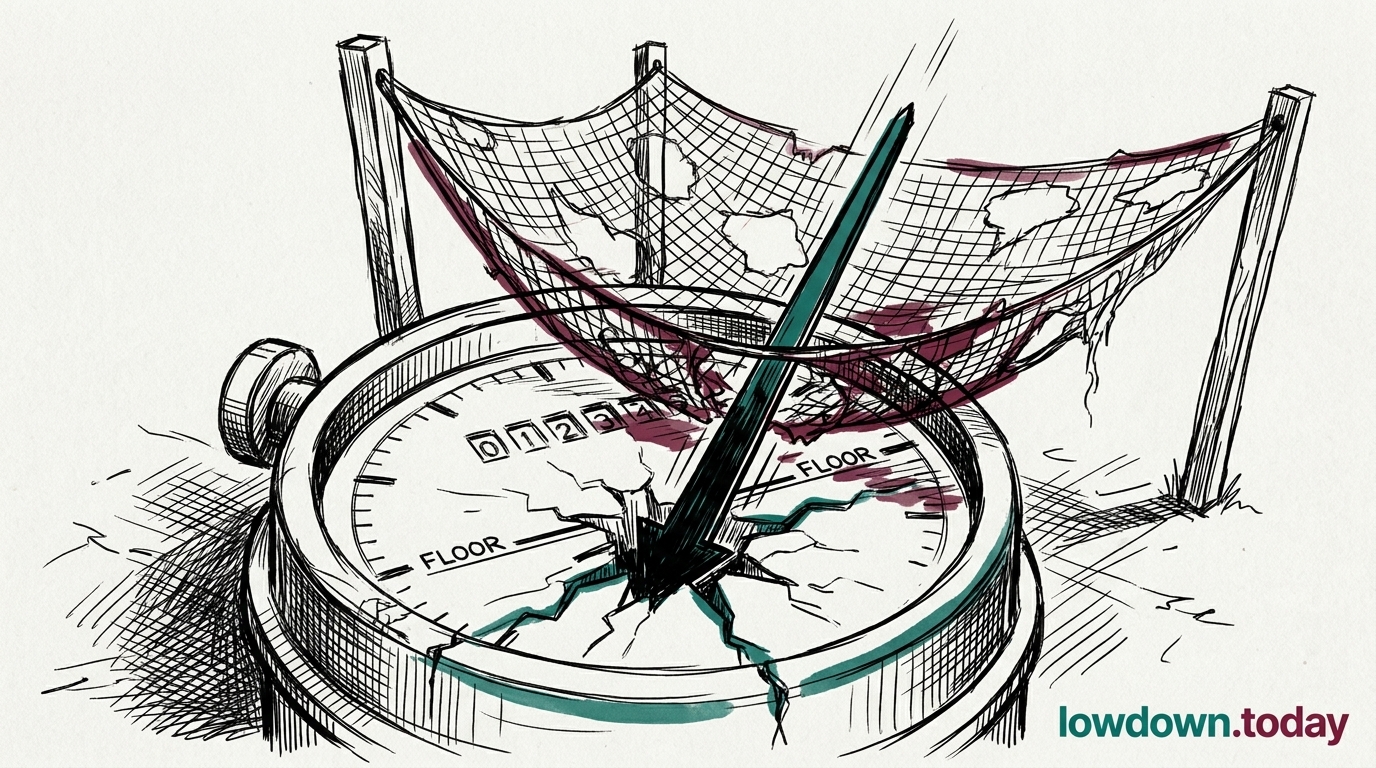
Russia and China's condemnation language, however strong, has established a rhetorical ceiling that signals Washington faces no great-power material counter-escalation for the command decapitation campaign.

Vladimir Putin called the killing of Supreme Leader Khamenei a "cynical murder" and the broader campaign "unprovoked aggression." Wang Yi, China's foreign minister, told Russian counterpart Sergei Lavrov the strikes are "unacceptable." Xinhua's state editorial — "brazen aggression" and "flagrant violation of the UN Charter" — deploys language Beijing last used after NATO bombed the Chinese embassy in Belgrade in May 1999, the sharpest formulation in Chinese diplomatic vocabulary.

Both governments backed condemnation at the UN Security Council emergency session . Both have framed the campaign as unchecked American unilateralism. But Putin did not invoke Russia's 2015 military cooperation framework with Tehran. Xi Jinping has not spoken publicly. The statements came from foreign ministers and state media editorial desks — one tier below head-of-state commitments. In 2003, when Russia opposed the Iraq invasion, Putin personally called it a "political mistake" but took no action to prevent it. The distance between rhetoric and response is consistent across two decades.

The pattern has a direct antecedent in the Iran-Iraq War. When Saddam Hussein invaded Iran in September 1980, Moscow — which held a treaty of friendship with Baghdad — declared neutrality. By 1982, the Soviet Union was selling arms to both sides. Beijing did the same. Neither intervened to end an eight-year war that killed over a million people. The calculus was identical: a conflict that consumed American attention and weakened a regional power served broader interests more effectively than direct involvement. Tehran is relearning what it learnt in 1980 — rhetorical solidarity from great powers does not convert to military protection.


Deep Analysis

In plain English

Russia and China are using unusually strong language — words like 'murder' and 'aggression' — but are not sending weapons, troops, or cutting trade with the US. The significance is what this tells Washington: the operation will not trigger a wider war with nuclear powers. Strong words without action are the diplomatic equivalent of a strongly worded letter that everyone knows will go unanswered.

Deep Analysis
Synthesis

The gap between rhetorical temperature and material inaction is itself a strategic communication to Washington: both powers are signalling displeasure without accepting responsibility to act. This preserves their ability to claim moral high ground in multilateral forums while bearing no costs — a posture that serves their interests precisely because it is costless.

Escalation

The bilateral Wang Yi–Lavrov phone call — rather than a joint Sino-Russian statement — is architecturally important: a phone call allows coordinated messaging while each party retains independent discretion on material response. A joint statement would imply joint obligation. The chosen format signals deliberate non-commitment beyond rhetoric.

What could happen next?
  • Meaning

    The rhetorical ceiling established by Russia and China confirms that the US-Israeli operation will not produce great-power material counter-escalation, significantly reducing the risk of the conflict widening to a US-Russia or US-China confrontation.

    Immediate · Assessed
  • Precedent

    Russia and China's non-response sets a durable precedent that command decapitation of aligned states — up to and including killing a head of state — does not trigger material retaliation from nuclear powers, so long as those powers are not themselves directly targeted.

    Long term · Assessed
  • Risk

    China's confirmation of one national killed in Tehran introduces a variable that purely rhetorical condemnation did not create: domestic pressure that could narrow Beijing's room to remain materially uninvolved if casualties among its approximately 8,000-strong community in Iran mount further.

    Short term · Suggested
First Reported In

Update #9 · IRGC HQ destroyed; Britain quits coalition

Palestine Chronicle· 2 Mar 2026
Read original
Causes and effects
This Event
Putin and Wang condemn; nothing follows
Iran's two most important strategic partners condemned the campaign with language reserved for the gravest provocations and matched it with zero military commitments, defining the practical limits of the partnerships Tehran cultivated over two decades.
Different Perspectives
Spain's LNG terminal operators
Spain's 9,145 GWh terminal inventory is the largest single stock in the EU LNG network, an option value that can reroute cargoes wherever the winter strip pays best rather than a cavern gas obligation tied to a fixed date. That flexibility matters more as Germany's cavern shortfall pushes more of the winter security question onto import infrastructure.
European Commission
European Commission
Brussels holds the bloc to 90% on a flexible window while Germany, holding roughly a quarter of EU storage capacity, tracks toward missing its own lower 80% figure by 21 points. A national shortfall this size in the anchor market matters more to bloc security than the flexible timetable alone can absorb.
French power exporters and CRE
French day-ahead rose in step with Germany but by less, reopening a EUR 7-17 premium that makes northward export flows commercially attractive again after the EUR 43.09 discount evaporated in days. CRE separately authorised RTE and Enedis to buy flexibility locally, betting the coming winter's binding constraint is grid congestion rather than a shortage of firm capacity.
TTF trading desk
TTF trading desk
A visible national shortfall like Germany's 21-point gap is a directional signal, not noise, for a desk holding the summer-winter spread. TTF's flat EUR 58-60 range through this week's German price swings says the market has not yet chosen to reprice refill risk into the front of the curve.
German cavern and CCGT operators
German caverns kept buying prompt gas at TTF near EUR 58-60 through the inversion; the wind collapse to 2.4 GW then flipped the spark spread to plus EUR 29 and put turbines back in the same queue. Every day turbines win that bid, injection at a third of the 877 GWh/day pace needed falls further behind.
Slovakia
Slovakia
Slovakia says it dropped its hold-out on the 21st sanctions package only after Ursula von der Leyen personally signed written gas-price and supply guarantees. The Council of the European Union's own 17,238-character release on the package names neither Slovakia nor any guarantee, leaving Bratislava's account unconfirmed by the institutional record.



