Skip to content
You can now search across every topic, entity and event.What's new
European Energy Markets
15JUN

Iran's rial rises for a war-first time

4 min read
12:23UTC

Iran's currency firmed 1.7 per cent over three days on Rubio's sequencing signal, its first gain since the fighting began, though a six-month 43 per cent slide still stands.

EconomicDeveloping
Key takeaway

The rial firmed 1.7 per cent on Rubio's testimony, but a 43 per cent six-month slide still stands.

The Iranian rial firmed to 1,716,000 to the dollar by Wednesday 3 June, its first gain since the fighting started. It had hit a record 1,746,000 on Monday 1 June , then eased to 1,730,000 on Tuesday, a recovery of roughly 1.7 per cent on the open market tracked by Alanchand 1. Traders moved on Secretary Rubio's sequencing testimony, not on any signed instrument. The gain rests on a Senate sentence, which means it can reverse on the next round of state-media denials.

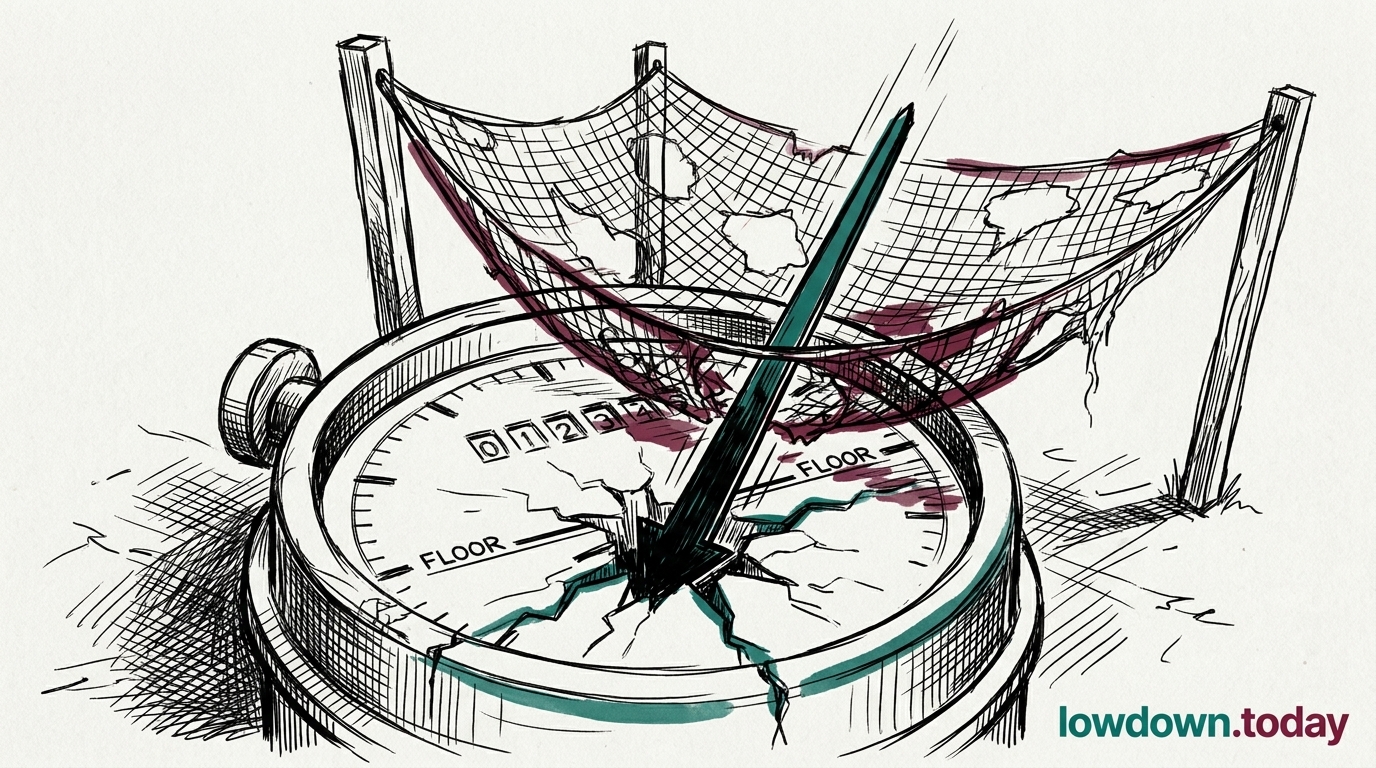
That 1.7 per cent does not undo much. The currency had shed 43 per cent over six months before this week , and a three-day bounce leaves it close to its record low. A family in Tehran buying imported insulin still pays near-record rial prices at the counter, so the recovery reads on a trading screen long before it reads on a pharmacy receipt. Brent Crude sat around $95 to $97 across the same days, firmer on the same diplomatic optimism 2.

The relief and the squeeze arrived together. OFAC has just cut the stablecoin rail the Central Bank of Iran leaned on to defend this exchange rate , so the very week confidence lifted the rate, Tehran lost its fastest tool to hold it there. The bounce came from hope; the means to sustain it shrank on the same days.


Deep Analysis

In plain English

Iran's currency, the rial, has been losing value steadily since the conflict began in February 2026. On 1 June it hit a record low: 1,746,000 rials to the dollar. Over two days it recovered slightly to 1,716,000, still far weaker than before the conflict but moving in the right direction for the first time in months. The recovery happened because traders interpreted Rubio's Congressional testimony as a sign that a deal to reopen the Strait of Hormuz might be possible. No agreement has actually been signed, so the rate rests on spoken words rather than a verified commitment. On the same two days, the US Treasury sanctioned the crypto exchanges that Iran's central bank had been using to buy dollars and support the rial, removing that support mechanism on the very days it was being tested.

Deep Analysis
Root Causes

The rial's structural vulnerability has two separate drivers. The first is the 43% accumulated devaluation from the sanctions shock and the conflict slide, which reflects the gap between Iran's export revenues (constrained by sanctions and the Hormuz blockade) and its import demand (inflexible for food, medicine and industrial inputs).

The second is the absence of a credible central-bank intervention mechanism: the CBI cannot defend the rial through conventional foreign-exchange reserve sales because its reserves are partly frozen and partly inaccessible due to its own SDN listing, so it was using informal crypto channels as a substitute.

Brent crude at $95-97 on the same days reflects the same diplomatic optimism, but from the opposite direction: oil traders priced a Hormuz reopening as plausible, which reduces the scarcity premium. The rial and Brent moving on identical signals with opposite sign (rial up, Brent down from conflict peak) confirms that both markets are trading on Rubio's testimony rather than any structural change.

First Reported In

Update #116 · Washington signs a sanction, not a strike

The National· 3 Jun 2026
Read original
Different Perspectives
Spain's LNG terminal operators
Spain's 9,145 GWh terminal inventory is the largest single stock in the EU LNG network, an option value that can reroute cargoes wherever the winter strip pays best rather than a cavern gas obligation tied to a fixed date. That flexibility matters more as Germany's cavern shortfall pushes more of the winter security question onto import infrastructure.
European Commission
European Commission
Brussels holds the bloc to 90% on a flexible window while Germany, holding roughly a quarter of EU storage capacity, tracks toward missing its own lower 80% figure by 21 points. A national shortfall this size in the anchor market matters more to bloc security than the flexible timetable alone can absorb.
French power exporters and CRE
French day-ahead rose in step with Germany but by less, reopening a EUR 7-17 premium that makes northward export flows commercially attractive again after the EUR 43.09 discount evaporated in days. CRE separately authorised RTE and Enedis to buy flexibility locally, betting the coming winter's binding constraint is grid congestion rather than a shortage of firm capacity.
TTF trading desk
TTF trading desk
A visible national shortfall like Germany's 21-point gap is a directional signal, not noise, for a desk holding the summer-winter spread. TTF's flat EUR 58-60 range through this week's German price swings says the market has not yet chosen to reprice refill risk into the front of the curve.
German cavern and CCGT operators
German caverns kept buying prompt gas at TTF near EUR 58-60 through the inversion; the wind collapse to 2.4 GW then flipped the spark spread to plus EUR 29 and put turbines back in the same queue. Every day turbines win that bid, injection at a third of the 877 GWh/day pace needed falls further behind.
Slovakia
Slovakia
Slovakia says it dropped its hold-out on the 21st sanctions package only after Ursula von der Leyen personally signed written gas-price and supply guarantees. The Council of the European Union's own 17,238-character release on the package names neither Slovakia nor any guarantee, leaving Bratislava's account unconfirmed by the institutional record.



