Skip to content
Foundations rebuilt, and the first new thing is here: search across every topic, entity, and event.Try search
European Energy Markets
11JUN

Druzhba restart unblocks EUR 90bn EU loan

3 min read
09:04UTC

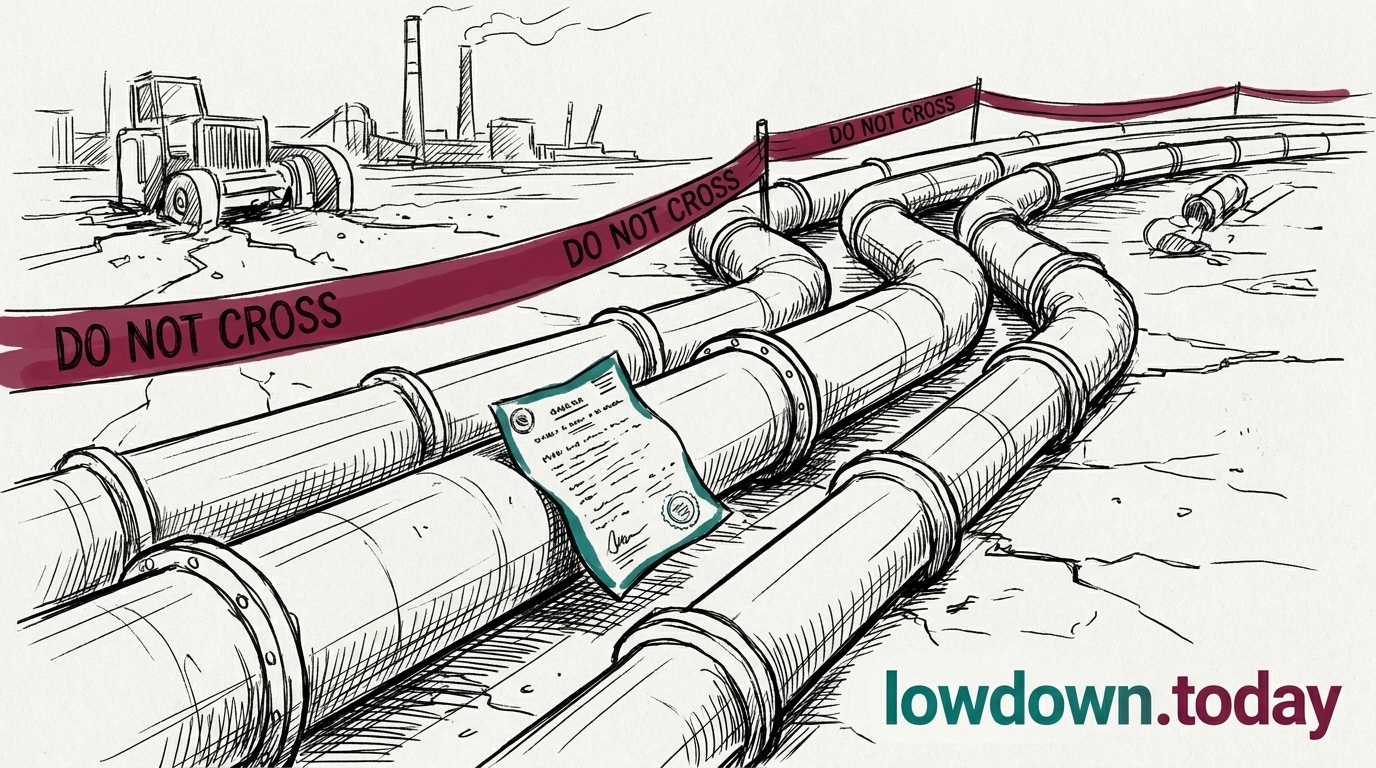
Ukraine restarted Russian crude flows via the Druzhba pipeline on 22 April after months halted; within hours Hungary lifted its veto on the EUR 90 billion EU-Ukraine loan, with MOL taking first deliveries 23 April.

EconomicAssessed
Key takeaway

The pipeline carries crude, but the political consequence runs through every Hungary file in this week's briefing.

Ukraine restarted Russian crude flows via the Druzhba pipeline on Wednesday 22 April after months halted following late-January damage 1. Within hours Hungary lifted its veto on the EUR 90 billion EU-Ukraine loan facility. MOL, the Hungarian oil major, took first deliveries on Thursday 23 April; Slovakia confirmed first deliveries in the early hours of the same day.

Druzhba is the Soviet-era pipeline network that has carried Russian crude west since 1964 and remains the primary crude artery for landlocked central European refiners. The northern leg runs through Belarus to Poland and Germany; the southern leg, which has restarted, runs through Ukraine to Hungary's Százhalombatta refinery and Slovakia's Slovnaft. The late-January halt followed damage to the Ukrainian transit infrastructure; the restart restores the southern flow that MOL has historically depended on for roughly a third of its crude.

The veto-lift followed the 12 April Hungarian parliamentary election, which brought Péter Magyar to power on a platform that had pledged to lift Hungary's veto on the EU-Ukraine loan. Magyar's pre-election positioning made the loan release contingent on his victory; the post-election delivery confirms the alignment. For the EUR 90 billion facility, that means disbursement now runs on the agreed timetable rather than the Hungarian calendar that had blocked it through the prior coalition's tenure.

Druzhba carries crude rather than gas, so the European wholesale gas curve sees only indirect impact. TTF settled at EUR 44.13/MWh on 29 April with no measurable Druzhba premium. Hungary's political pivot delivers the direct consequence. Budapest's negotiating posture inside the 20th sanctions package debate and on the MOL infringement opinion now sits on a baseline reset by Magyar's election win. Russia-Ukraine-war-2026 owns the primary geopolitical framing of the crude restart and the loan unblock; this topic owns the European market-exposure leg, where MOL's first-delivery confirmation sets the operational baseline against which Slovakia's CEZ-led contracting and Hungary's longer-run pipeline-redundancy planning will be measured.


Deep Analysis

In plain English

The Druzhba pipeline is one of the longest oil pipelines in the world, running from Russia through Ukraine into central Europe. It moves crude oil; the raw material refined into petrol, diesel and heating oil; to refineries in Hungary and Slovakia. It had been shut since late January following damage during the war. Ukraine switched it back on 22 April. The same week, Hungary's new government dropped its veto blocking the EU from disbursing a EUR 90 billion financial package to Ukraine. The two events are connected: Hungary's previous government had used the loan as leverage, and its replacement by a pro-EU administration resolved both blocks in the same week.

Deep Analysis
Root Causes

Hungary's veto on the EUR 90 billion EU-Ukraine loan rested on two linked conditions under Orbán: the continuation of Russian crude via Druzhba to MOL's Százhalombatta refinery (the only refinery in Hungary, calibrated for Russian crude), and Budapest's broader leverage over EU unanimity-required instruments.

Magyar's pre-election commitment to lift the veto was credible because his party platform explicitly addressed both conditions: normalising EU relations while negotiating a long-term crude supply alternative for MOL.

The Druzhba restart on 22 April preceded the formal vote on the loan veto by hours, suggesting that Ukraine and Hungary had coordinated the sequencing; Ukraine signalling commercial reliability to MOL before Budapest's parliamentary vote, and Hungary signalling political will to Brussels before the formal veto lift.

What could happen next?
  • Consequence

    Hungary's changed EU posture, if sustained after government formation on 5 May, opens the path to unanimity on the full maritime services ban blocked in the 20th package and potential revision of Hungary's MOL infringement response.

  • Risk

    Magyar's government formation faces Fidesz contestation that could delay formal executive positions on EU instruments past the 5 May target; the window of Hungarian blocking leverage may not have fully closed.

First Reported In

Update #6 · REMIT II live; storage instrument absent

Al Jazeera· 29 Apr 2026
Read original
Causes and effects
This Event
Druzhba restart unblocks EUR 90bn EU loan
The pipeline carries crude not gas, so the wholesale gas curve impact is indirect, but the political baseline has shifted under every other Hungary file in this week's briefing.
Different Perspectives
Amsterdam-Rotterdam-Antwerp gas trading desks
TTF failing to fall with three bearish physical signals on 11 June confirms EUR 50 as a diplomatic ceiling rather than a physical floor; the Iran escalation premium of roughly EUR 2-3/MWh is the sole bid not corroborated by a molecule. Winter Cal-26 long against summer TTF short is the structural position FNB Gas's broken-mechanism verdict supports.
German capacity planners and industrial buyers
The cabinet-approved StromVKG entering Bundestag is a direct acknowledgement that EUR 124/MWh day-ahead power and a EUR -8 spark spread make Germany's grid unfinanceable on market terms; the 2031 first-capacity date is five years of exposure before any relief arrives from the 9 GW programme.
ACER and the European Commission
ACER's 11 June REMIT workshop and the 12 June guidance lock signal the surveillance regime entering its first full enforcement cycle under expanded cross-border powers, with 204 STORs in 2025 already doubling the prior year before the new powers activated. The Article 207 TFEU pipeline ban framing has produced no CJEU stay, validating the trade-measure classification strategy.
LNG spot traders and cargo routers
The JKM-TTF arb at USD 2.368/MMBtu sits above the USD 1.80-2.00 round-trip threshold, routing Atlantic spot cargoes east with positive carry and compressing European import volumes through the injection season. At USD 2.368 the arb still points Asia comfortably; the next weekly laycan window is the operative data point.
Hungary and Slovakia
Neither Budapest's February 2026 CJEU annulment challenge nor Slovakia's signalled application has produced a stay; with six days remaining the legal route has not bought the supply-protection time it was intended to. After 17 June, Hungary's long-term Gazprom-TurkStream contract to at least September 2027 becomes the sole remaining Russian pipeline import line for both states.
Hungary and Slovakia (Central European supply-security bloc)
Nine days from the 17 June short-term pipeline ban, neither Hungary's February CJEU challenge nor Slovakia's signalled application has produced a stay; the legal route has not bought the supply-protection time it was intended to. After 17 June, Hungary's long-term Gazprom-TurkStream contract to 2036 becomes the sole remaining Russian pipeline import route for both states.



