Skip to content
Foundations rebuilt, and the first new thing is here: search across every topic, entity, and event.Try search
European Energy Markets
11JUN

20th sanctions: Arc7 ban live, maritime ban blocked

4 min read
09:04UTC

The EU Council adopted the 20th Russia sanctions package on 23 April; the Arc7 maintenance ban entered force 25 April, but the full maritime services ban on Russian crude failed for want of unanimity.

EconomicAssessed
Key takeaway

Arctic LNG capacity is the chokepoint that bit; the maritime services ban remains the chokepoint that did not.

The EU Council adopted the 20th Russia sanctions package on Thursday 23 April 1. Two days later, on Saturday 25 April, the package's Arc7 LNG tanker and icebreaker maintenance ban entered force, the same day the Russian LNG short-term contract ban took effect.

Arc7 is the icebreaker-class hull rating the Yamal LNG Arctic export facility relies on to move cargoes through ice-bound seasons of the Northern Sea Route. The Arc7 ban was proposed in the package flagged on 25 April and is now operative. Hill Dickinson noted that six Arc7 vessels are due dry-dock across the next maintenance cycle and lose access to EU yards, the only European maintenance infrastructure rated for the class. That narrows Yamal LNG's Arctic export availability in the late-2026 maintenance window. The package also added 46 shadow-fleet vessels to the port-access ban and introduced a mandatory "no Russia" clause on EU tanker sales to third countries, designed to stop second-hand sales rebuilding the shadow fleet through European yards.

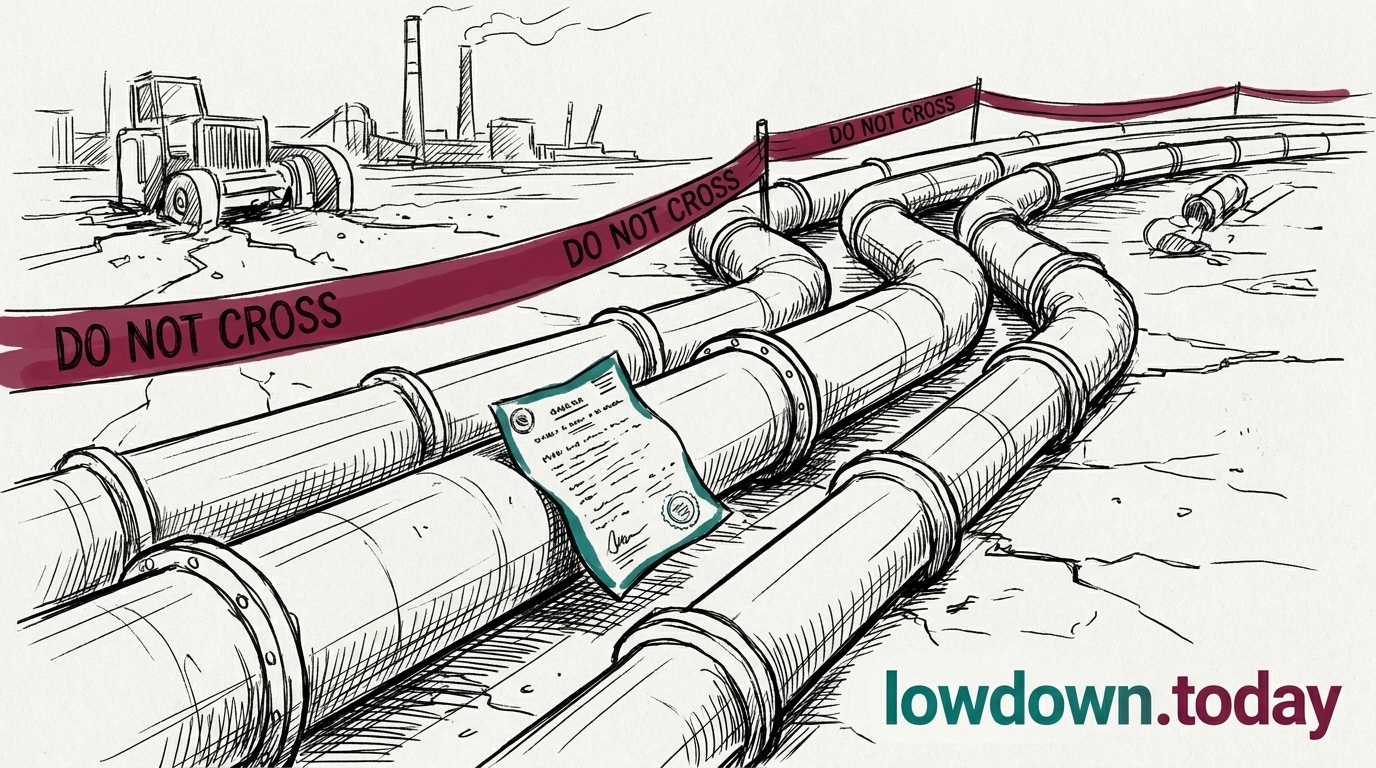
The full maritime services ban on Russian crude and petroleum products was the package's headline target and failed for want of unanimity. Hungary was identified in earlier reporting as the blocking party; Hill Dickinson noted the measure remains on hold 2. The blockage matters because the maritime services ban is the chokepoint instrument The Commission has designed to attack the shadow-fleet insurance and reflagging chain; without it, the 46 vessel addition to the port-access ban is a partial remedy, not a structural one. Arctic LNG capacity tightens; refined-product and crude flows through shadow-fleet hulls do not.

The legislative calendar has a domestic political edge that the Brussels readout does not show. Hungary's blocking vote landed inside a fortnight that also produced the Druzhba pipeline restart and the MOL infringement decision, all running off the same domestic political reset. Péter Magyar took office on 12 April; the pipeline resumed flow on 22 April; the maritime ban failed for unanimity 23 April. Whether the next sanctions iteration revisits the maritime services ban with revised text or trades it for asset-freeze tightening is the live operational question for European refiners watching primary-product flows.


Deep Analysis

In plain English

Russia has a special type of ship, called an Arc7 tanker, designed to carry LNG through Arctic ice. These ships were built in European yards and can only be serviced by European companies. Six of them are due for maintenance in the coming months. Under the 20th sanctions package, they can no longer use European dry-docks for that maintenance. The EU also wanted to go further and ban European companies from providing shipping services; insurance, pilotage, technical management; to vessels carrying Russian crude oil. But that broader ban needed every EU member to agree, and it didn't happen. So the shadow fleet of tankers that moves Russian crude around Western sanctions remains partially open for business.

Deep Analysis
Root Causes

The full maritime services ban required unanimity and failed. Hungary, whose Péter Magyar government is still in formation, has not yet publicly revised Budapest's position on maritime sanctions despite Magyar's pre-election pro-EU positioning. The Arc7 maintenance ban was achievable because it is narrowly targeted and does not directly threaten the crude supply chains of any single member state's refinery sector.

The shadow fleet circumvention route for crude remains open because the 46 vessels added to the port-access ban are a fraction of the total fleet. ICIS and Argus Media estimate Russia's shadow fleet at 600-700 vessels; 46 additions represent roughly 7% of the operational fleet, insufficient to materially alter aggregate crude export volumes.

What could happen next?
  • Consequence

    Six Arc7 vessels denied EU maintenance yards over the next maintenance cycle narrows Yamal LNG's Arctic export availability; deferred maintenance adds hull-integrity risk priced conservatively by marine actuaries.

    Short term · 0.78
  • Risk

    Russia's domestic Arc7 maintenance ramp, if it reaches parity with EU yard standards within 24-36 months, reduces the long-term deterrent value of the maintenance ban to near zero.

    Medium term · 0.6
  • Opportunity

    Hungary's shift under Magyar government creates a potential path to unanimity on the full maritime services ban in the 21st package, closing the crude circumvention route the 20th package left open.

    Short term · 0.5
First Reported In

Update #6 · REMIT II live; storage instrument absent

EU Council· 29 Apr 2026
Read original
Different Perspectives
Amsterdam-Rotterdam-Antwerp gas trading desks
TTF failing to fall with three bearish physical signals on 11 June confirms EUR 50 as a diplomatic ceiling rather than a physical floor; the Iran escalation premium of roughly EUR 2-3/MWh is the sole bid not corroborated by a molecule. Winter Cal-26 long against summer TTF short is the structural position FNB Gas's broken-mechanism verdict supports.
German capacity planners and industrial buyers
The cabinet-approved StromVKG entering Bundestag is a direct acknowledgement that EUR 124/MWh day-ahead power and a EUR -8 spark spread make Germany's grid unfinanceable on market terms; the 2031 first-capacity date is five years of exposure before any relief arrives from the 9 GW programme.
ACER and the European Commission
ACER's 11 June REMIT workshop and the 12 June guidance lock signal the surveillance regime entering its first full enforcement cycle under expanded cross-border powers, with 204 STORs in 2025 already doubling the prior year before the new powers activated. The Article 207 TFEU pipeline ban framing has produced no CJEU stay, validating the trade-measure classification strategy.
LNG spot traders and cargo routers
The JKM-TTF arb at USD 2.368/MMBtu sits above the USD 1.80-2.00 round-trip threshold, routing Atlantic spot cargoes east with positive carry and compressing European import volumes through the injection season. At USD 2.368 the arb still points Asia comfortably; the next weekly laycan window is the operative data point.
Hungary and Slovakia
Neither Budapest's February 2026 CJEU annulment challenge nor Slovakia's signalled application has produced a stay; with six days remaining the legal route has not bought the supply-protection time it was intended to. After 17 June, Hungary's long-term Gazprom-TurkStream contract to at least September 2027 becomes the sole remaining Russian pipeline import line for both states.
Hungary and Slovakia (Central European supply-security bloc)
Nine days from the 17 June short-term pipeline ban, neither Hungary's February CJEU challenge nor Slovakia's signalled application has produced a stay; the legal route has not bought the supply-protection time it was intended to. After 17 June, Hungary's long-term Gazprom-TurkStream contract to 2036 becomes the sole remaining Russian pipeline import route for both states.



