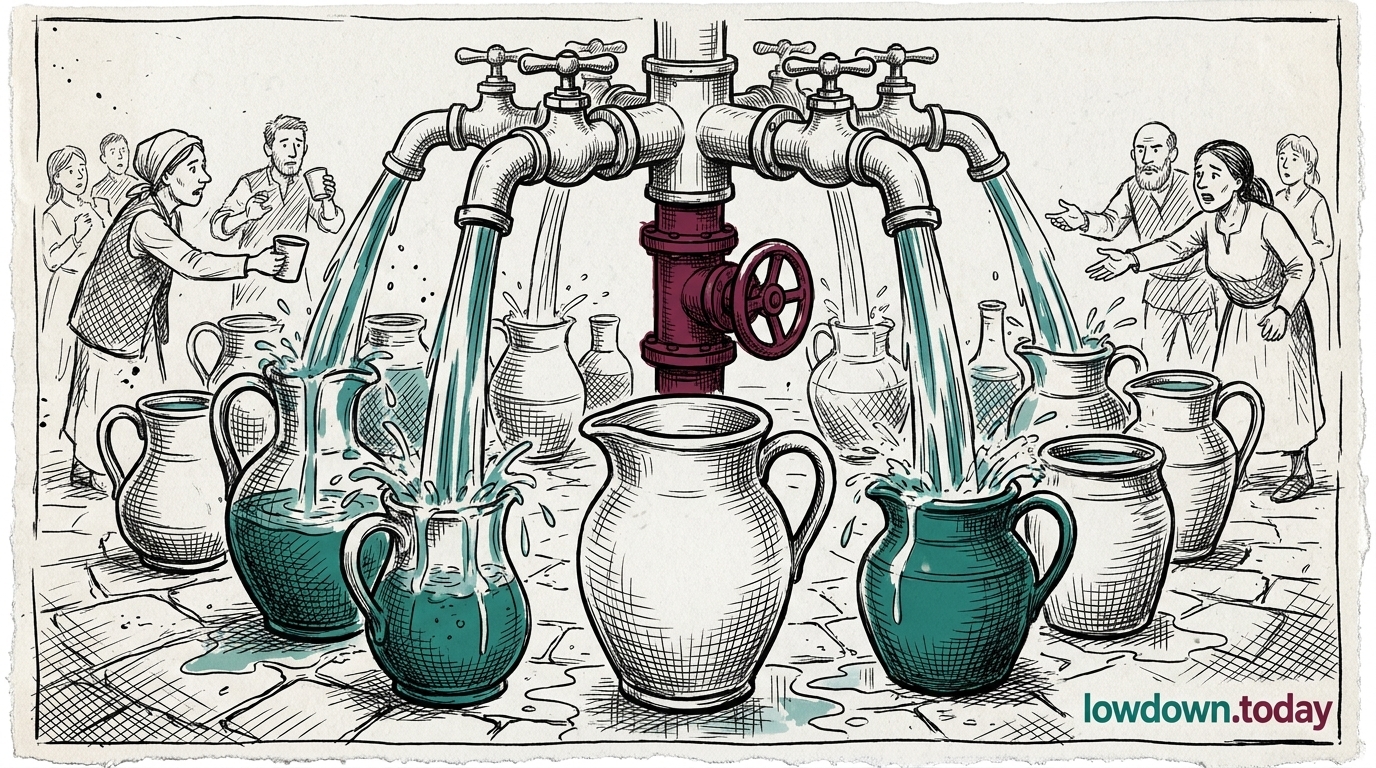
Germany's net gas storage injection collapsed from 530.7 gigawatt-hours a day on Sunday 19 July to 0.8 GWh/day on Tuesday 21 July, effectively flat, on GIE AGSI+ data, the daily platform Gas Infrastructure Europe runs1. National fill barely moved, 45.43% to 45.53% across the two days. The stall lands on the 20 July session when Germany's clean spark spread turned negative.
The EU aggregate kept climbing, reaching 54.41% on 21 July2, up from 50.03% on 5 July. France was still net injecting 147 GWh/day the same day3. The bloc's refill now runs on peripheral estates rather than the German anchor. At a negative spark, cavern injection economics sit underwater at the same gas print that pushes a German CCGT out of the money, so the gas Germany neither burns nor stores goes unbought.
That shifts the inverted spark from a generation-margin story to a winter-supply one. German withdrawal capacity of roughly 7 TWh a day outstrips injection capacity of roughly 4.3 TWh a day, so refill delayed into autumn cannot be recovered at the same daily pace. A July stall does not net out by November.
The stall spans only two gas days, 19 to 21 July, too short to call a structural halt. It could be a weekend gas-day effect or a single maintenance blip, and one week of AGSI+ prints will not settle it. What tilts the reading toward the economics is the EU-aggregate divergence: the injection that vanished is German-specific, and it vanished on the day the spark inverted. Treat it as a coincidence worth watching, not proof of a halt.




