Skip to content
Briefings are running a touch slower this week while we rebuild the foundations.See roadmap
European Energy Markets
26MAY

AccelerateEU skips gas storage injection mechanism entirely

3 min read
12:01UTC

Brussels published a consumer-relief package on 22 April with no gas storage injection incentive, 72 hours before the Russian LNG short-term ban takes effect.

EconomicDeveloping
Key takeaway

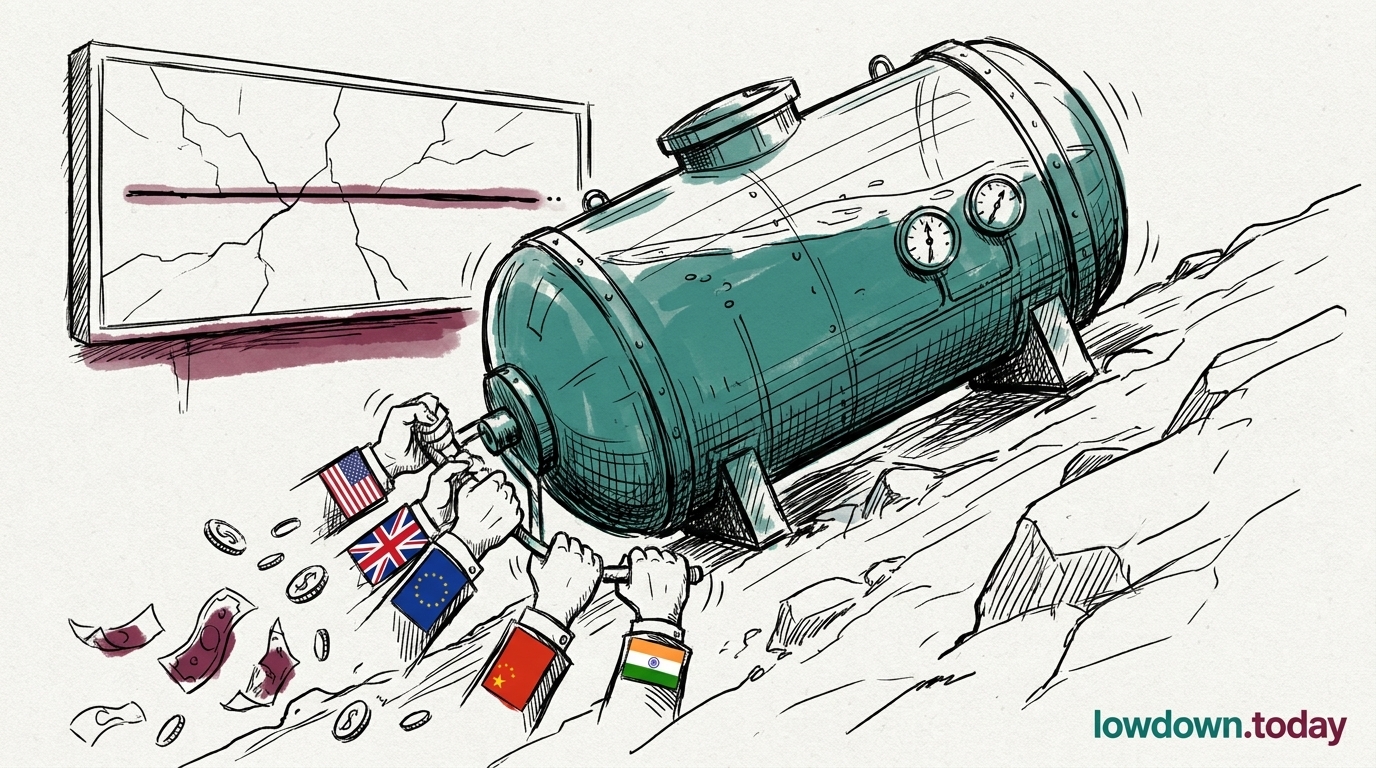
Brussels picked consumer relief over a storage mechanism, leaving the 469 TWh target to an unsubsidised market.

The European Commission published the AccelerateEU energy package on 22 April, confirming the template Bruegel had assessed as inadequate for storage security 1. The package delivers energy vouchers, a temporary disconnection ban, an electricity tax reduction Recommendation, a one-day-a-week remote-working recommendation, nuclear retention guidance, and state aid covering up to 50% of extra costs for agriculture, fishing, transport and energy-intensive industry through 31 December 2026. No storage-injection incentive, no mandatory refill mechanism, and no replacement for the storage levy abolished on 1 January 2026.

The five-finance-minister windfall letter is acknowledged but not converted into an instrument. A Power Purchase Agreement (PPA) Recommendation landed the same day, but multi-year PPA lead times make it a post-2027 investment signal rather than a summer 2026 fix. Consumer-relief is itself a political-constraint signal: the Commission picked the tools compatible with current coalition arithmetic rather than the tools that would have closed the injection gap.

The informal European Council in Cyprus on 23-24 April is the only remaining venue where the storage question could be reopened before Friday's Russian LNG short-term ban and the REMIT recast entry both land. DG Energy's 20 April explainer, which still reads 'no immediate security of oil or gas supply concerns' from Hormuz, was not updated after Tehran's re-closure. With no storage instrument and stale supply framing as the regulatory calendar tightens, the hedge against the three removals sits entirely on member state balance sheets.


Deep Analysis

In plain English

Europe needs to refill its underground gas tanks over the summer so there is enough gas to heat homes next winter. The EU's new energy package came out on 22 April but skipped any mechanism to subsidise or require that refilling, meaning gas companies have no financial reason to inject when it costs more to store than the gas is currently worth.

Deep Analysis
Root Causes

Two structural decisions created the conditions for AccelerateEU's storage gap. First, the Council voted to abolish the gas storage levy on 1 January 2026, removing the only cross-member mechanism for sharing injection costs, on the assumption that the 2022-2025 storage infrastructure build had solved the adequacy problem.

Second, the Commission's decision to lower the mandatory fill target from 90% to 80% in April 2026 reduced the headline gap but did not adjust the injection incentive structure. With the levy gone and the target reduced, operators at the Reden cavern and comparable sites face a rational disincentive: pay injection costs today against a summer-winter spread that does not cover them, and sit on a stranded gas position if TTF falls before winter.

What could happen next?
  • Risk

    If the European Council in Cyprus on 23-24 April does not reopen the storage question, the EU enters summer with no fiscal mechanism to close the injection deficit, leaving member state balance sheets as the only backstop.

    Immediate · 0.85
  • Consequence

    The PPA Recommendation published alongside AccelerateEU will only affect power procurement economics from approximately 2028 at the earliest, given multi-year contract lead times.

    Long term · 0.9
  • Risk

    With the windfall levy option still unresolved after the five-minister letter, forward gas contracts face an uncertainty premium until the Commission formally closes or opens that instrument, likely at or after the Cyprus summit.

    Short term · 0.75
First Reported In

Update #4 · AccelerateEU skips gas; three removals land

European Commission DG Energy· 22 Apr 2026
Read original
Causes and effects
This Event
AccelerateEU skips gas storage injection mechanism entirely
A consumer-relief template with no supply-side instrument leaves the 469 TWh summer injection arithmetic to the unaided market at a moment when summer-winter spreads are inverted.
Different Perspectives
Cefic and European industrial gas offtakers
Chemical manufacturers running at 62-68% utilisation face mandate-funded storage that secures volume at above-commercial prices without reducing gas costs. A EUR 35bn refill bill, if confirmed, flows back through regulated network tariffs, adding directly to industrial energy costs already named by BASF and INEOS as structural.
OIES and energy research institutions
Bruegel and OIES have not published a revised refill cost model at EUR 47-51 TTF with sub-0.4 pp/day pace. The EUR 35bn mid-range is drifting into use as the operative sub-80% November consensus, and the 11 June ACER workshop is the next venue where EU-level storage instrument advocacy can surface.
Equinor upstream gas
The Troll A compressor fault removed 34.6 mcm/day, stacked on Hammerfest, yet TTF fell 8.1% on Iran news the same day. Norwegian supply disruptions carry no price premium while Hormuz dominates; Equinor's 31 May Troll restart is a first estimate and the 2025 Hammerfest compressor fault of the same class slipped 24 days.
German Economy Ministry and Bundesnetzagentur
Berlin confirmed on 20 May it will not introduce a summer injection-incentive scheme, leaving Germany as the EU's only major unincentivised market after the storage levy lapsed on 1 January 2026. Commercial injectors apparently used the 18 May EUR 50 spike to lock winter supply cost rather than book against a structurally negative strip.
CRE and French gas operators
CRE's 100% mandatory booking order funds French injection regardless of the inverted strip, providing the EU aggregate cover that masks Germany's gap. The French position is insulated from TTF price moves but exposed to CRE's annual renewal cycle, a political risk rather than a commercial one.
Amsterdam-Rotterdam gas trading desks
TTF's 8.1% crash on a deal headline despite 50-plus mcm/day of verified Norwegian outages settled the EUR 50 question: it is a diplomatic ceiling, not a floor, and the short EUR 50-strike summer position keeps paying until Iran resolves. EBN's price-insensitive mandate buying tightens the prompt but the EUR 233m budget cap is a known position risk.
