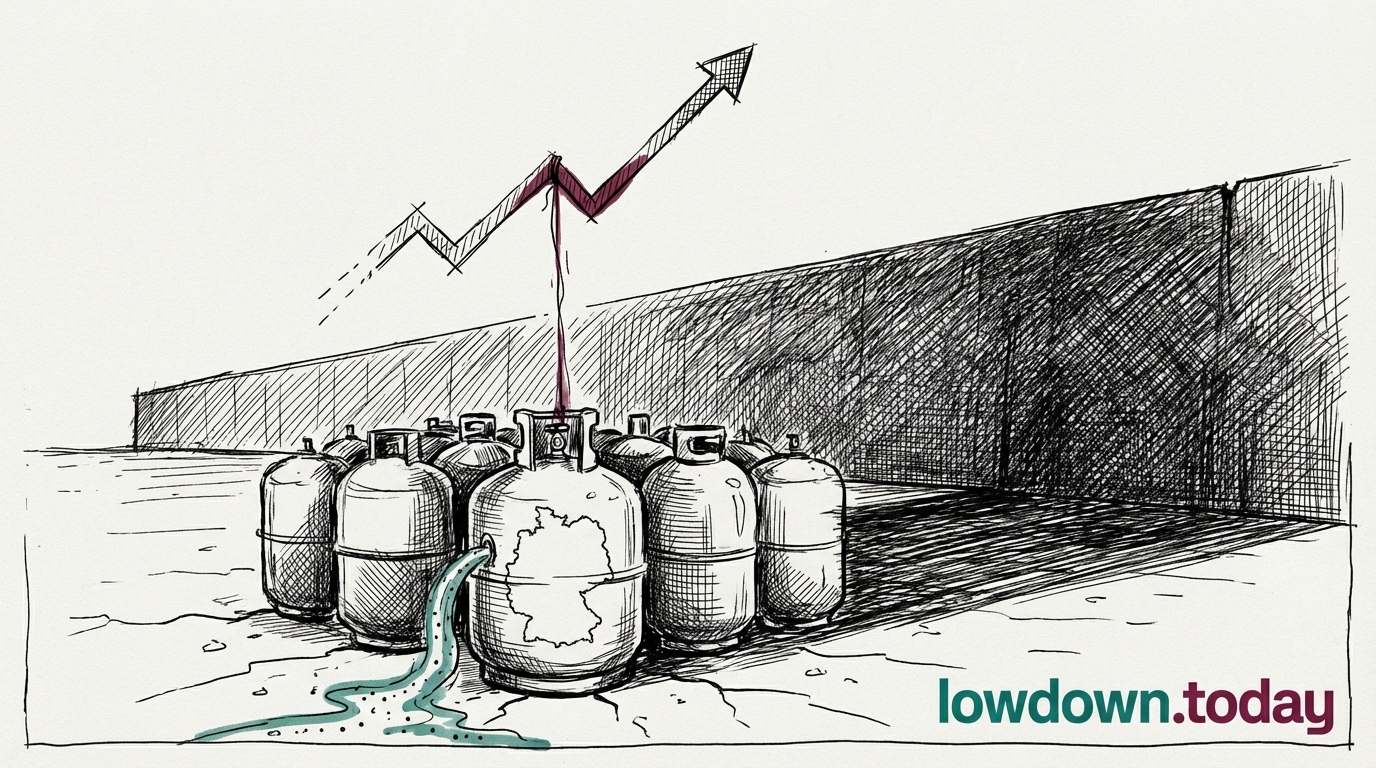
Finance ministers of Germany, Italy, Spain, Portugal and Austria wrote jointly to EU Climate Commissioner Wopke Hoekstra on 4 April calling for a new EU-wide windfall contribution on energy company profits, modelled on the 2022-23 solidarity levy 1. Eurozone inflation rose to 2.5% in March from 1.9% in February, largely on energy.
The political mechanism is familiar from the 2022 solidarity levy: governments facing renewed household cost-of-living pressure look for a revenue instrument that does not require direct fiscal transfer and lands on politically visible corporate profits. The signatories are the five member states running the highest consumer-facing gas tariffs relative to pre-2022 baselines, and the Ember analysis showed EU household gas bills still 16% above 2021 levels .
the Commission's position is more constrained than the 2022 moment. The reduced 80% November storage target is already a concession to the supply-side difficulty of the Bruegel EUR 35 billion refill ; stacking a windfall contribution on top of a Russian LNG ban implementation in the same fortnight compresses the room for negotiation with industry. If adopted, the levy redistributes cost from consumer to energy-profit balance sheets; if deferred, it becomes a campaign issue in member states with 2026 elections on the calendar.
The operational read for energy-sector finance leads is that the 4 April letter is a forward commitment, not a proposal. It places a funded position on the table before the 40th Gas Regulatory Forum convenes in Madrid on 29 April context, which means the Forum's agenda now includes a redistribution argument the Commission did not choose to open.





