Skip to content
Briefings are running a touch slower this week while we rebuild the foundations.See roadmap
Drones: Industry & Defence
7JUN

Perennial wins first JIATF-401 IDIQ at $500M

4 min read
11:27UTC

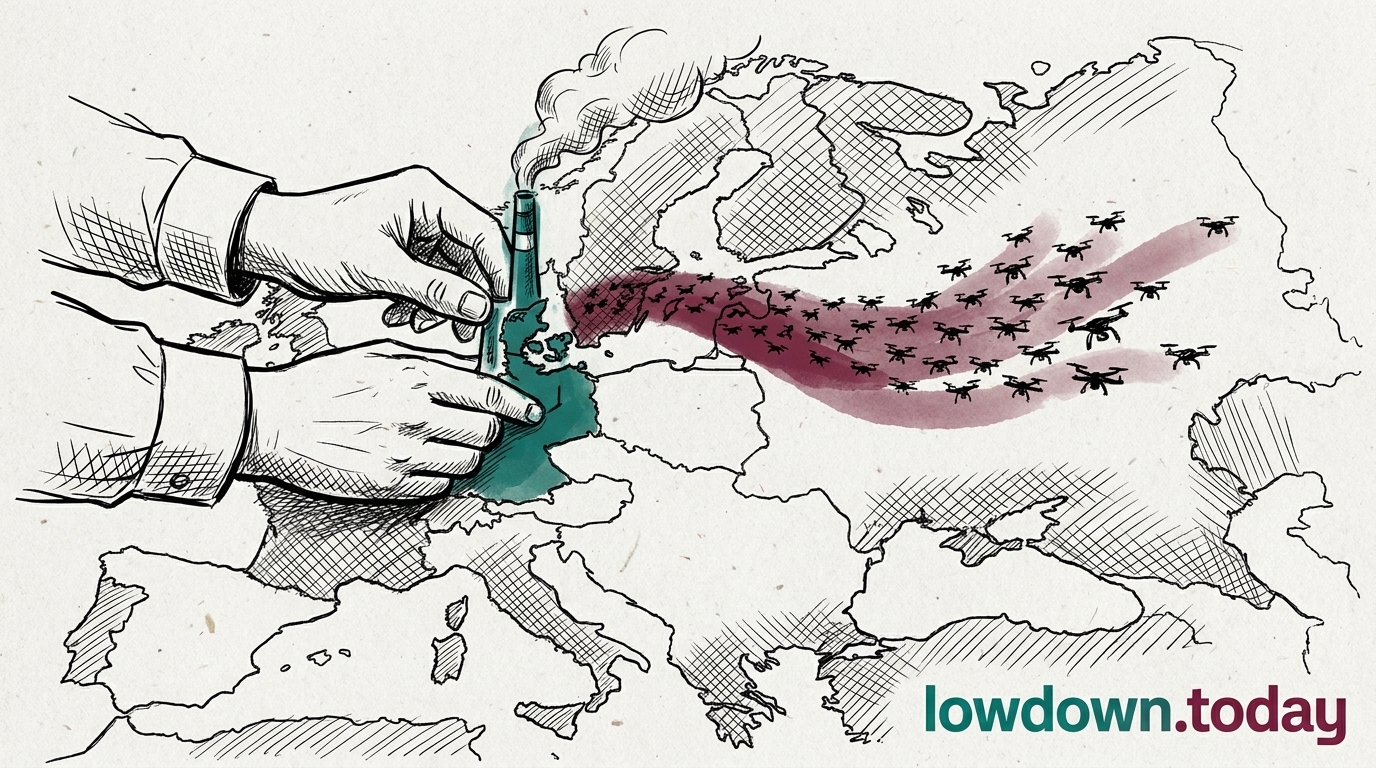
Joint Interagency Task Force 401 named Perennial Autonomy its first counter-drone IDIQ holder on Tuesday 19 May, a $500 million three-year ceiling for Eric Schmidt's three-year-old Merops outfit. Twenty-four hours later, Perennial put a Munich production line on the deal.

TechnologyDeveloping
Key takeaway

JIATF-401 has its first named IDIQ holder, and that holder has a Munich line within 24 hours.

Perennial Autonomy landed the first named counter-drone IDIQ (indefinite-delivery, indefinite-quantity vehicle) ever awarded by Joint Interagency Task Force 401 on Tuesday 19 May, a $500 million three-year ceiling. The award covers three platforms: the Merops air-to-air interceptor at roughly $15,000 per unit, the Bumblebee quadcopter and the Hornet mid-range strike drone 1. Twenty-four hours later, Perennial named Munich-based Twentyfour Industries as the European production partner for Merops, locating manufacturing near Munich for NATO supply 2.

JIATF-401 was previously known only as the institutional vehicle for the Iran-Gulf counter-drone data feed into Golden Dome ; on Tuesday it acquired its first named platform contractor. That contractor, founded in 2023 by Eric Schmidt as Project Eagle and rebranded from White Stork, took roughly six months to move from a 10,000-Merops Gulf emergency deployment to an institutional procurement ceiling. The Schmidt-to-JIATF-401 trajectory ran faster than Anduril's comparable Ghost-X pull in early April, a $16.8 million sole-source ISR award , not an IDIQ.

The procurement arithmetic sits at $15,000 per Merops against roughly $3 million for a PAC-3 MSE interceptor, a 200-to-one cost ratio against a missile defence round that is in any case sized for ballistic, not drone, threats. Merops earned that ratio in Ukrainian combat, where the airframe has been credited with destroying more than 4,000 Russian drones 3. The Munich production tie validates the transatlantic supply assumption Western planners have leaned on since Dragoneer led Helsing's $18 billion round , and it gives the Bundeswehr a domestic call option on Merops without disturbing the US contract.

IDIQ ceilings are not orders, and Perennial's $500 million sits inside a programme JIATF-401 has not yet exercised. A single ceiling does not displace Anduril's broader Counter-UAS enterprise contract, nor does it secure Perennial against later entrants such as AeroVironment, RTX and the Ukrainian interceptor makers being shopped across NATO at $1,000 to $3,000 per unit 4. The naming choice still resets the benchmark: once a task force at this level picks an IDIQ holder, every competitor recalibrates against that contract structure.

Deep Analysis

In plain English

Perennial Autonomy makes a small drone called Merops that catches and destroys other drones in mid-air. It costs about $15,000 per unit, which sounds expensive until you compare it to the missile-based systems it replaces, which cost around $3 million each. In Ukraine, Merops destroyed more than 4,000 Russian drones. On 19 May, the US government signed a $500 million contract with Perennial giving it the right to order as many Merops as it needs over three years without running a fresh competition each time. Think of it as an approved vendor list with a credit limit. The day after, Perennial announced it will build Merops near Munich in Germany so European countries can buy them without the delays that come with US export paperwork.

Deep Analysis
Root Causes

Ukraine's wartime export ban, in force since February 2022, blocked direct transfer of Ukrainian interceptor designs to US procurement channels. That forced JIATF-401 to source from US-domiciled manufacturers building on Ukrainian combat data rather than from the companies that generated the data.

Perennial Autonomy is structurally the product of that regulatory gap: founded 2023, combat-tested in Ukraine, and institutionally positioned as the US-domiciled vehicle for technology the Pentagon could not buy directly from Ukrainian makers.

The Munich production partnership with Twentyfour Industries resolves a second structural constraint. NATO allies, including the Bundeswehr, cannot buy from a JIATF-401 IDIQ holder without creating a separate procurement chain. Locating production inside the EU, near Munich, gives European customers a domestic-source option that satisfies both EU procurement rules and NATO interoperability requirements without routing orders through the US contract.

What could happen next?
  • Opportunity

    European NATO members can use Twentyfour Industries' Munich production as a domestic-source justification to acquire Merops outside US foreign military sales channels, accelerating counter-drone procurement timelines by 12-18 months.

    Short term · Assessed
  • Risk

    Single-holder IDIQ structure may lock JIATF-401 into Merops pricing at $15,000/unit as Ukrainian interceptors at $1,000-$3,000 reach NATO-compatible quality standards, creating a three-year cost disadvantage for the US government.

    Medium term · Assessed
  • Meaning

    JIATF-401 naming its first IDIQ holder signals the task force has shifted from emergency deployment mode into sustained institutional procurement, a structural change that every counter-drone competitor must now recalibrate against.

    Short term · Reported
First Reported In

Update #9 · Schmidt's Perennial wins $500M drone deal

Defense News· 21 May 2026
Read original
Different Perspectives
Denmark (host nation)
Denmark accepted Fire Point's Skrydstrup plant after committing to bilateral defence co-production at the B9 Nordic summit in May; the facility sits beside a Danish F-35 base, sharing security perimeters. NATO has published no legal guidance on whether hosting Ukrainian weapons production converts Denmark into a co-belligerent, leaving the host-state obligation unresolved.
Russian Ministry of Defence
Russia's 117% YoY drone-output rise in April, accelerating from a 68% full-year 2025 baseline, validates the FPV mass-production doctrine and hands Moscow a cleaner targeting argument for the Skrydstrup plant than any hidden production line offered; a Ukrainian weapons facility on NATO sovereign territory is a legitimate military target under the laws of armed conflict.
Baltic NATO states (Latvia, Estonia, Lithuania)
Latvia deployed mobile drone-intercept teams on 29 May using domestic Origin Robotics and Eraser interceptors, the first kinetic Baltic border response to Russia's 117% output surge. The Baltic states are the primary target market for Ukraine's ten EU export offices, giving them direct commercial access to combat-tested interceptors their own manufacturers have not yet matched.
Pentagon / Joint Interagency Task Force 401
Two Ukrainian entrants in Drone Dominance Phase 2 and Red Cat's SEC-filed STE partnership bring combat-iterated Ukrainian designs into US procurement without triggering Foreign Military Sale approvals; the programme's performance-scoring methodology does not require US-origin hardware. Northrop holding the Common UAS Payload standard means a heritage prime captures interface revenue regardless of which startup airframe wins.
Ukrainian defence industry (Fire Point / Spetstechnoexport)
Fire Point's Skrydstrup construction start and Spetstechnoexport's Red Cat partnership execute Zelensky's 13 May Bucharest proposal: converting wartime production surplus into a state export apparatus, independent of US approval chains. For Ukraine, embedded manufacturing on NATO soil protects propellant supply from Russian strikes while generating hard currency the war effort needs.
Chinese drone manufacturers (DJI, Autel)
Autel's Ralls Corp Fifth Amendment filing and DJI's Ninth Circuit quantification of USD 1.56 billion in 2026 losses are parallel constitutional attacks on a classified-evidence exclusion mechanism; neither company can contest the intelligence allegations directly, so both are betting on due-process doctrine to reopen the FCC authorisation route.
