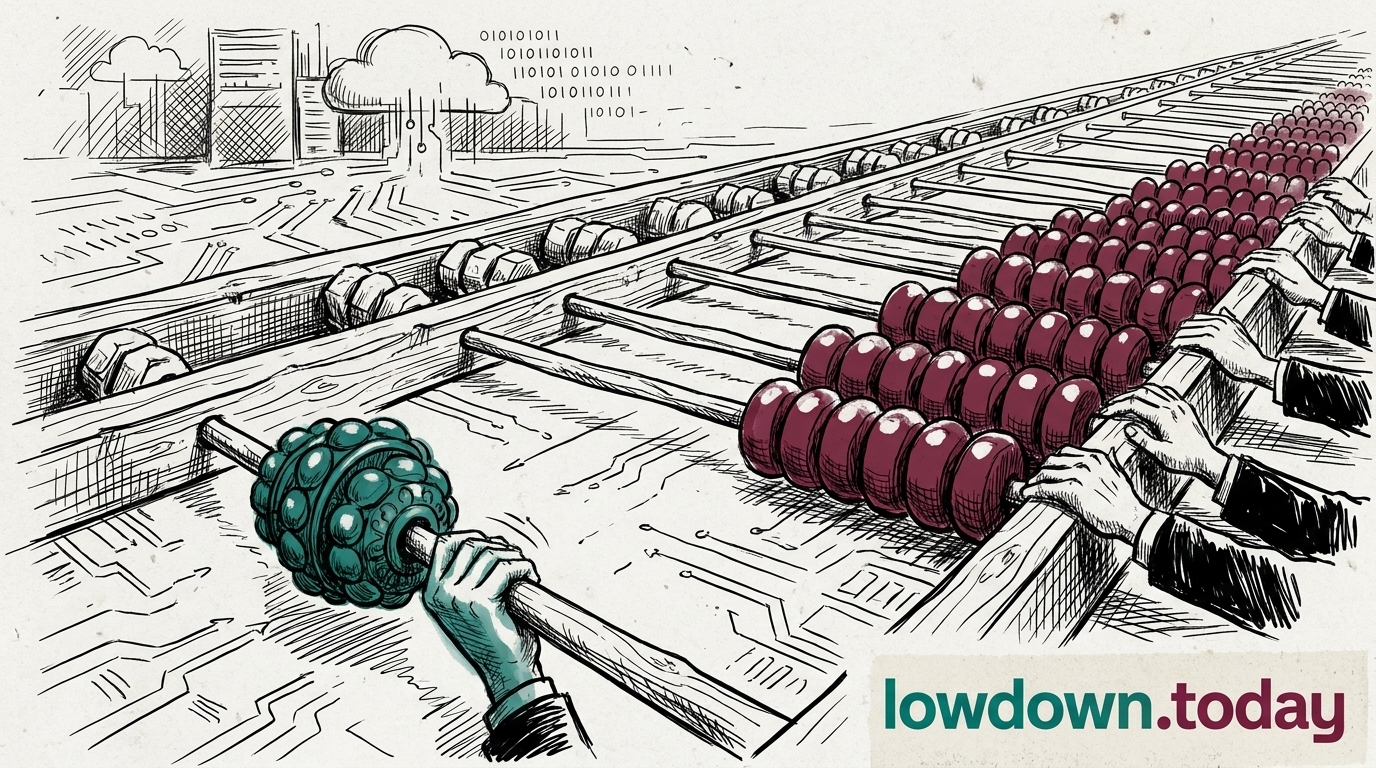
Amazon, Alphabet, Microsoft and Meta posted combined Q1 2026 capital expenditure of $110.75bn when results landed on Wednesday 29 April1. Amazon led at $44.2bn, followed by Alphabet at $35.7bn (up 107% year-on-year) and Microsoft at $30.88bn. Meta did not break out a separate Q1 number but raised its full-year range to $125-145bn, citing 'higher component costs and expanded data-centre capacity'. Alphabet raised full-year guidance to $180-190bn; on Amazon's earnings call Andy Jassy committed the company to roughly $200bn for the year.
The four are the cloud platforms on which OpenAI, Anthropic, xAI and the bulk of the enterprise AI market run their training and inference workloads. Q1 capex of this scale is the cleanest signal that boards approved their 2026 build plans before OpenAI's revision became visible, and chose not to walk them back when it did. Sundar Pichai told Alphabet's earnings call the company is 'compute constrained in the near term' with cloud backlog above $460bn, a figure that gives the raised guidance an underwriter rather than a speculator: the backlog is contracted demand, not modelled forecast.
The aggregate now firms above the $725bn annual figure flagged at the end of April. What it cannot yet answer is whether the spend reflects confidence in the demand profile or fear of being short on capacity when transformer slots close in 2027. Meta's component-cost reference points to the second reading; Pichai's backlog number points to the first. The two are not mutually exclusive, but the test arrives in the late-July Q2 earnings cycle, when boards will reset guidance against a quarter that has fully digested the OpenAI retreat.
The Microsoft figure carries a methodological caveat that matters for sectoral totals: Microsoft does not split data-centre capex from broader Azure spend in its 10-Q, so the $30.88bn includes an undisclosed non-DC portion. The combined $110.75bn is therefore an upper bound on the data-centre slice. Even on the more conservative read, the quarter is the largest concentrated build commitment the sector has posted, and it travels into Q2 against a softer OpenAI demand signal.



