What does Amazon's $200bn capex commitment mean for global grid capacity?
Timeline for Andy Jassy
Met Prime Minister Modi on 25 June and announced $48bn total India commitment
Data Centres: Boom and Backlash: Amazon lifts India bet to $48bnCommitted to approximately $200bn full-year capex on earnings call
Data Centres: Boom and Backlash: Hyperscalers post record $110.75bn Q1 capexMentioned in: Amazon FCF down 95% as capex hits $200bn
AI: Jobs, Power & MoneyMentioned in: Amazon cuts 30,000 corporate jobs
AI: Jobs, Power & MoneyBackground
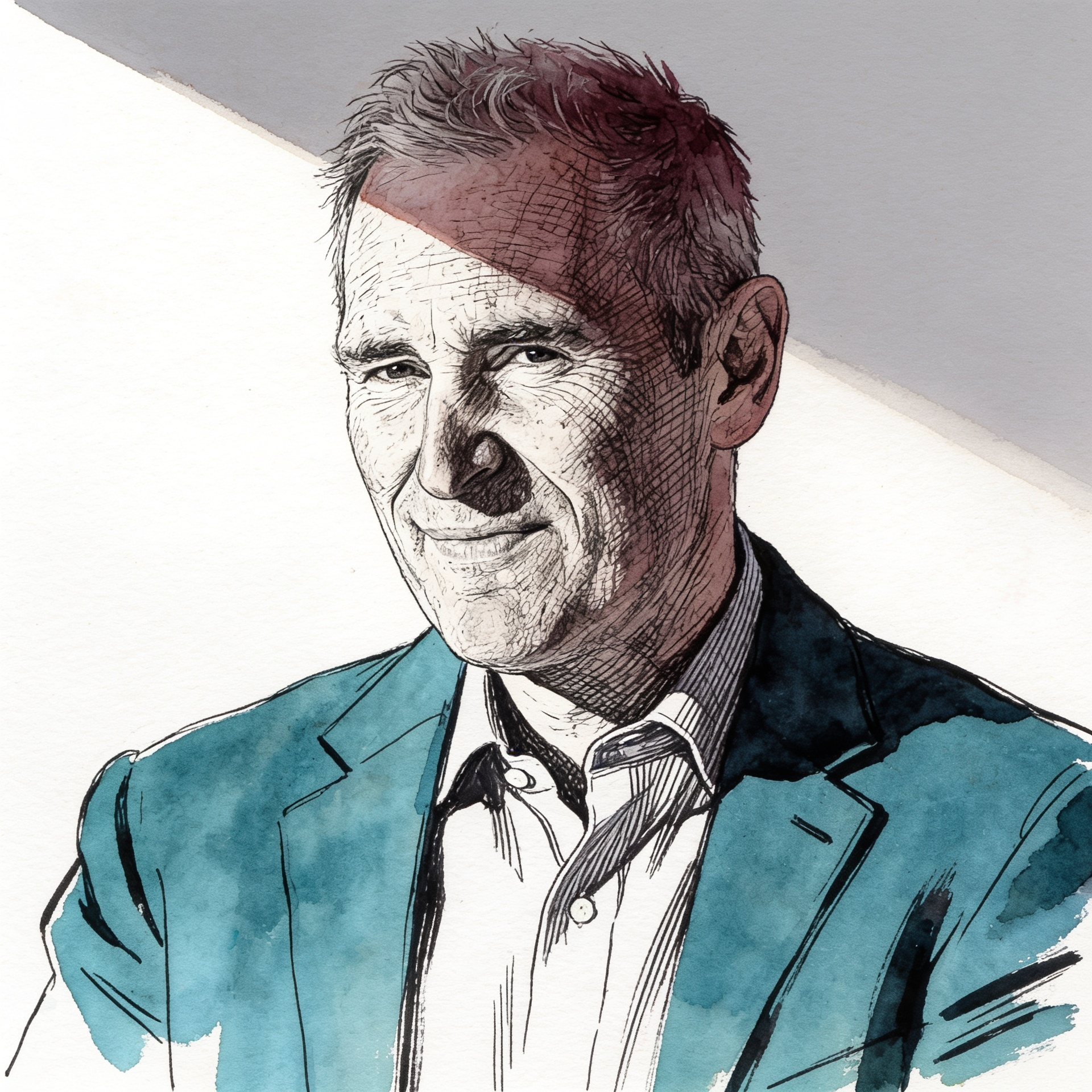
Andy Jassy (Born 1968) is President and CEO of Amazon, where he succeeded Jeff Bezos in July 2021. He is the architect of Amazon Web Services, which he conceived with Bezos in 2003 and built into the world's largest cloud platform. As CEO, Jassy has staked Amazon's near-term future on generative AI infrastructure, committing the company to roughly $200 billion in capital expenditure for 2026, the largest annual capex figure in Amazon's history and the largest single-company commitment in the Q1 2026 hyperscaler reporting cycle.
Jassy graduated cum laude from Harvard College and holds an MBA from Harvard Business School. He joined Amazon in 1997 as a marketing manager. Under his leadership, AWS grew from an internal experiment into a division generating over $100 billion in annual run-rate revenue. The $200 billion 2026 capex commitment — up from $75 billion guidance in 2025 — reflects both the explosive demand for AI inference capacity and the long lead times required for large-scale data-centre construction.
Jassy's position in the data-centre supply race is structurally different from his hyperscaler peers: Amazon's retail fulfilment network gives it a land and power estate that competitors cannot replicate quickly. His decision to expand rather than pause AWS construction, even as regulatory pressure mounts over grid impact, defines one of the key demand-side drivers of the transformer and grid interconnection bottlenecks that have emerged across 2026.
Why did Andy Jassy commit $200 billion in Amazon capex for 2026?
Who founded Amazon Web Services?
How does Amazon's data centre strategy compare to Microsoft and Google?
