Skip to content
Welcome, thoughtbot's Giant Robots listeners!Start here
Data Centres: Boom and Backlash
15NOV

Malaysia bills data centres' unused grid

3 min read
23:07UTC

Johari Abdul Ghani told Malaysia's parliament on 15 October that a data centre booking 200 MW of grid and drawing 100 MW now pays for all 200.

IndustryDeveloping
Key takeaway

Malaysian data centres now pay for every megawatt of grid they reserve, whether they use it or not.

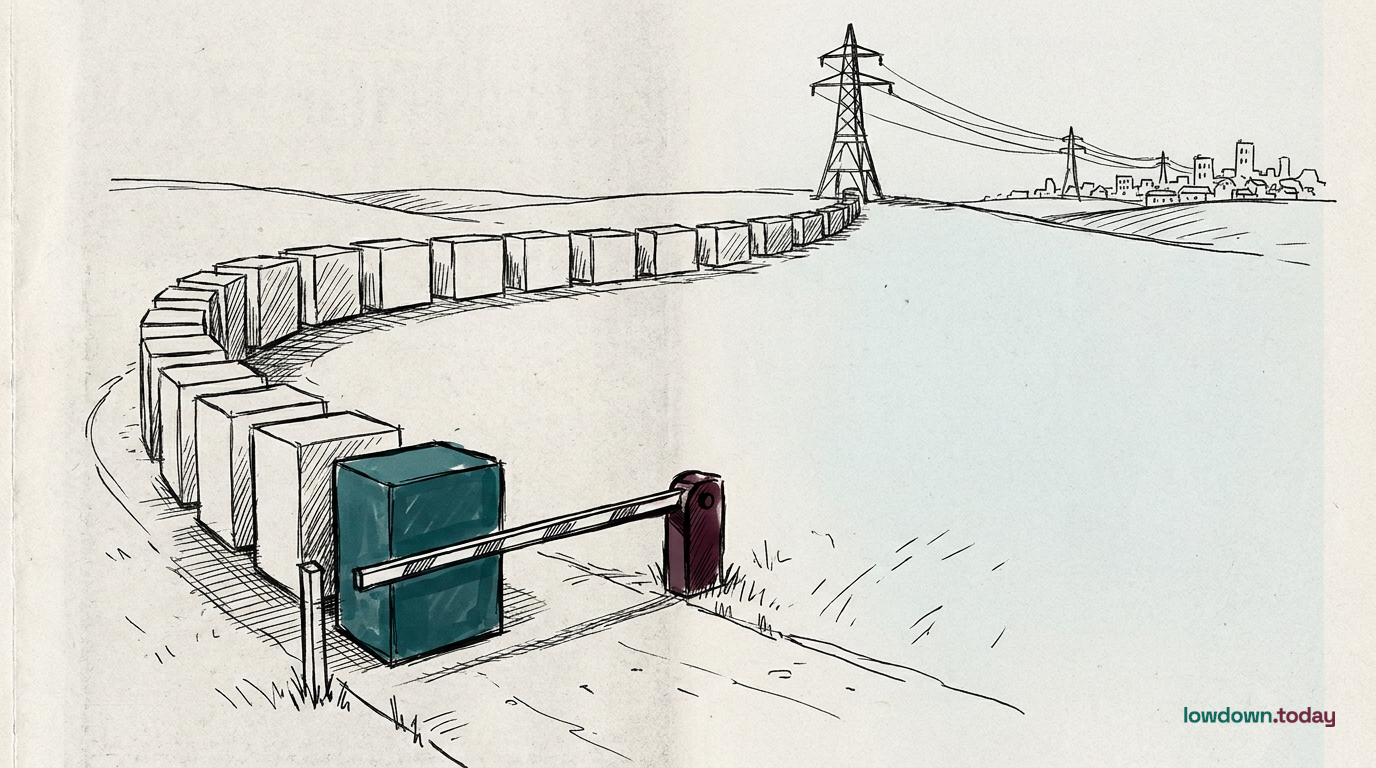
A data centre in Malaysia that books 200 megawatts (MW) of grid capacity and draws 100 MW will now pay for all 200. Johari Abdul Ghani, the Investment, Trade and Industry Minister, set out the rule in the Dewan Rakyat (the lower house of Parliament) on 15 October⁠1. Operators also pay a market electricity tariff set apart from other customers' rates, carry the cost of upgrading the transmission network of Tenaga Nasional Berhad (TNB), the national utility, recycle their water and buy at least 3% of their services locally⁠2.

"It is no longer about cheap energy," Johari said, according to Free Malaysia Today. He told state governments to be careful when approving new applications⁠3.

Some 57 data centres run on 6,237 MW supplied by TNB, while 60 more projects at approval or construction stages want 11,172 MW, almost double the operating fleet and roughly the capacity of eleven large nuclear reactors, the minister said as reported by Free Malaysia Today⁠4. A different count in June, of contracted capacity, put 38 projects at 5.9 gigawatts (GW), more than two-fifths of everything TNB had contracted to customers. The two tallies measure different things and cannot be joined into a trend.

A developer who books capacity before signing a tenant now pays for it every month, on take-or-pay terms like those of a gas pipeline contract. Total reported investment in the sector stands at 385.7bn Malaysian ringgit (RM385.7bn), and the minister put its economic contribution at RM14.1bn this year, up from RM900m in 2021⁠5. Johor, the southern state across the strait from Singapore, halted approvals over water in April; the federal government has now chosen to price access rather than stop it.

Deep Analysis

In plain English

Data centres are warehouses full of computers that run websites, apps and artificial intelligence. They use huge amounts of electricity. In Malaysia, companies building them ask the national power company, Tenaga Nasional Berhad, to set aside grid capacity. Some ask for far more than they use, which blocks others. The government now makes them pay for everything they set aside, used or not. It is like paying for a whole restaurant table you reserved, even if half your party never turns up.

Deep Analysis
Root Causes

Malaysia regulates Tenaga Nasional Berhad under Incentive-Based Regulation, which recovers approved network spending through tariffs paid by every customer. Until now a developer could book transmission capacity cheaply while the upgrades it triggered flowed into everyone's base tariff.

Singapore's 2019 freeze pushed regional demand across the causeway into Johor, where land was cheap and the grid had headroom. That displacement, not domestic demand, explains why the queue grew faster than the operating fleet.

Water compounds the grid problem. Johor halted approvals over water in April, so the federal water-recycling condition now applies the state's constraint nationwide.

What could happen next?
  • Consequence

    Developers holding capacity without signed tenants may release part of their bookings, shortening the queue behind them.

    Short term · Assessed
  • Precedent

    Other Southeast Asian grids facing Johor-style queues gain a worked model for charging on reservation rather than use.

    Medium term · Suggested
  • Risk

    If hyperscale tenants absorb the charge easily, the queue may shrink only at the speculative fringe while water stress persists.

    Medium term · Suggested
First Reported In

Update #16 · Malaysia bills data centres for idle grid

Free Malaysia Today· 18 Oct 2026
Read original →
Different Perspectives
Mooresville Board of Commissioners
The town board north of Charlotte voted unanimously on 2 November to stop taking data-centre applications for 12 months. Commissioners cited environmental and electrical impacts, joining other North Carolina towns that have paused new projects.
Naver
Naver
Naver signed a US$9bn contract under which a Brookfield vehicle owns the GPUs and buildings and sells computing to Naver Cloud. It guarantees the fees for up to eight years, which also unlocked Nvidia's US$1bn equity investment.
Saudi Aramco
Saudi Aramco
Aramco closed its purchase of 49% of HUMAIN on 1 November, paying about US$2.6bn in cash and adding its own AI, compute and digital assets. Chief executive Amin Nasser cast the deal as a gain in technology standing.
NEXTDC board
NEXTDC board
The board called the Goodman and Digital Realty stake opportunistic and said it had received no takeover proposal. It enters the 20 November meeting with a new chairman search, a 10% fee cut and a spill resolution on the agenda.
Brasscom
Brasscom
Sergio Sgobbi of Brazil's technology industry association says investors face uncertainty until the Redata rules are public. Members need rulings on gas and the CDE levy after Lula said data centres must build their own power.
Johari Abdul Ghani, Malaysia's investment, trade and industry minister
He told the Dewan Rakyat in October that data centres pay for all the grid capacity they reserve and fund upgrades to TNB's network. Google's 4 November pledge repeats those terms as its own.

Written with AI from Lowdown's published reporting. Not individually reviewed by an editor. Editorial standards.