Skip to content
Briefings are running a touch slower this week while we rebuild the foundations.See roadmap
Cuba Dispatch
4JUN

GAESA wind-down window shuts 5 June

3 min read
11:38UTC

OFAC's legal cover for foreign firms still transacting with the Cuban military's business empire expires on Friday 5 June, the day after this briefing publishes.

PoliticsDeveloping
Key takeaway

Foreign firms lose their legal exit cover from GAESA on Friday 5 June, the day after publication.

OFAC (the US Office of Foreign Assets Control), the Treasury bureau that administers US sanctions, set a wind-down window for foreign firms doing business with GAESA (Grupo de Administración Empresarial, the Cuban military's business conglomerate). That window closes on Friday 5 June 2026, the day after this briefing publishes. The mechanism was established by Executive Order 14404 (EO 14404), which named GAESA, and which the State Department widened on Monday 18 May to eleven officials, the interior ministry, the police and the Directorate of Intelligence .

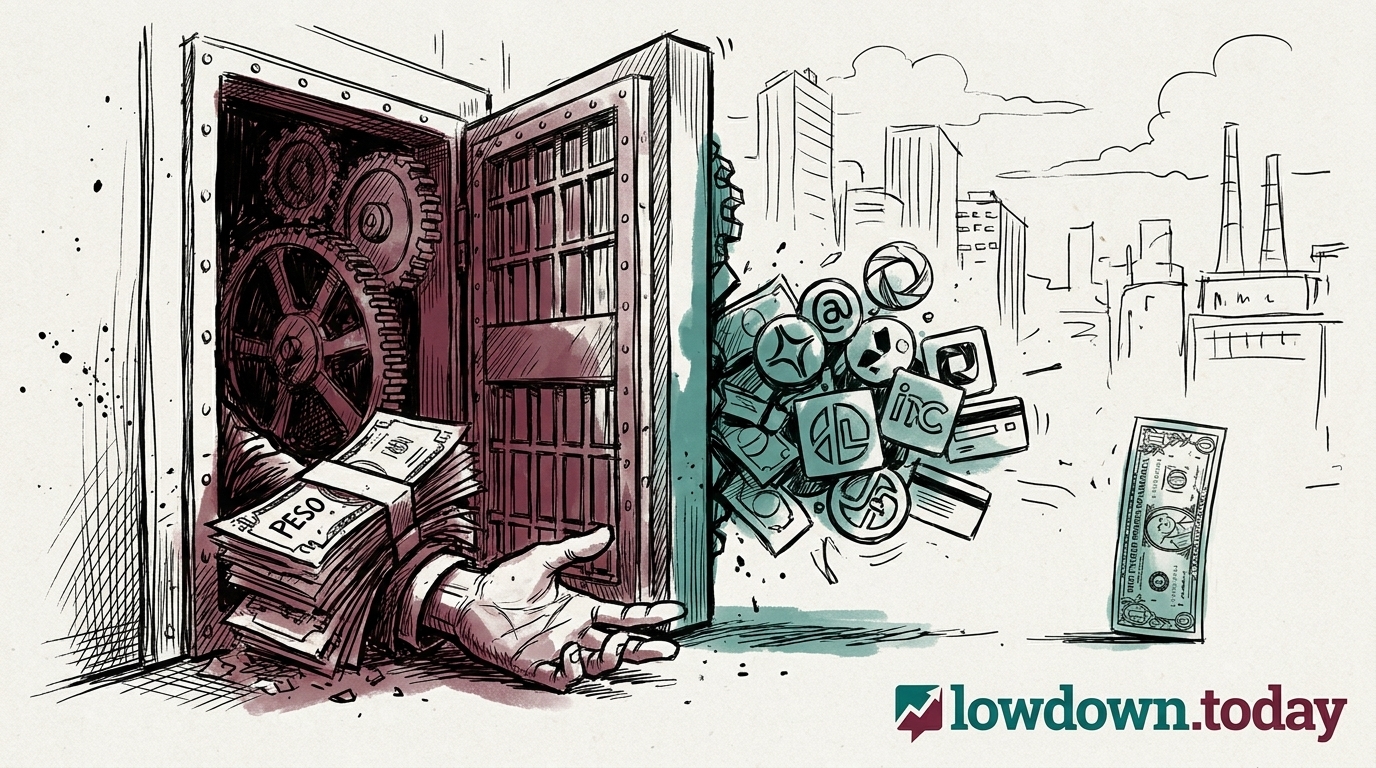
The wind-down rule reaches narrowly but cuts deep. Any foreign person or foreign bank still transacting with GAESA after Friday loses the legal cover that let them exit cleanly, and inherits secondary-sanctions exposure on their unrelated US business 1. GAESA controls roughly 60 per cent of Cuba's hard-currency economy, including its hotels, ports and import infrastructure, so a deadline aimed at the conglomerate reaches every commercial partner downstream of it.

Nothing new was listed this week. The 18 May wave was the last designation; everything since is the downstream effect of the deadline forcing firms to decide before the door shuts. The case for the wind-down as the trigger rests on timing against a hard legal date, documented by US sanctions counsel rather than by Havana or Washington, not on either government's framing.


Deep Analysis

In plain English

The US Treasury department (called OFAC) had given foreign companies a short window to legally stop doing business with GAESA, a Cuban military-run holding company that controls most of Cuba's hotels, shops, and imports. After 5 June 2026, any company still doing deals with GAESA risks being cut off from the US financial system, even if the company itself is Spanish, Canadian, or German. This matters because almost every foreign hotel or retailer on the island runs through GAESA one way or another. The deadline is driving a mass exit: any company that keeps dealing with GAESA past 5 June would be exposing its entire global business to US sanctions. Think of it as a legal countdown clock that makes staying on the island too costly to risk.

Deep Analysis
Root Causes

GAESA's structural position is the foundational condition: it controls an estimated 60 per cent of Cuba's hard-currency revenues through subsidiaries spanning hospitality (Gaviota), retail (TRD), construction (GECYT), and import-export. Any foreign firm operating a hotel, tour desk, or retail franchise on the island will route revenue through GAESA-linked entities, making the conglomerate's SDN designation a de facto ban on commercial engagement, not merely a targeted measure.

Dollar-clearing dependency provides the second structural route. The SWIFT-adjacent US correspondent-banking system means that even a wholly non-US transaction; a Spanish hotel chain paying a French linen supplier in euros; carries US jurisdiction if either bank clears through New York. The correspondent-banking mechanism converts a Cuba-specific OFAC action into a global compliance requirement, and the 5 June deadline activates that mechanism universally.

What could happen next?
  • Consequence

    GAESA-linked Cuban tourism revenues fall by an estimated 35-40 per cent from their already-depressed 2025 baseline as internationally marketed rooms lose their management chains.

    Immediate · Assessed
  • Risk

    Foreign firms that continue transacting with GAESA after 5 June face secondary-sanctions exposure that may include correspondent-bank de-risking of their unrelated US business.

    Short term · Assessed
  • Precedent

    The wind-down doctrine established for Cuba extends OFAC's 2018 Iran playbook to a Western Hemisphere target, validating the mechanism for future use against Venezuela or Nicaragua.

    Long term · Assessed
First Reported In

Update #6 · Cuba sanctions hit the cash economy

14ymedio· 4 Jun 2026
Read original
Causes and effects
This Event
GAESA wind-down window shuts 5 June
A single date on a US Treasury calendar, not a new sanctions listing, is what turned the GAESA designation into a real-economy siege this week.
Different Perspectives
Spanish hotel operators
Meliá and Iberostar exited GAESA-linked Cuban hotels before 5 June to protect their broader Caribbean and global portfolios from secondary-sanctions exposure. Spain's commercial stake in Cuban tourism makes Madrid a structural veto risk if the EU advances Cuba-specific restrictive measures under Ollongren's mandate.
Cuban opposition / OCDH
After the US Senate killed a Cuba war-powers check 51-47 on 29 April, the Madrid-based OCDH formally demanded an EU reparations fund for political prisoners on 4 June, routing its pressure campaign to Brussels where the EU's existing restrictive-measures machinery, used previously against Venezuela and Belarus, does not require a Senate majority.
China
China
Beijing paired a birthday telegram to Castro with no operational commitment on fuel or credit, using the occasion to signal non-abandonment ahead of the G20 without incurring the cost of a replacement tanker. China has no military-logistics presence in the Caribbean comparable to Soviet-era capacity.
Russia
Russia
Moscow sent an official birthday message to the indicted Raúl Castro on 3 June, a deliberate legitimacy signal to Global South partners, while Sovcomflot has announced no replacement for the Universal's 270,000-barrel cargo that turned away on 26 May. The pattern mirrors Soviet public solidarity during the 1962 crisis while privately managing exposure.
Trump administration / OFAC
Washington let a calendar date do the work: no new designations were needed after 18 May, and the looming 5 June expiry, which strips foreign firms' legal-exit defence, drove the hotel exodus and card suspension without a second executive action. The administration has not publicly commented on the compound utility failures.
Cuban government and citizens
Havana's only countermeasure this week was a Granma editorial defending GAESA by name, conceding the designation is biting hard enough to require a public answer. Residents of Havana and Guanabacoa banged pots on the nights of 3-4 June, the first confirmed capital protests, after gas, water, and the state milk ration all failed.