Skip to content
You can now search across every topic, entity and event.What's new
Autonomous Systems: Land & Sea
12AUG

Stark closes €500m above its own ask

3 min read
14:17UTC

Stark Defence closed a €500m round at above €3.5bn on 23 June, led by Sequoia and Peter Thiel's Founders Fund, with 80% earmarked for factories.

TechnologyDeveloping
Key takeaway

Stark raised €500m at above €3.5bn with no volume production yet, priced on the option to build.

Stark Defence closed a €500 million round at a valuation above €3.5 billion on 23 June, above the €300 million to €500 million it had been seeking three days earlier 1. Stark is a Berlin-based maker of drones and loitering munitions. Sequoia Capital and Peter Thiel's Founders Fund led the round, with the NATO Innovation Fund and roughly fifty other investors alongside. More than 80% of the capital is earmarked for manufacturing, with new production lines planned across Germany, the UK and Ukraine.

The firm now sits on a German framework contract worth up to €2.8 billion, far above the €270 million call-off booked in the spring . Its Virtus loitering munition, the company's investors say, assembles in about ten minutes.

Investors priced the round above Stark's own ask while the company still has no volume production behind it. A Bundeswehr framework slot is being treated as collateral for a pre-revenue mark, the same option-to-produce bet running through Anduril and Helsing. If the German, British and Ukrainian lines slip, the €3.5 billion valuation stays untested by a single delivered unit.

Deep Analysis

In plain English

Stark Defence is a German company, founded only in 2024, that makes an autonomous flying bomb called Virtus, which finds and strikes a target on its own before detonating. On 23 June it raised €500 million from investors, at a value of more than €3.5 billion, roughly what a mid-sized listed company might be worth, despite Stark not yet proving it can build these weapons in large numbers. The money came from well-known venture capital firms, including Sequoia Capital and Peter Thiel's Founders Fund, plus NATO's own investment arm and around fifty other backers. More than 80% of it is earmarked for building factories in Germany, Britain and Ukraine, rather than for research.

Deep Analysis
Root Causes

Stark's valuation rests on a structural feature of German defence procurement: framework contracts like the Bundeswehr's up-to-€2.8 billion Virtus agreement set a ceiling and a supplier list, but individual call-off orders, not the ceiling, are what actually fund production, and Berlin has not disclosed how much of that ceiling is contracted versus optional.

Investors including Sequoia and Founders Fund are pricing Stark, Anduril and Helsing alike on the assumption that Ukraine-honed autonomous-strike demand will keep converting European framework ceilings into real orders, a bet that has not yet been tested by a full economic cycle.

What could happen next?
  • Risk

    If the Bundeswehr's Virtus framework converts to call-off orders at a pace closer to the €270 million already booked than the €2.8 billion ceiling, Stark's €3.5 billion valuation would be priced well ahead of realised revenue.

  • Precedent

    Sequoia and Founders Fund backing a pre-volume European defence manufacturer at this scale is likely to draw comparable follow-on rounds for Anduril and Helsing, priced on the same option-to-produce logic.

First Reported In

Update #14 · UK's £5bn drone bet follows Healey's exit

Air Street Capital· 5 Jul 2026
Read original
Different Perspectives
Conservative opposition
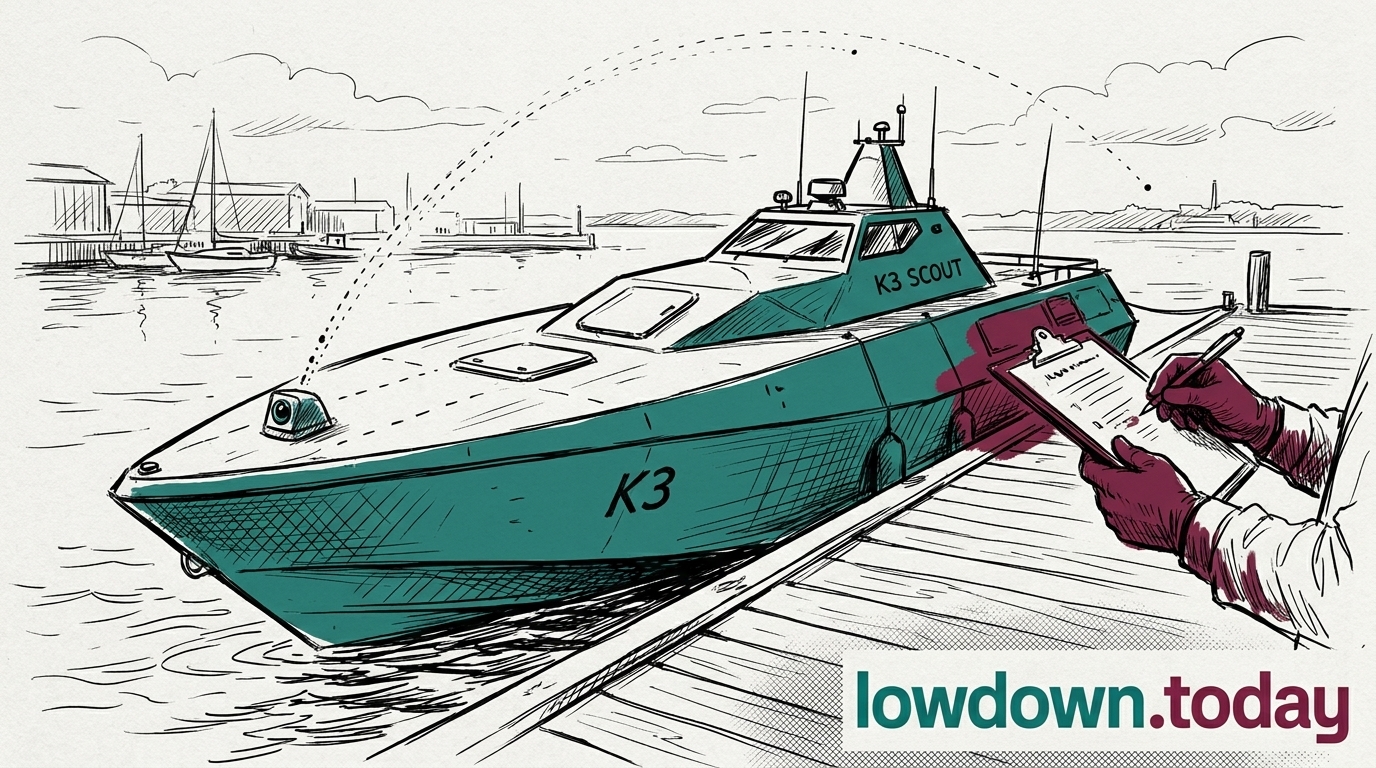
The Conservative opposition called on the Government on 9 August to 'urgently audit' equipment for hidden Chinese components, after the Telegraph's K3 SCOUT report. No named MP has been quoted on the record; the call came at party level, alongside the Ministry of Defence's own 10 August statement that no data had been compromised.
Netherlands Ministry of Defence
The Netherlands Ministry of Defence authorised Dutch Naval Design on 4 August to design 12-metre anti-submarine warfare uncrewed vessels for the Dutch-Belgian frigate programme, and to buy an adapted Compact FLASH dipping sonar from Thales Underwater Systems France. The order commits money and a named supplier while Britain's own certification body remains at the market-engagement stage.
Kraken Technology Group
Kraken Technology Group is a UK maritime-defence company based in Portsmouth that builds the K3 SCOUT, and crossed a $1bn valuation in July on a single-sourced $175m raise. The camera components reached the fleet under a third party's written security assurance, which the Platform Authority, which does not yet exist, was never positioned to check.
Navy Commercial
Navy Commercial
Navy Commercial at Whale Island published two notices on 5 August: 074032-2026, asking industry how to build a Platform Authority to certify uncrewed vessels, and 074351-2026, a GBP10m multi-role USV testbed for the Defence Chief Technology Officer. Responses on the Platform Authority close 19 August, ten days after the cameras were found transmitting to China.
Ministry of Defence
Ministry of Defence
The Ministry of Defence said on 10 August that a routine cyber vulnerability assessment found the camera fault, and a thorough investigation found no evidence that MoD data or systems had been accessed, compromised or transmitted externally. It stripped the cameras of internet connectivity but did not say whether it acted against the supplier.
Thales
Thales
Thales converted its 6 July engaging accord with Exail into a definitive combination agreement on 30-31 July, but the tender offer for Exail's remaining shares now closes by early 2028, later than July's timetable implied. Thales integrates its new undersea prime while still bidding against Kongsberg and DRASS's 2027 target for the AUKUS Pillar II contest.
