Skip to content
You can now search across every topic, entity and event.What's new
Autonomous Systems: Land & Sea
12AUG

Berlin startup priced ahead of delivery

3 min read
14:17UTC

Stark Defence is in talks to raise about EUR 300 million at a roughly EUR 2.5 billion valuation, double its prior mark, despite no demonstrated volume production; Peter Thiel is confirmed as an investor.

TechnologyDeveloping
Key takeaway

European defence-AI capital is pricing the option to produce, not proven production.

Berlin's Stark Defence, founded in 2024, is in talks to raise about EUR 300 million at a roughly EUR 2.5 billion valuation, more than double its prior EUR 1 billion mark 1. The company has not demonstrated production at the volumes military procurement requires, so investors are paying twice the price for an unchanged delivery record. Peter Thiel is confirmed as an investor, and the flagship Virtus autonomous loitering munition, a drone that loiters over a target area before striking, remains Stark's only product while the round stays open.

Stark already holds a slice of the Bundeswehr's EUR 840 million framework alongside Helsing and Rheinmetall , and that existing government contract is the backdrop against which the valuation doubled on no disclosed output. The gap to Helsing's $18 billion mark is the proven-in-field premium: Helsing's HX-2 has combat credentials, while Stark's Virtus has a valuation and a backer.

The round prices an option on conversion, and the prototype-to-production gap is the risk the capital is underwriting. The same delivery-versus-valuation tension runs through this whole briefing: a funded Anduril books a loss against its CCA win, Skydio prices MASS below the cost of a single exquisite ISR platform, and a Berlin prototype house is marked at billions before building at scale. In each case the capital buys the option to produce rather than production itself. The raise is in discussions, not signed, and Thiel's participation is reported via the Financial Times rather than confirmed by a closed round.

Deep Analysis

In plain English

Stark Defence is a Berlin-based defence startup founded in 2024. It makes a single product: the Virtus, an autonomous drone designed to loiter above a battlefield and then dive into a target. No confirmed volume production exists yet. The company is in talks to raise EUR 300 million at a EUR 2.5 billion valuation, double its previous EUR 1 billion mark. PayPal co-founder Peter Thiel has confirmed his investment. Stark already holds a position in a EUR 840 million German military contract framework alongside Helsing and Rheinmetall; the framework provides access to procurement but does not guarantee Stark-specific purchase orders.

What could happen next?
  • Risk

    Stark Defence's EUR 2.5 billion valuation without volume production creates a correction risk if Bundeswehr framework task orders do not materialise within 12-18 months; a failed follow-on round would mark down all European autonomous weapons startup valuations.

  • Opportunity

    Peter Thiel's confirmed participation will attract co-investment from US family offices and sovereign wealth funds that follow Thiel's deal flow into European defence tech, bringing USD-denominated capital into a sector that has primarily accessed EUR-denominated institutional funding.

First Reported In

Update #13 · Air Force shuts primes out of drone wingman

ad-hoc-news.de· 25 Jun 2026
Read original
Different Perspectives
Conservative opposition
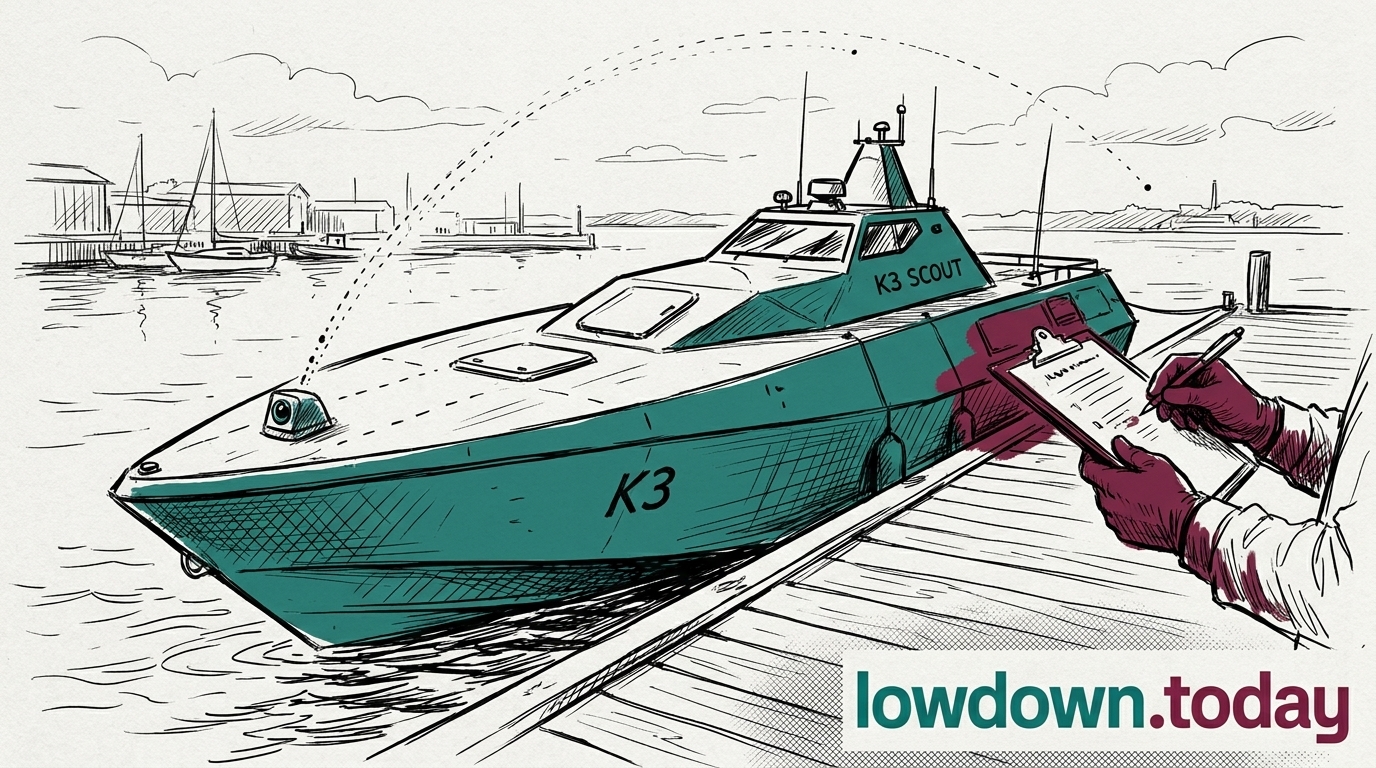
The Conservative opposition called on the Government on 9 August to 'urgently audit' equipment for hidden Chinese components, after the Telegraph's K3 SCOUT report. No named MP has been quoted on the record; the call came at party level, alongside the Ministry of Defence's own 10 August statement that no data had been compromised.
Netherlands Ministry of Defence
The Netherlands Ministry of Defence authorised Dutch Naval Design on 4 August to design 12-metre anti-submarine warfare uncrewed vessels for the Dutch-Belgian frigate programme, and to buy an adapted Compact FLASH dipping sonar from Thales Underwater Systems France. The order commits money and a named supplier while Britain's own certification body remains at the market-engagement stage.
Kraken Technology Group
Kraken Technology Group is a UK maritime-defence company based in Portsmouth that builds the K3 SCOUT, and crossed a $1bn valuation in July on a single-sourced $175m raise. The camera components reached the fleet under a third party's written security assurance, which the Platform Authority, which does not yet exist, was never positioned to check.
Navy Commercial
Navy Commercial
Navy Commercial at Whale Island published two notices on 5 August: 074032-2026, asking industry how to build a Platform Authority to certify uncrewed vessels, and 074351-2026, a GBP10m multi-role USV testbed for the Defence Chief Technology Officer. Responses on the Platform Authority close 19 August, ten days after the cameras were found transmitting to China.
Ministry of Defence
Ministry of Defence
The Ministry of Defence said on 10 August that a routine cyber vulnerability assessment found the camera fault, and a thorough investigation found no evidence that MoD data or systems had been accessed, compromised or transmitted externally. It stripped the cameras of internet connectivity but did not say whether it acted against the supplier.
Thales
Thales
Thales converted its 6 July engaging accord with Exail into a definitive combination agreement on 30-31 July, but the tender offer for Exail's remaining shares now closes by early 2028, later than July's timetable implied. Thales integrates its new undersea prime while still bidding against Kongsberg and DRASS's 2027 target for the AUKUS Pillar II contest.
