Skip to content
You can now search across every topic, entity and event.What's new
Autonomous Systems: Land & Sea
12AUG

MCA drops the word sandbox from trials

3 min read
14:17UTC

The UK Maritime and Coastguard Agency opened a crewless-ship trial route on 3 June, designated Plymouth Harbour two days later, then deleted the word "sandbox" to recast the route as permanent.

TechnologyDeveloping
Key takeaway

The MCA's deleted "sandbox" wording makes its MASS trial route permanent, not a temporary experiment.

The UK Maritime and Coastguard Agency (MCA), the government body responsible for maritime safety, published its Maritime Innovation Hub guidance on 3 June 2026, a regulatory pathway for trials of Maritime Autonomous Surface Ships (MASS) across four vessel-size categories from under 2.5 metres to over 24 metres 1. Plymouth Harbour was designated a trial zone the following day. On 5 June the MCA removed the word "sandbox" from the guidance, reclassifying the Hub as a formal regulatory route rather than a test environment.

The wording change carries the weight. A sandbox is a place to experiment under relaxed rules that may lapse; a regulatory route is a permanent access point into approval. Operators now have a single named door at the MCA for MASS trial permissions, with Plymouth as the designated water and one application channel rather than case-by-case negotiation.

The Hub arrived 12 days after the IMO adopted its global MASS Code , and four weeks before that Code enters force on 1 July. Few government bodies move from an international adoption to a working domestic route inside a fortnight. The compressed timeline points to the guidance being drafted in parallel with the IMO process at MSC 111, not assembled in reaction to it, which is a state choosing to lead on rules ahead of the hardware that fills them.

Deep Analysis

In plain English

Until June 2026, a company wanting to run an unmanned boat in UK waters had no clear official procedure: existing maritime regulations covered crewed vessels only, leaving autonomous operators reliant on case-by-case MCA dispensations. The Maritime Innovation Hub changes that: the MCA published a step-by-step application process on 3 June 2026 for autonomous vessel trials across four size bands, from small drones under 2.5 metres to vessels longer than 24 metres. Plymouth Harbour in Devon has been named as the first designated trial zone, meaning companies wanting to test autonomous vessels have a specific port with a defined regulatory entry point. Removing the word 'sandbox' matters commercially because a sandbox implies temporary and experimental; a formal permanent route signals to investors and insurers that the pathway will not be withdrawn. The IMO is the United Nations body that writes global shipping rules. Its MASS Code, adopted on 22 May 2026, is the first international framework for autonomous cargo ships. The MCA's Hub sits beneath that global code as the UK's domestic implementation layer.

Deep Analysis
Root Causes

The MCA's ability to publish the Hub in June 2026 reflects a regulatory pre-positioning decision taken at least 18 months earlier. The IMO's schedule for the MASS Code adoption at MSC 111 was publicly known from the MSC 109 agenda in 2024. A domestic regulator that waited for the international vote before beginning its own framework design would have been behind commercially useful industry deployments by at least two years.

A second structural cause is competitive pressure from the Netherlands, Norway, and Denmark, each of which published formal MASS trial frameworks between 2019 and 2024. UK operators testing in Norwegian or Dutch waters generate certification evidence tied to those flag states. Establishing a Plymouth trial zone before 1 July 2026 anchors UK-flagged autonomous vessel development to a British port rather than allowing a Norwegian or Dutch first-mover advantage in North European MASS certification.

What could happen next?
  • Opportunity

    UK-based autonomous vessel developers and offshore energy operators can now submit formal trial applications to the MCA against a permanent regulatory route, unlocking insurance structures and investment commitments that require a published compliance path.

    Immediate · Assessed
  • Risk

    Plymouth's single-environment trial data may not satisfy Lloyd's Register or DNV certification requirements for vessels intended to operate in higher-traffic or harsher-weather UK corridors such as the Dover Strait or the northern North Sea.

    Medium term · Suggested
  • Precedent

    The Hub's permanent-route status ahead of the IMO Code's 1 July 2026 entry-into-force date positions the MCA as a de facto standard-setter for national MASS implementation, giving UK operators a 14-month head start over flag states that wait for the mandatory 2032 framework.

    Medium term · Assessed
First Reported In

Update #2 · Britain writes the rules; AUKUS names US robots

UK Maritime and Coastguard Agency· 6 Jun 2026
Read original
Different Perspectives
Conservative opposition
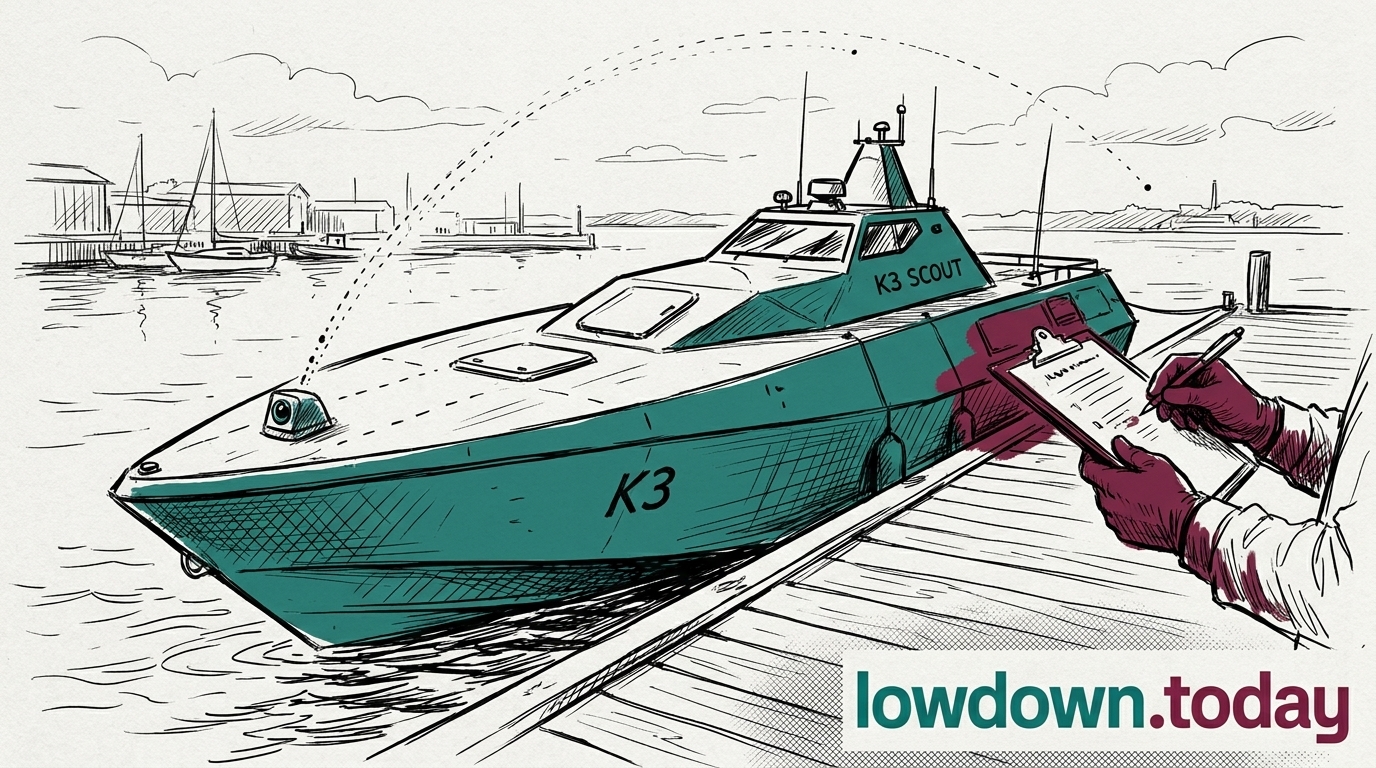
The Conservative opposition called on the Government on 9 August to 'urgently audit' equipment for hidden Chinese components, after the Telegraph's K3 SCOUT report. No named MP has been quoted on the record; the call came at party level, alongside the Ministry of Defence's own 10 August statement that no data had been compromised.
Netherlands Ministry of Defence
The Netherlands Ministry of Defence authorised Dutch Naval Design on 4 August to design 12-metre anti-submarine warfare uncrewed vessels for the Dutch-Belgian frigate programme, and to buy an adapted Compact FLASH dipping sonar from Thales Underwater Systems France. The order commits money and a named supplier while Britain's own certification body remains at the market-engagement stage.
Kraken Technology Group
Kraken Technology Group is a UK maritime-defence company based in Portsmouth that builds the K3 SCOUT, and crossed a $1bn valuation in July on a single-sourced $175m raise. The camera components reached the fleet under a third party's written security assurance, which the Platform Authority, which does not yet exist, was never positioned to check.
Navy Commercial
Navy Commercial
Navy Commercial at Whale Island published two notices on 5 August: 074032-2026, asking industry how to build a Platform Authority to certify uncrewed vessels, and 074351-2026, a GBP10m multi-role USV testbed for the Defence Chief Technology Officer. Responses on the Platform Authority close 19 August, ten days after the cameras were found transmitting to China.
Ministry of Defence
Ministry of Defence
The Ministry of Defence said on 10 August that a routine cyber vulnerability assessment found the camera fault, and a thorough investigation found no evidence that MoD data or systems had been accessed, compromised or transmitted externally. It stripped the cameras of internet connectivity but did not say whether it acted against the supplier.
Thales
Thales
Thales converted its 6 July engaging accord with Exail into a definitive combination agreement on 30-31 July, but the tender offer for Exail's remaining shares now closes by early 2028, later than July's timetable implied. Thales integrates its new undersea prime while still bidding against Kongsberg and DRASS's 2027 target for the AUKUS Pillar II contest.
