Skip to content
You can now search across every topic, entity and event.What's new
Autonomous Systems: Land & Sea
12AUG

Germany names Russia its immediate threat

3 min read
14:17UTC

Germany published its first-ever standalone military strategy on 22 April, naming Russia the "biggest and most immediate threat" and setting a 2029 readiness deadline. Active Bundeswehr strength is planned to grow from 185,420 to 260,000.

TechnologyAssessed
Key takeaway

Berlin wrote a Russia-facing doctrine with a 2029 readiness deadline and a 260,000-active-troop ceiling.

German Defence Minister Boris Pistorius published Germany's first-ever standalone military strategy on Wednesday 22 April, naming Russia the "biggest and most immediate threat" and setting a 2029 readiness deadline for large-scale conflict 1. Active Bundeswehr strength is planned to rise from 185,420 to 260,000 by the mid-2030s, with reserves growing from 60,000 to 200,000. Conscription remains a fallback if volunteer recruitment falls short. Pistorius has held the Defence portfolio since January 2023.

The strategy publication lands on the operational baseline set by the Germany-Ukraine €4 billion defence package signed in Berlin on 14 April . That agreement funded a Raytheon direct commercial sale for several hundred GEM-T Patriot interceptors, 36 IRIS-T launchers and €300 million for Ukrainian long-range strike, with a new production line in Schrobenhausen. Berlin had locked in procurement before Pistorius wrote the doctrine. What he published on 22 April is the doctrinal frame around a force-generation timeline the January 2026 constitutional debt-brake removal had already funded.

Berlin's 22 April publication measures the NATO posture gap on a single-day comparison with Whitehall's Hormuz-facing planning at Northwood. Pistorius has named Russia, set a deadline and committed the Bundeswehr to fielding Europe's largest conventional Army by 2039; the UK's War Book revival on the same Wednesday sits against a £28 billion procurement funding gap. Two allies, one day, and the difference between a doctrine document and a civil-mobilisation binder reopened on top of an underfunded force.

Deep Analysis

In plain English

Germany, for the first time in its post-war history, published a dedicated military strategy document on 22 April that names Russia as its 'biggest and most immediate threat'. Previously German defence planning was embedded in NATO documents that avoided naming specific countries so directly. Defence Minister Boris Pistorius set a deadline of 2029 for the Bundeswehr (Germany's military) to be ready for large-scale conflict, and announced plans to grow it from roughly 185,000 to 260,000 active personnel and expand the reserves from 60,000 to 200,000. This is the most explicit German security posture shift since reunification in 1990.

First Reported In

Update #14 · Kyiv's Druzhba gambit unlocks €90bn loan

Defense News· 24 Apr 2026
Read original
Causes and effects
This Event
Germany names Russia its immediate threat
Berlin's first standalone military strategy sets a 2029 Bundeswehr readiness deadline for large-scale conflict and puts a doctrinal Russia-facing frame around a force expansion already funded.
Different Perspectives
Conservative opposition
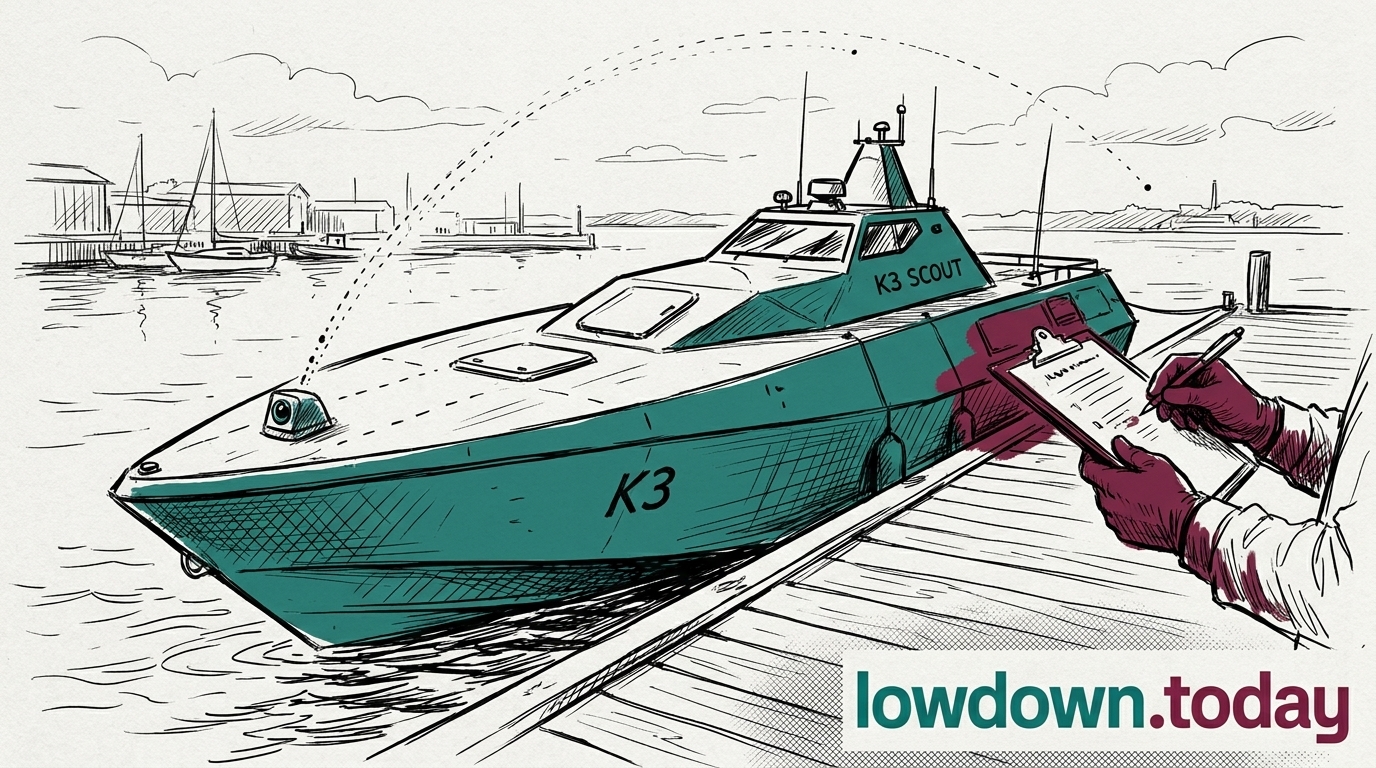
The Conservative opposition called on the Government on 9 August to 'urgently audit' equipment for hidden Chinese components, after the Telegraph's K3 SCOUT report. No named MP has been quoted on the record; the call came at party level, alongside the Ministry of Defence's own 10 August statement that no data had been compromised.
Netherlands Ministry of Defence
The Netherlands Ministry of Defence authorised Dutch Naval Design on 4 August to design 12-metre anti-submarine warfare uncrewed vessels for the Dutch-Belgian frigate programme, and to buy an adapted Compact FLASH dipping sonar from Thales Underwater Systems France. The order commits money and a named supplier while Britain's own certification body remains at the market-engagement stage.
Kraken Technology Group
Kraken Technology Group is a UK maritime-defence company based in Portsmouth that builds the K3 SCOUT, and crossed a $1bn valuation in July on a single-sourced $175m raise. The camera components reached the fleet under a third party's written security assurance, which the Platform Authority, which does not yet exist, was never positioned to check.
Navy Commercial
Navy Commercial
Navy Commercial at Whale Island published two notices on 5 August: 074032-2026, asking industry how to build a Platform Authority to certify uncrewed vessels, and 074351-2026, a GBP10m multi-role USV testbed for the Defence Chief Technology Officer. Responses on the Platform Authority close 19 August, ten days after the cameras were found transmitting to China.
Ministry of Defence
Ministry of Defence
The Ministry of Defence said on 10 August that a routine cyber vulnerability assessment found the camera fault, and a thorough investigation found no evidence that MoD data or systems had been accessed, compromised or transmitted externally. It stripped the cameras of internet connectivity but did not say whether it acted against the supplier.
Thales
Thales
Thales converted its 6 July engaging accord with Exail into a definitive combination agreement on 30-31 July, but the tender offer for Exail's remaining shares now closes by early 2028, later than July's timetable implied. Thales integrates its new undersea prime while still bidding against Kongsberg and DRASS's 2027 target for the AUKUS Pillar II contest.
