Orion is scheduled to splash down at 8:07 PM EDT in the Pacific, 200 miles off San Diego, completing the first crewed lunar transit since Apollo 17 in 1972. The two-hour recovery target is standard for US Navy-NASA joint operations in benign sea states. USS Murtha, positioned off San Diego since 7 April, carries the recovery divers and capsule-towing equipment. Koch will be extracted first, followed by Glover, Hansen, and Wiseman.
10APR
Orion due to splash down; crew recovery planned
2 min read
11:48UTC
Artemis II's capsule is due to hit the Pacific at 8:07 PM EDT, 200 miles off San Diego, with Koch the first crew member to be extracted from the bobbing capsule.
ScienceAssessed
Key takeaway
Crew recovery will begin the post-mission inspection window that determines Artemis III readiness.
Deep Analysis
In plain English
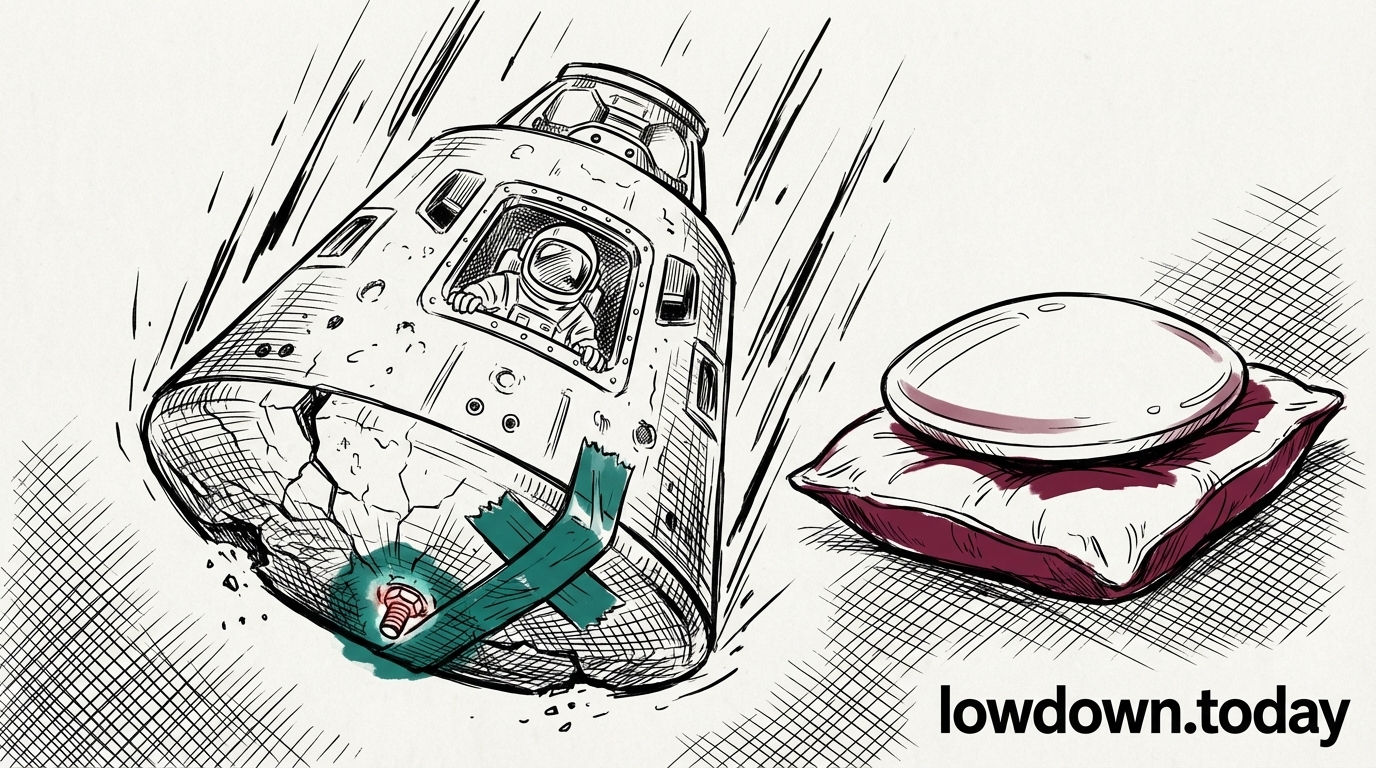
The capsule is due to hit the water on schedule and the Navy ship will move in to recover the crew. Christina Koch comes out first, then the others. The real test starts after they are safe: engineers will examine the heat shield for damage patterns that tell them whether NASA's fix worked.
Root Causes
Splashdown recovery procedure reflects three constraints with independent origins.
The Pacific splashdown geography is a structural heritage of the Apollo programme's range safety and recovery fleet positioning, which was preserved for Artemis rather than reconsidered.
The two-hour recovery target was established during Artemis I's uncrewed test and assumes sea states within USS Murtha's well-deck operational envelope.
The crew extraction order reflects NASA's formal crew hierarchy protocol, which has remained unchanged from Shuttle-era documentation despite the very different recovery geometry of a floating ocean capsule versus an airstrip runway landing.
What could happen next?
- Consequence
Post-recovery heat shield inspection results become the critical data point for Artemis III timeline.
First Reported In
Update #8 · Thirteen minutes on a shield NASA already replaced
NASA· 10 Apr 2026
Read original →Causes and effects
This Event
Orion due to splash down; crew recovery planned
Splashdown ends the operational phase of Artemis II and opens the post-mission inspection window that will determine Artemis III's trajectory.
Different Perspectives

Boeing / Northrop Grumman
SLS component production spans more than 40 US states, giving the industrial base strong political protection regardless of commercial alternatives. Congressional mandates guarantee contracts through FY2029, insulating the supply chain from technical programme changes.
NASA Office of Inspector General
The IRB heat shield findings should have been published before launch. The Starship HLS is two years behind schedule with a worsening manual control dispute. NASA has no crew rescue capability for lunar surface operations. The programme is proceeding with documented, unresolved risks.

JAXA
JAXA is an Artemis Accords signatory with the Lunar Cruiser rover planned for south-pole surface operations; Chang'e 7's first-arrival timeline compresses the window those surface systems were designed to operate in alongside American crew.

Space Research Institute RAS / Roscosmos
The LILEM instrument on Chang'e 7 gives Russia science-cooperation presence at Shackleton's rim with no independent crewed lunar capability on a public timeline. This is Roscosmos's only confirmed path to south-pole science in the current decade.

CNSA / China Manned Space Agency
Chang'e 7 at Wenchang confirmed a second-half 2026 launch for Shackleton rim, 18 to 24 months before any American crewed arrival. The mission carries a Russian LILEM instrument, giving Roscosmos a south-pole science foothold inside China's programme.

Jeremy Hansen / Canadian Space Agency
Hansen appeared at the 16 April JSC press conference in his only public moment since splashdown. Canada's Canadarm3 remains without a confirmed deployment host after Gateway cancellation, with CSA maintaining institutional silence on the programme's status.