USS John P. Murtha
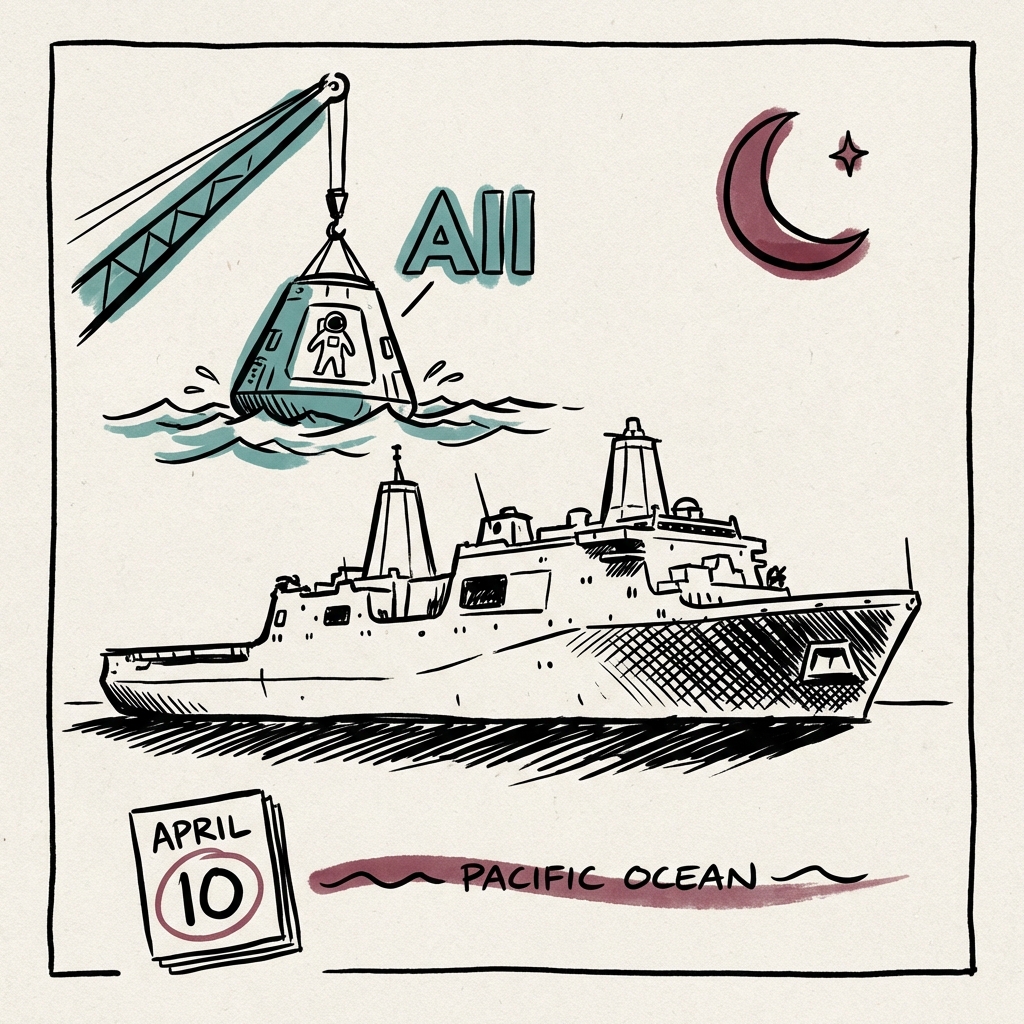
US Navy ship LPD-26; Artemis II recovery vessel, positioned for 10 April Pacific splashdown.
Last refreshed: 7 April 2026 · Appears in 1 active topic
Which ship is picking up the Artemis II crew after splashdown?
Timeline for USS John P. Murtha
Conducted initial diver imagery and inspection showing no unexpected conditions
Artemis II Moon Mission: Heat shield: clean eye, scan pendingMentioned in: NASA's post-mission press conference disclosed no data
Artemis II Moon MissionOrion splashes down in Pacific, crew recovered aboard USS Murtha
Artemis II Moon MissionOrion due to splash down; crew recovery planned
Artemis II Moon MissionRecovery weather clears; San Diego zone confirmed
Artemis II Moon MissionBackground
USS John P. Murtha (LPD-26) is a San Antonio-class amphibious transport dock ship homeported at Naval Base San Diego. It is the designated recovery vessel for Artemis II's splashdown in the Pacific Ocean off San Diego, scheduled for 10 April 2026 at 8:07 PM EDT. The ship sailed to its recovery station after the return trajectory was established following the Day 6 lunar flyby. A POST-recovery press conference is scheduled for 10:35 PM EDT.
San Antonio-class ships carry a well deck and aviation facilities suited to recovery operations. LPD-26 carries a CREW-retrieval TEAM from NASA's Underway Recovery Test programme, including divers trained to reach the Orion capsule in open water, attach flotation equipment, and transfer CREW to the ship. The class was also used for Artemis I's unmanned capsule recovery in December 2022.
The use of a Navy amphibious ship rather than a dedicated recovery vessel continues NASA's POST-Apollo pattern. Murtha previously supported test recoveries during the Exploration Ground Systems programme. The ship's homeport at San Diego aligns with the Pacific splashdown zone chosen for its distance from Commercial shipping lanes and proximity to US recovery infrastructure.
What ship is recovering the Artemis II crew?
When does the Artemis II crew return to Earth?



