Skip to content
Briefings are running a touch slower this week while we rebuild the foundations.See roadmap
AI: Jobs, Power & Money
16APR

NY AI layoff law: 162 filings, zero hits

2 min read
13:29UTC

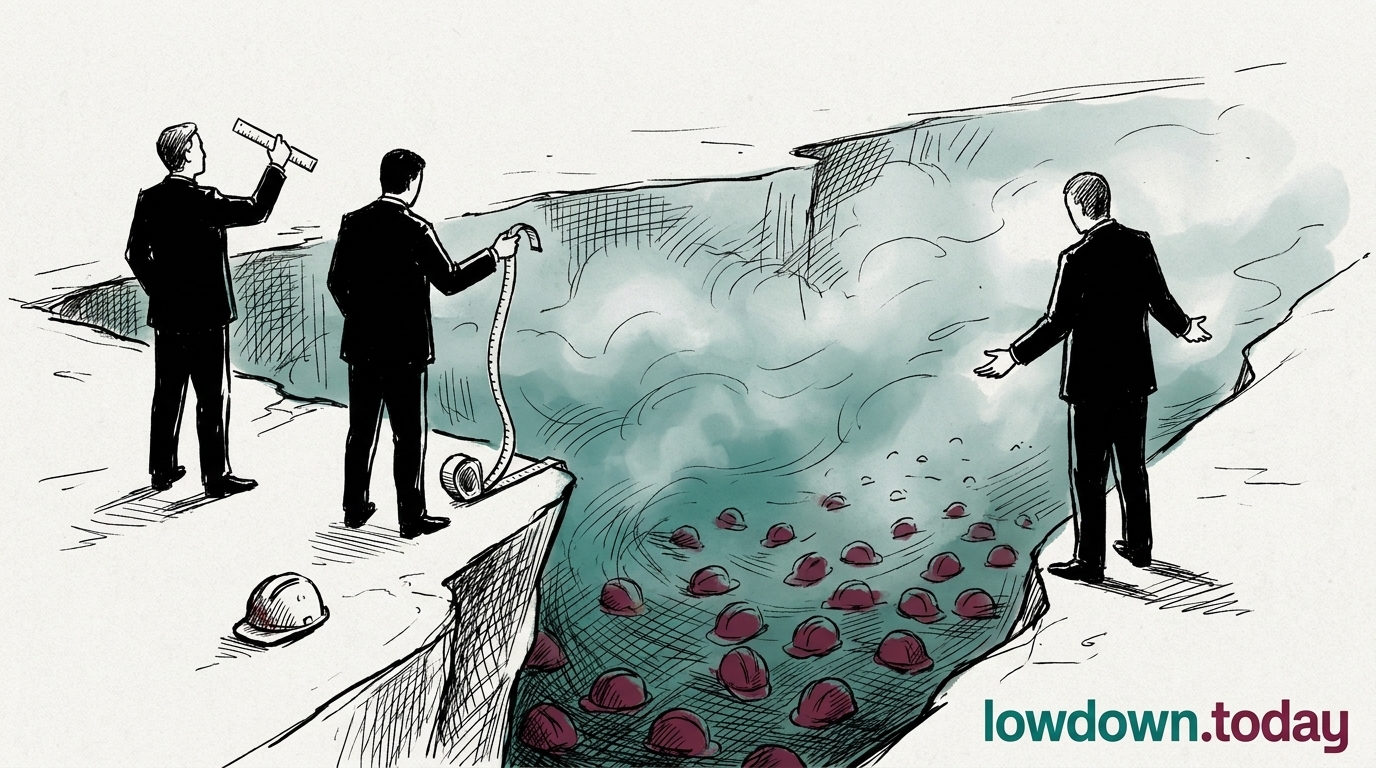
New York required companies to disclose AI's role in mass layoffs. After a year, 162 companies covering 28,300 workers attributed zero cuts to AI.

EconomicAssessed
Key takeaway

Zero of 162 companies disclosed AI as a factor in layoffs despite a legal obligation to do so.

In 2025, New York State updated its Worker Adjustment and Retraining Notification Act to require companies to disclose AI's role in mass layoffs, becoming the first US jurisdiction to mandate such reporting. After nearly a year of operation, the results are in. 1 Zero of 162 companies filing layoff notices attributed cuts to AI or technological automation. Those filings covered more than 28,300 workers, including staff at Amazon and Goldman Sachs.

Non-compliance currently carries a penalty of $500 per day. Proposed legislation would raise that to $10,000 per violation and strip companies of state grants and tax incentives for five years. That tougher bill has not advanced.

Silence on this scale is evidence, not absence. Harvard Business Review reported that only 2% of layoffs followed actual AI deployment . Oxford Economics called AI's layoff role "overstated" . Both relied on corporate claims taken at face value. New York's data shows those claims are legally shielded as well as reputationally incentivised. Companies that cut 28,300 jobs had the opportunity and the obligation to say whether AI played a role. Every one said no. Either AI genuinely drives none of the displacement in the nation's financial capital, or the disclosure framework is failing.

Deep Analysis

In plain English

New York passed a law requiring companies to say whether AI played a role when they do mass layoffs. After nearly a year, 162 companies laid off more than 28,000 people, including workers at Amazon and Goldman Sachs. Not one company said AI was involved. The penalty for lying or not disclosing is $500 a day. For billion-dollar companies, that is a trivial fine. Until the penalty is meaningful, there is no incentive to tell the truth.

Deep Analysis
Root Causes

The $500/day penalty is structurally inadequate. For a company like Amazon or Goldman Sachs, potential exposure of $500 per day during a WARN period is a rounding error against litigation risk or reputational exposure from admitting AI-driven displacement. The incentive structure rewards non-disclosure.

Legal uncertainty also suppresses attribution. The definition of AI-driven job loss has not been tested in court. Companies face asymmetric risk: disclosing AI as a reason invites class actions and union bargaining claims, while non-disclosure carries only a civil penalty. Rational legal counsel will advise against attribution until the definition is litigated.

What could happen next?
  • Consequence

    The New York result will be cited in Congressional debates as evidence that voluntary disclosure frameworks cannot generate honest AI attribution data, strengthening the case for mandatory federal reporting with meaningful penalties.

    Short term · High
  • Risk

    Other states considering WARN Act amendments may model weak penalty structures on New York, producing the same zero-attribution outcome and wasting a decade of potential evidence collection.

    Medium term · Medium
  • Precedent

    New York's failure is the most important data point in the AI disclosure debate: it proves empirically that disclosure laws without credible enforcement produce no data.

    Long term · High
First Reported In

Update #3 · The AI jobs data contradicts itself

Bloomberg Law· 28 Mar 2026
Read original
Different Perspectives
TSMC and Taiwan chip supply chain
Nvidia's 17% headcount growth to 42,000 on $81.6 billion in quarterly revenue depends on TSMC's CoWoS advanced packaging capacity constraining H100 and B200 supply, sustaining margins above 70%. The AI build-out's sole headcount-growth story runs through a Taiwan supply chain that has no parallel in downstream software.
Displaced tech workers globally
CrowdStrike's SEC disclosure puts AI attribution on a material regulatory record for the first time, but Oracle's Massachusetts WARN clock expired unfiled after up to 14 workers were logged as remote despite office proximity. The legal apparatus cannot enforce what it cannot see: hybrid reclassification, GCC transfers, and hires never made.
UK workforce and policymakers
ONS recorded UK vacancies at 705,000, below the pre-pandemic baseline for the first time, as payrolled employment fell 210,000 year on year with real wage growth at 0.1%. The Bank of England's AI worst case assumed 500,000 additional unemployed from a baseline above 730,000; the UK is already below that floor, and ONS still publishes no AI-exposure breakdown.
India IT workforce and graduates
NASSCOM's FY2026 data shows net sector growth of 140,000, but entry-level hiring fell 20-25% as the growth concentrated in in-house GCC offices requiring mid-career specialists. Indian graduates who previously entered through TCS, Infosys and Wipro fresher programmes find that channel closing at both ends: outsourcers cutting and GCCs not hiring at the junior level.
IG Metall and European trade unions
European labour bodies see the market reward pattern, cuts on record revenue, as investor preference for short-term margin extraction over validated AI productivity. They note the EU Digital Omnibus provisional deal has dropped binding employer AI-literacy obligations at the precise moment the ILO-NASK index has quantified that 3.3% of global workers are in the highest AI exposure category.
Federal Reserve Board
Governor Cook told Stanford's SIEPR on 27 May that speculative-grade software bond spreads have widened on AI-disruption concern, moving AI displacement from a labour observation into the Fed's financial-stability mandate. The Fed cannot resolve structural labour transformation through rate policy, so Cook routed the concern through the one channel the Fed does control.
