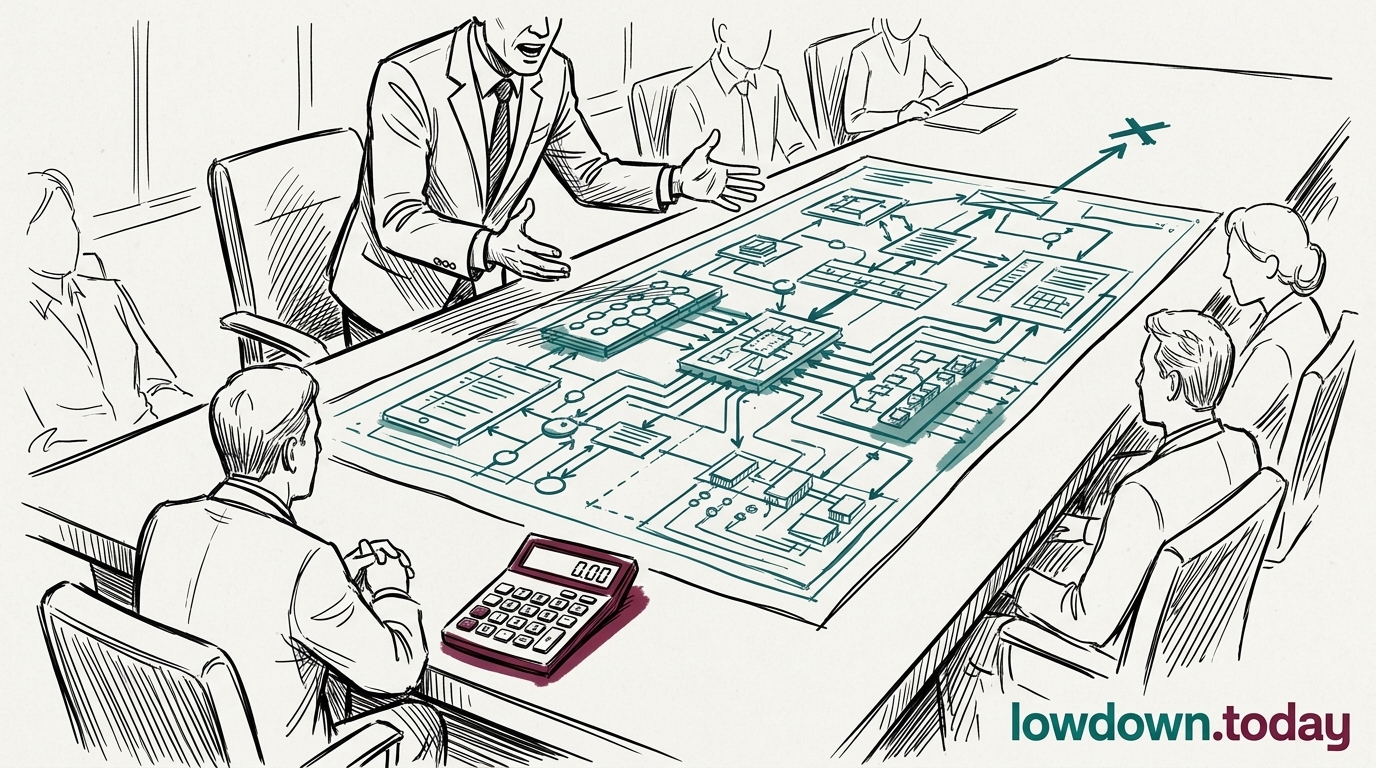
Harvard Business Review research by Thomas H. Davenport and Laks Srinivasan found that only approximately 2% of organisations reported layoffs tied to actual AI implementation1. The remaining companies cutting headcount in the name of AI are doing so in anticipation of capability that does not yet exist — restructuring against a future they expect but cannot demonstrate.
The finding reframes the wave of AI-attributed job cuts documented through Q1 2026. RationalFX counted 45,363 confirmed global tech layoffs in the quarter, with 9,238 — 20.4% — citing AI and automation explicitly. If Davenport and Srinivasan's ratio holds across that subset, fewer than 200 of those cuts replaced a worker with a functioning AI system. The rest are pre-emptive. This aligns with the Yale Budget Lab's identification of "AI washing" — companies attributing restructuring to AI when underlying causes are conventional: slowing growth, weak demand, cost pressure . Oxford Economics reached a parallel conclusion in January 2026, finding firms do not appear to be replacing workers with AI on a significant scale and that productivity growth has not accelerated consistently with labour replacement.
The pattern has a clear financial logic. When Block cut 4,000 jobs and cited AI, shares surged 22–25% in after-hours trading . Former employees told the Guardian that many eliminated roles "can't really be AI'd," suggesting overstaffing and a weak crypto market were the actual drivers. When Meta's planned 20% reduction became public, shares rose approximately 3%. The equity market rewards the narrative of AI-driven efficiency regardless of whether the efficiency is real. For executives under margin pressure, attributing conventional cost-cutting to AI is — in the short term — a share price subsidy paid for by the workers who lose their positions.
The Orgvue survey finding that a third of companies have already rehired 25–50% of the roles they cut suggests the market is discovering the gap between narrative and reality. Klarna's public reversal is the most visible example, but Gartner projects half of all companies that cut customer service staff for AI will rehire by 2027. The workers displaced in the interim bear the cost of what Davenport and Srinivasan's data reveals as corporate speculation — jobs sacrificed not to technology that works, but to quarterly earnings calls that reward the promise of technology that might.





