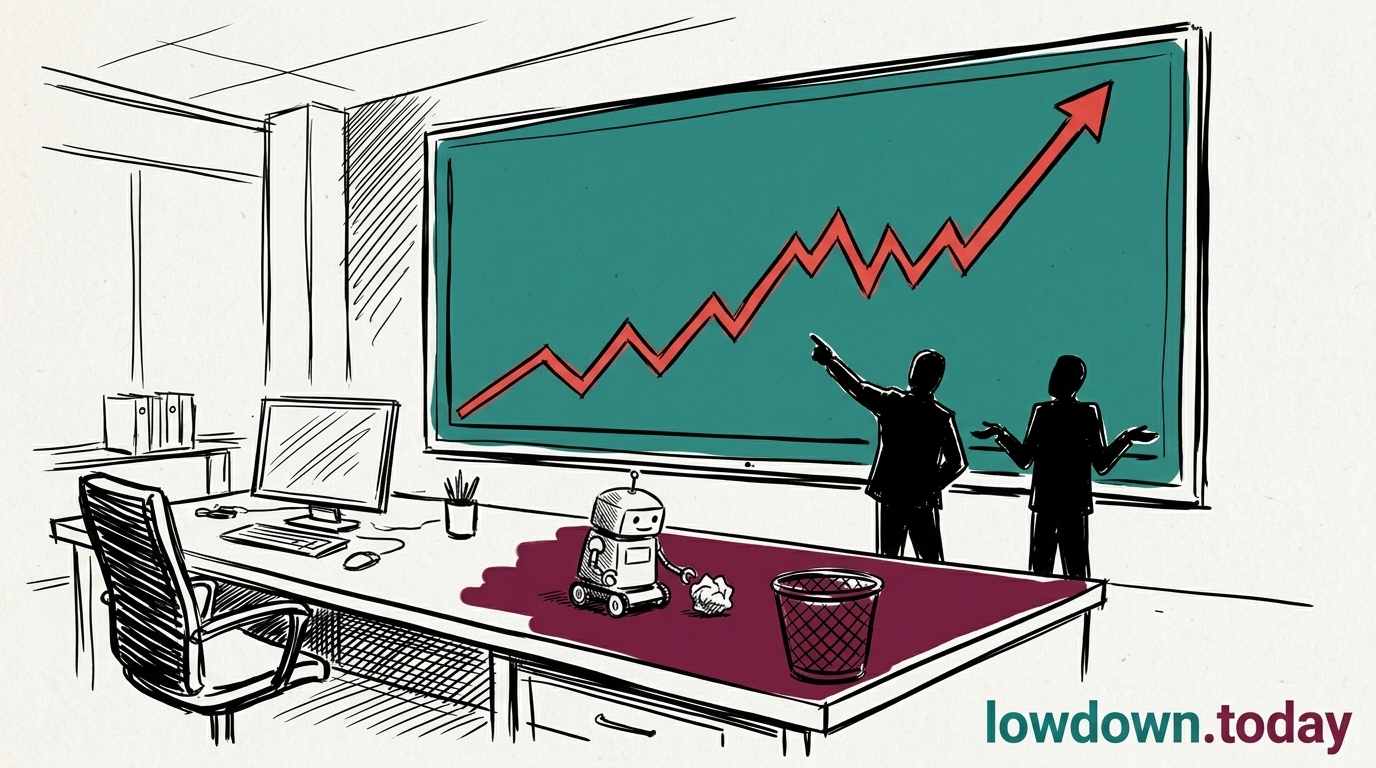
Oxford Economics published research in January 2026 concluding that AI's role in recent layoffs is likely "overstated"1. The Firm examined whether companies are replacing workers with artificial intelligence at meaningful scale and found they are not. If automation were genuinely substituting for labour, output per worker should be climbing. It has not.
The finding sits uncomfortably alongside corporate statements from the same period. Block, Meta , Oracle , Amazon, and Accenture have all framed reductions through an AI lens. In each case, the narrative is the same: the technology makes the workers unnecessary.
Oxford looked past the press releases to the aggregate numbers. US productivity growth since 2023 has been uneven, with no sustained acceleration matching the claim that AI tools eliminate human labour at scale. The more parsimonious explanation: overhiring corrections from the 2020–2022 expansion, cost discipline in a slowing economy, and a market mechanism that rewards headcount reduction — conventional restructuring dynamics that predate large language models by decades.
The policy stakes are real. If legislators build retraining and tax frameworks around the premise of rapid AI displacement, but the displacement is conventional cost-cutting in new packaging, the resulting programmes will target a problem that does not yet exist at the assumed scale.





