Skip to content
Welcome, thoughtbot's Giant Robots listeners!Start here
AI: Jobs, Power & Money
22OCT

AI marks French hiring and Accenture's 10-K

3 min read
16:14UTC

Banque de France economists find permanent hiring of under-30s fell 28% in the most AI-exposed jobs between November 2022 and March 2026, against 8% in the least exposed. Accenture's annual filing now says automation, including AI, "has led and may continue to lead to reduced demand for our services", in a year its headcount grew by 35,000. AI-cited US job cuts rose in September but fell to fifth among stated reasons, and hiring plans were the lowest for a September since 2011.

Key takeaway

AI now shows most clearly in who firms hire and what they file, not in announced layoffs.

This briefing mapped
Economic
Domestic

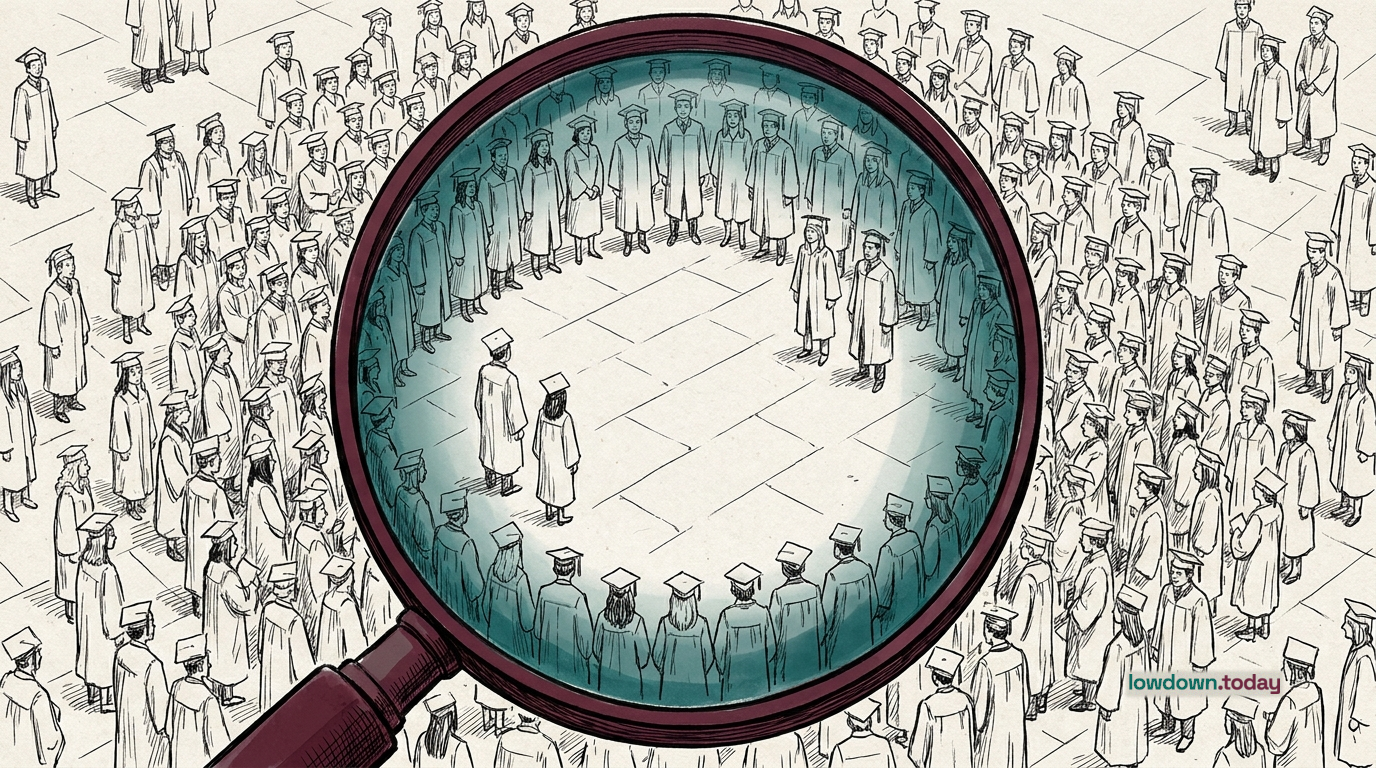
Banque de France economists found permanent hiring of under-30s in the most AI-exposed jobs 28% below its November 2022 level by March 2026, against 8% in the least exposed.

Sources profile:This story draws on neutral-leaning sources

Banque de France economists reported on 8 October that permanent hiring of French 21-to-29-year-olds in the most AI-exposed occupations sat 28% below late 2022 levels by March. In the least exposed jobs, the drop was 8%.

The pattern matches Canada's central bank finding from August. Young workers are also leaving exposed jobs less often, which slows the job moves that usually lift pay. 

Accenture's new annual report says automation including AI "has led" to reduced demand for its services, where last year's report said it "will lead".

Sources profile:This story draws on neutral-leaning sources

Accenture filed its annual report with US regulators on 16 October. A risk warning that automation, including AI, "will lead" to lower demand now says it "has led" there, and covers clients' staff too.

The Ireland-domiciled consultancy grew its workforce by about 35,000 in the same year. Its filing also shows $308m spent mainly on severance. 

Challenger counted 3,961 US job cuts citing AI in September, up from August, yet AI slipped to fifth as other stated reasons grew faster.

Challenger, Gray & Christmas counted 43,281 announced US job cuts in September, reported on 1 October. Cuts citing AI rose to 3,961, yet AI fell to fifth among stated reasons.

Hiring plans hit their weakest September since 2011, and technology cuts jumped 77% on August. The firm does not say which industries named AI. 

Germany's insurance employers offered 15 hours of training a year; ver.di wanted 15 days, and none of its AI clauses reached the agreed points.

Sources profile:This story draws on neutral-leaning sources

Germany's insurance employers and the services union ver.di ended a third bargaining round in Würzburg on 14-15 October without a contract on technological change. Employers offered 15 hours of training a year.

The union had asked for 15 days. Its demands for AI impact assessments and human review of algorithmic decisions appear in neither the offer nor the four agreed points. 

China's investment in information transmission rose 30.8% in the first nine months of 2026 while total fixed-asset investment fell 7.2%.

Sources profile:This story draws on neutral-leaning sources

China's National Bureau of Statistics reported on 19 October that fixed-asset investment fell 7.2% in the first nine months of 2026. Spending on information transmission rose 30.8% over the same period.

Robot output climbed 29.1%, though neither robots nor network spending are purely AI. Urban unemployment stood at 5.2% in September. 

UK vacancies fell to 691,000 in July to September, the lowest outside the pandemic since 2014, with professional and technical posts down 11.6%.

Sources profile:This story draws on neutral-leaning sources

Britain's Office for National Statistics put UK vacancies at 691,000 for July to September, in figures released on 20 October. Outside the pandemic, that is the lowest since 2014.

Adverts in professional, scientific and technical work fell 11.6% on the year, over twice the national drop. In September the same sector was still adding workers. 

HCLTech added 6,450 staff, including 6,136 freshers, and Tata Consultancy Services grew again, while Wipro cut 6,716 on flat revenue.

Sources profile:This story draws on neutral-leaning sources from India
India
LeftRight

HCLTech added 6,450 staff in the quarter to September, including 6,136 graduates hired from college, as its AI revenue rose 78%. Wipro, reporting on 15 October, cut 6,716 on flat revenue.

Tata Consultancy Services grew modestly, by press accounts. Whether entry-level work is shifting to India remains unshown; recovery from last year's cuts fits the same figures. 

South Korea's first youth figures on the new 15-to-34 band show a 98,000 fall on the year, against 147,000 on the old 15-to-29 measure.

Sources profile:This story draws on neutral-leaning sources

South Korea published its first September jobs figures on a 15-to-34 youth band on 16 October. Youth employment fell 98,000 on the year on that measure.

On the old 15-to-29 band the drop was 147,000. Adding people in their early thirties, whose employment grew, makes the official series look gentler. 

IMF chief Kristalina Georgieva called AI a "slow-moving tsunami" for young graduates at the IMF and World Bank meetings in Bangkok.

Sources profile:This story draws on neutral-leaning sources
Sources:TradeArabia

TSMC kept 2026 capital spending at $60-64bn and lifted its full-year revenue growth forecast to about 44%.

Sources profile:This story draws on neutral-leaning sources

TSMC (Taiwan Semiconductor Manufacturing Company) reported third-quarter results on 15 October and held 2026 capital spending at $60-64bn. It raised its full-year revenue growth forecast to about 44%.

High-performance computing, mostly AI data-centre chips, made 68% of quarterly revenue. Spending on new capacity stays flat while sales climb. 

Sources:CRN Asia
Closing comments

Direction: up on the hiring side, sideways on announced layoffs. Three dated decision points could move it. Challenger's October report in early November 2026 will show whether cuts citing AI climb past September's 3,961 while AI still ranks outside the top three. The next ver.di and AGV round will show whether any AI safeguard enters a German sector contract; AGV says it will sign on its own basis if its other demands are met. Hyperscaler results on 28-30 October will show whether the buyers of TSMC's chips keep adding capital spending without adding staff. A second euro-area central bank repeating the French result would turn one finding into a pattern that rate-setters must address in policy statements.

Different Perspectives
Banque de France economists
Writing on the Bank's blog on 8 October, they found permanent hiring of under-30s in the most AI-exposed jobs 28% below November 2022, against 8% in the least exposed. They name rate rises and remote hiring as rival causes, so they present a pattern to test, not proof that AI did it.
Accenture
Accenture
Its 10-K filed on 16 October says automation has already reduced demand for its services and extends the risk to clients' staff. The same filing shows headcount up about 35,000, so The Firm is warning investors of lost work while its payroll still grows.
Andy Challenger
Andy Challenger
He blamed September's weak hiring on energy costs, the war in Iran, a possible rate rise and healthcare bills. His firm's own count of cuts citing AI still rose to 3,961, so employers named AI more often even as it fell to fifth among reasons.
ver.di
ver.di
The union took its demand for impact assessments before any AI system, de-skilling protection and human review of algorithmic decisions to Würzburg on 14-15 October. According to AGV's circular, ver.di narrowed its training demand to 15 days a year, yet the employers' 15-hour offer carried none of its AI clauses.
Srini Pallia, Wipro
Srini Pallia, Wipro
Wipro's chief executive called AI a long-term growth driver as the company cut 6,716 staff on flat revenue. HCLTech and TCS added staff in the same quarter, so Wipro's cut sits beside its own weak revenue rather than an industry-wide fall.
Tharman Shanmugaratnam
Singapore's President, co-chair of the World Bank Jobs Council, urged governments at the Bangkok meetings to make crisis-era youth employment support a standing policy tool. That treats young workers' AI exposure as a lasting budget line rather than a shock to ride out.

