AI-Related Job Impacts Clarity Act
Proposed US bill requiring quarterly disclosure of AI-related layoffs, hiring, unfilled roles and retraining.
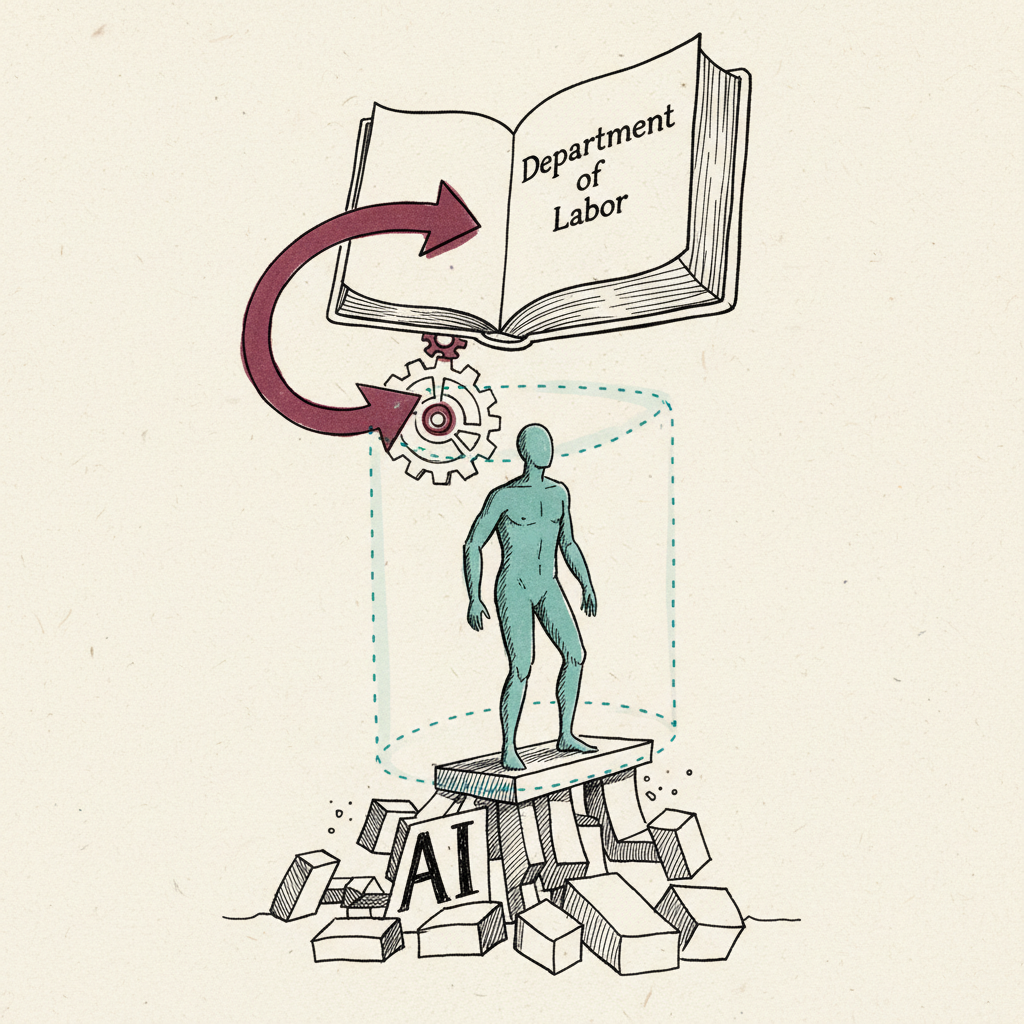
Introduced on 5 November 2025, S.3108 proposes quarterly reporting of AI-related layoffs, hiring, unfilled positions and retraining. The AI-Related Job Impacts Clarity Act would give the Department of Labor employer disclosures to compile and publish.
Last refreshed: 22 October 2026 · Appears in 1 active topic
Why does the US still lack mandatory data on how many jobs AI is actually eliminating?
Timeline for AI-Related Job Impacts Clarity Act
Mentioned in: Warner and Hawley bill would log AI layoffs
AI: Jobs, Power & MoneyMentioned in: US payrolls miss by 142,000 in February
AI: Jobs, Power & MoneyMentioned in: Microsoft and Google back the Warner-Rounds bill
AI: Jobs, Power & MoneyMentioned in: Warner-Rounds bill creates AI jobs body
AI: Jobs, Power & MoneyMentioned in: Nine senators demand AI workforce data
AI: Jobs, Power & MoneyBackground
The AI-Related Job Impacts Clarity Act is a US Senate proposal for collecting information about how artificial intelligence changes employment. Josh Hawley introduced the bill with Mark Warner as an original cosponsor. Its reporting design covers more than redundancies: employers would also disclose AI-related hiring, positions left unfilled and workers receiving retraining. The [introduced text](https://www.govinfo.gov/content/pkg/BILLS-119s3108is/html/BILLS-119s3108is.htm) sets out these categories separately.
The proposal assigns the Department of Labor a further role: compiling quarterly reports, analysing the net employment effects and publishing the underlying data through the Bureau of Labor Statistics. It would record employers' accounts of changes associated with AI, rather than treating every workforce reduction as an AI-related loss.
The bill remains a proposal in the [retrieved congressional record](https://www.Congress.gov/bill/119th-Congress/Senate-bill/3108/all-info). Its provisions describe reporting obligations that would follow enactment, not requirements already imposed by this measure.
What is the AI-Related Job Impacts Clarity Act?
Written with AI from Lowdown's published reporting. Not individually reviewed by an editor. Updated 22 October 2026. Editorial standards.