Skip to content
Welcome, thoughtbot's Giant Robots listeners!Start here
AI: Jobs, Power & Money
1JUL

Madrid court: AI is no ground to dismiss

3 min read
11:00UTC

Madrid's regional high court has ruled that introducing AI is not on its own a ground for dismissal; an employer must prove AI's effect through Spain's existing four causes.

EconomicDeveloping
Key takeaway

A Madrid court requires employers to prove AI replaced a dismissed worker's tasks.

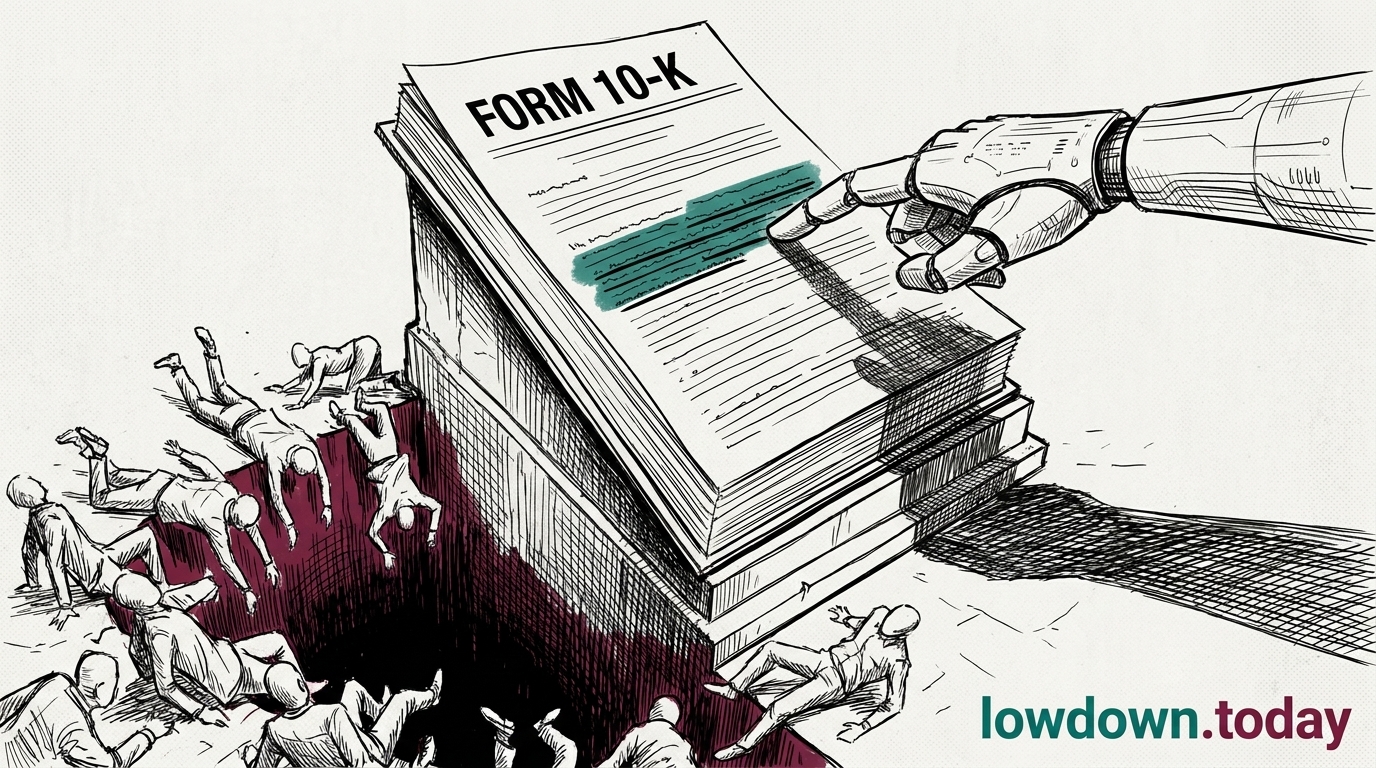
The High Court of Justice of Madrid has ruled that bringing in AI is not, on its own, a ground for dismissal under Spanish law⁠1. Its judgment 864/2026, dated 8 October and made public this week, says an employer must prove AI's effect through the four causes the Workers' Statute (Spain's main employment law) already lists: economic, technical, organisational and production. "La implantación de IA no constituye una quinta causa de despido," the court's employment chamber held: introducing AI is not a fifth cause of dismissal.

The case began with a collective redundancy (an ERE, Spain's procedure for group layoffs) at a video-game studio the court did not name. The court upheld a lower ruling that one worker's dismissal was unfair, because the company had not shown that the AI tool replaced that worker's tasks⁠2. No party appealed a second dismissal, which the original trial court had ruled fair.

The ruling moves the burden onto evidence: an employer in Madrid that says AI did the job has to prove the tool took over that worker's tasks. UGT (Unión General de Trabajadores), one of Spain's two largest union confederations, counts 10 large collective dismissals in Spain linked to AI, affecting at least 6,711 people; any of them challenged in court could face the same test. A Spanish court ruled on algorithmic employment decisions in July, and the call-centre firm Concentrix's cuts in A Coruña went through on negotiated terms.

The ruling binds this case, and only Spain's Supreme Court can set national doctrine. Employers can still dismiss on technical or organisational grounds when they prove them, so the judgment raises the bar of evidence without barring AI-linked layoffs.


Deep Analysis

In plain English

In Spain, an employer can only dismiss workers for reasons the law lists: economic problems, technical changes, changes to how work is organised, or changes in production. A regional appeals court in Madrid looked at a case where a company said it cut jobs because it had brought in AI. The court said AI is not a separate reason of its own. A company that blames AI must prove, under one of the existing reasons, that the technology really changed the work. In this case the company had not shown that, so one worker's dismissal stayed ruled unfair. The ruling applies to this case; only Spain's Supreme Court can set a rule for the whole country.

Deep Analysis
Root Causes

Spanish dismissal law lists a closed set of grounds. A new technology cannot create a new ground; it can only be evidence for an existing one, and the court applied that structure.

Collective redundancies in Spain run through a formal procedure that requires the employer to justify the cuts. That makes the stated reason a matter of record that workers can challenge.

Unions are already contesting AI rationales. The CCOO confederation disputes Capgemini's AI justification for a 748-person collective dismissal, a case that could now meet the same evidential test.

What could happen next?
  • Precedent

    Spanish employers citing AI in collective dismissals now face an appellate ruling requiring proof of the tool's effect on the work.

    Short term · Assessed
  • Risk

    Employers may avoid naming AI and rely on organisational grounds, making AI-linked cuts harder to track.

    Medium term · Suggested
  • Consequence

    A Supreme Court ruling would be needed to make the test binding across Spain.

    Long term · Assessed
First Reported In

Update #22 · Central banks see AI before payrolls do

GCLEX· 6 Nov 2026
Read original →
Causes and effects
This Event
Madrid court: AI is no ground to dismiss
Employers in Madrid that blame AI for layoffs can expect to prove, worker by worker, that the tool replaced the tasks.
Different Perspectives
Competition and Consumer Commission of Singapore
The regulator found on 27 November that businesses can still choose and switch between cloud providers and AI models. It named dominant firms blocking rival AI agents as a risk, but answered with eight voluntary principles rather than rules.
La Poste
La Poste
France's state-owned postal group signed its first AI accord with four union confederations on 19 November, setting up a joint committee to oversee AI use. The announcement gives the unions a say, but no job security and no training hours for its 227,000 staff.
Nascent Information Technology Employees Senate (NITES)
The IT workers' union asked India's central government on 26 November for a mandatory national policy on AI layoffs, with every automated job cut logged in public. It expects to meet Labour Ministry officials; no government response has been reported.
China State Council
China State Council
Beijing's cabinet told local governments to pace AI in labour-intensive industries and to screen large AI projects for job losses. It keeps backing AI but wants the replacement of workers slowed, and it set no numeric targets.
SAP
SAP
SAP answered Bloomberg's report of at least 10,000 planned job cuts by telling CNBC that nothing is settled. In Germany a cut on that scale goes through works councils, and its 2024 round of about 10,000 ended mostly in voluntary departures.
Nvidia's board of directors
The board reinstated Jensen Huang on 22 November after input from senior levels of the US government, while its committee of independent directors keeps investigating. Its confidence rests, by its own account, on Washington's input, and the company says it will keep cooperating with government inquiries.

Written with AI from Lowdown's published reporting. Not individually reviewed by an editor. Editorial standards.
