TC2
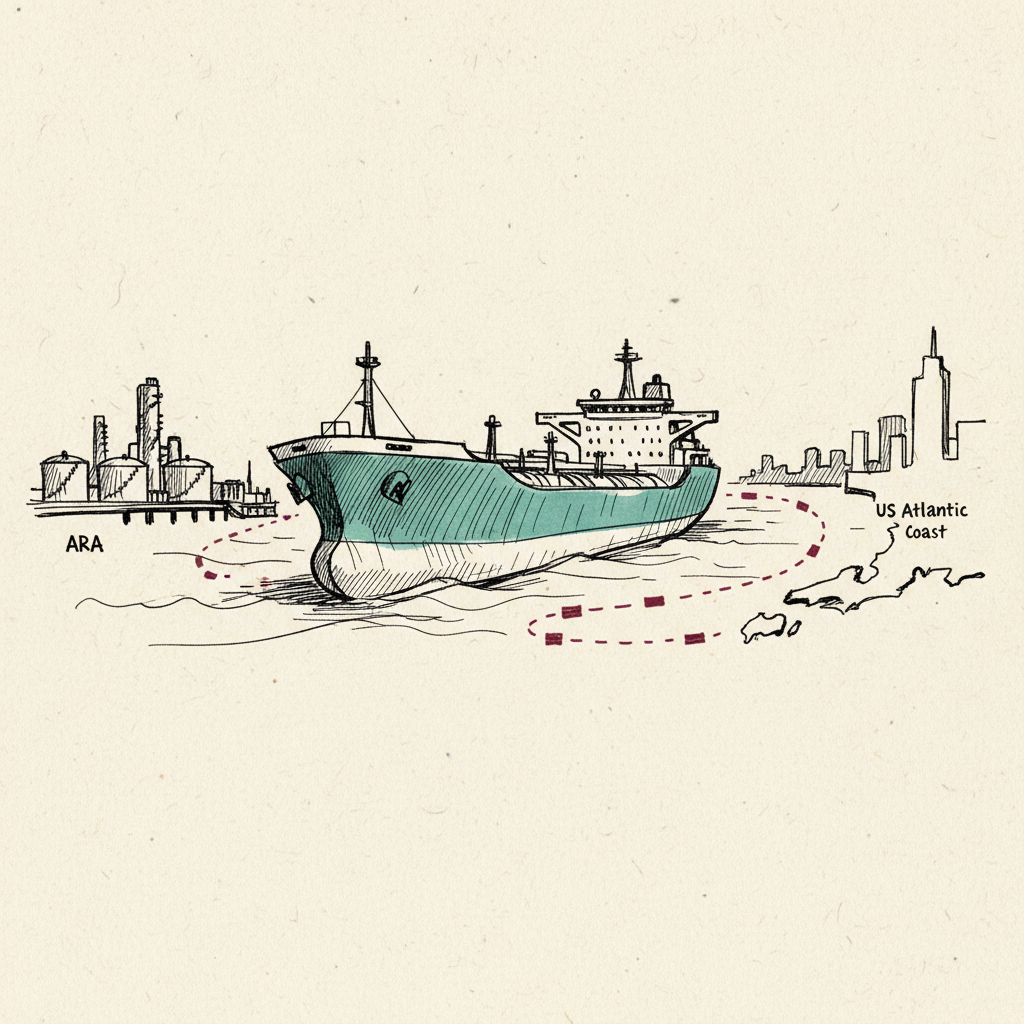
TC2 is the Baltic Exchange MR (medium-range) product tanker freight route from ARA to the US Atlantic coast, the primary transatlantic gasoline arbitrage indicator.
Last refreshed: 1 June 2026 · Appears in 1 active topic
Is the TC2 transatlantic gasoline arb open after the US 7.9mb crude draw?
Timeline for TC2
Brent-WTI spread widens out to $3.55
European Oil MarketsUS gasoline draws 8.2mb at 94.5% runs
European Oil MarketsRan WS230 and $19,300/day on 7 May; arb stays shut with $1-2 Brent-WTI
European Oil Markets: WTI flips to +172,580 net longMentioned in: US draws 7.9mb, Fujairah rebuilds 96kbd
European Oil MarketsBackground
TC2 is the Baltic Exchange's benchmark freight route for clean petroleum product (CPP) tankers of approximately 37,000 deadweight tonnes (DWT), covering the transatlantic voyage from Rotterdam (ARA) in Northwest Europe to the US Atlantic Coast (USAC), specifically the New York Harbor (NYH) delivery area. The route price, expressed in US dollars per tonne or as a Worldscale (WS) percentage, is the primary freight reference for the transatlantic movement of gasoline, naphtha, and jet fuel. When European product exports are competitive versus US import needs, TC2 comes under active demand; when the arbitrage window narrows, TC2 rates soften and vessels re-deploy within Europe or to other clean basins. The EBOB-RBOB price spread (European Eurobob oxy versus NYMEX RBOB gasoline) is the core driver of whether the TC2 arb is open or closed in any given week.
Medium Range (MR) tankers are the workhorses of clean product shipping, sized at 25-55,000 DWT and suited to port access constraints on both sides of The Atlantic. TC2's 37kt specification aligns with the IMO load lines and berth draught limits at key USAC terminals. The Baltic Exchange publishes TC2 assessments daily, and the route is used as a hedge or settlement reference in freight derivatives (FFAs). Bunker costs, port charges at Rotterdam or the ARA cluster, the state of the NYH terminal market, and US refining run rates all feed into the TC2 level.
In late May 2026, the TC2 arb tightened significantly as US gasoline stocks drew 8.2 million barrels to 211.6mb over three weeks to 22 May, even as US refinery utilisation surged to 94.5% from 90.1% on 1 May. This signalled end-demand strength that US refiners running near capacity could not satisfy, reducing the incentive for US barrels to stay onshore and compounding the case for European exports to fill the gap. The Brent-WTI spread widening to ~$3.55 simultaneously provided a structural tailwind for transatlantic flows, supporting TC2 demand.
TC2 matters to European oil markets beyond freight economics: a firm TC2 rate confirms that European gasoline is competitively priced for export, reducing the regional supply surplus and supporting local crack spreads. Conversely, a weak TC2 rate alongside high EBOB premiums can indicate a glut building in ARA barges that the transatlantic route cannot clear.