AIS
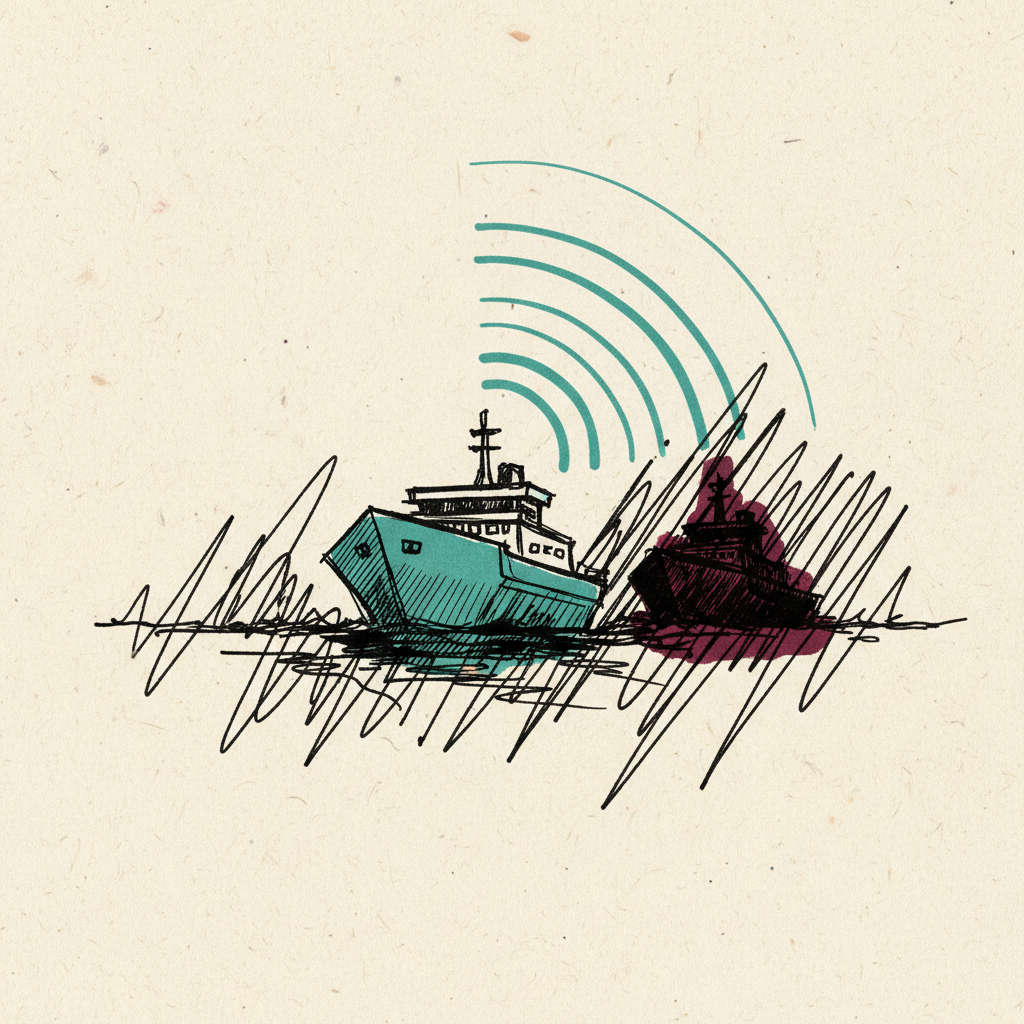
IMO-mandated ship transponder system; vessels going 'AIS-dark' signal concealment in Hormuz.
Last refreshed: 29 April 2026
How do analysts track ships going AIS-dark through the Hormuz Strait?
Timeline for AIS
Mentioned in: Hormuz transits climb to 13 on 28 April
Iran Conflict 2026- What is AIS and how does ship tracking work?
- AIS (Automatic Identification System) is an IMO-mandated transponder fitted to vessels over 300 gross tons, broadcasting position, identity, and speed every 2-10 seconds. Aggregators like MarineTraffic and Kpler compile this data into a global shipping picture.Source: IMO
- What does it mean when a ship goes AIS-dark?
- Going AIS-dark means a vessel has disabled or spoofed its transponder to conceal its position and identity, typically to evade sanctions enforcement or naval interdiction. In the Hormuz context, AIS-dark transits are a key indicator of potential sanctions evasion.Source: Vortexa; Kpler
- How many ships transited Hormuz on Day 60 of the Iran conflict?
- AIS data showed 13 transits through the Hormuz Strait on 28 April 2026 (Day 60). The actual number of transits is likely higher, as AIS-dark vessels are not captured in public tracking data.Source: MarineTraffic; Kpler
Background
The Automatic Identification System (AIS) is an IMO-mandated transponder system fitted to all commercial vessels above 300 gross tons engaged on international voyages, and to all passenger ships. Each transponder broadcasts the vessel's identity, position, course, speed, and other data at intervals of 2-10 seconds, creating the real-time global shipping picture used by port authorities, coast guards, and maritime intelligence services.
A vessel that switches off or spoofs its AIS transponder is described as going "AIS-dark". In the Hormuz Strait context during the Iran conflict, AIS-dark transits are a primary indicator that a vessel is concealing its identity or route, typically to avoid interdiction by US or allied naval forces enforcing the blockade, or to obscure Iranian crude shipments. Tracking firms including Vortexa and Kpler monitor AIS-dark intervals as a proxy for smuggling activity.
AIS data is aggregated by commercial providers (MarineTraffic, VesselFinder, Kpler) and by military intelligence services. It is openly available at low resolution and subject to spoofing: vessels can broadcast false positions or suppress their signal entirely. The gap between reported AIS transits and estimated actual transits through Hormuz has been a key analytical challenge throughout the Iran conflict.
