EHEL
US Army directed-energy competition for counter-drone laser weapon; winner selection slipped to Q4 FY26.
Last refreshed: 29 May 2026
When will the US Army pick its counter-drone laser winner?
Timeline for EHEL
RAF Typhoons fire APKWS in Gulf combat
Drones: Industry & DefenceMentioned in: Army-Navy commit $676m to JLWS laser
Drones: Industry & DefenceWhat is the EHEL counter-drone laser programme?
Why is the US Army still using APKWS instead of a laser against drones?
What is the difference between EHEL and the Joint Laser Weapon System?
Background
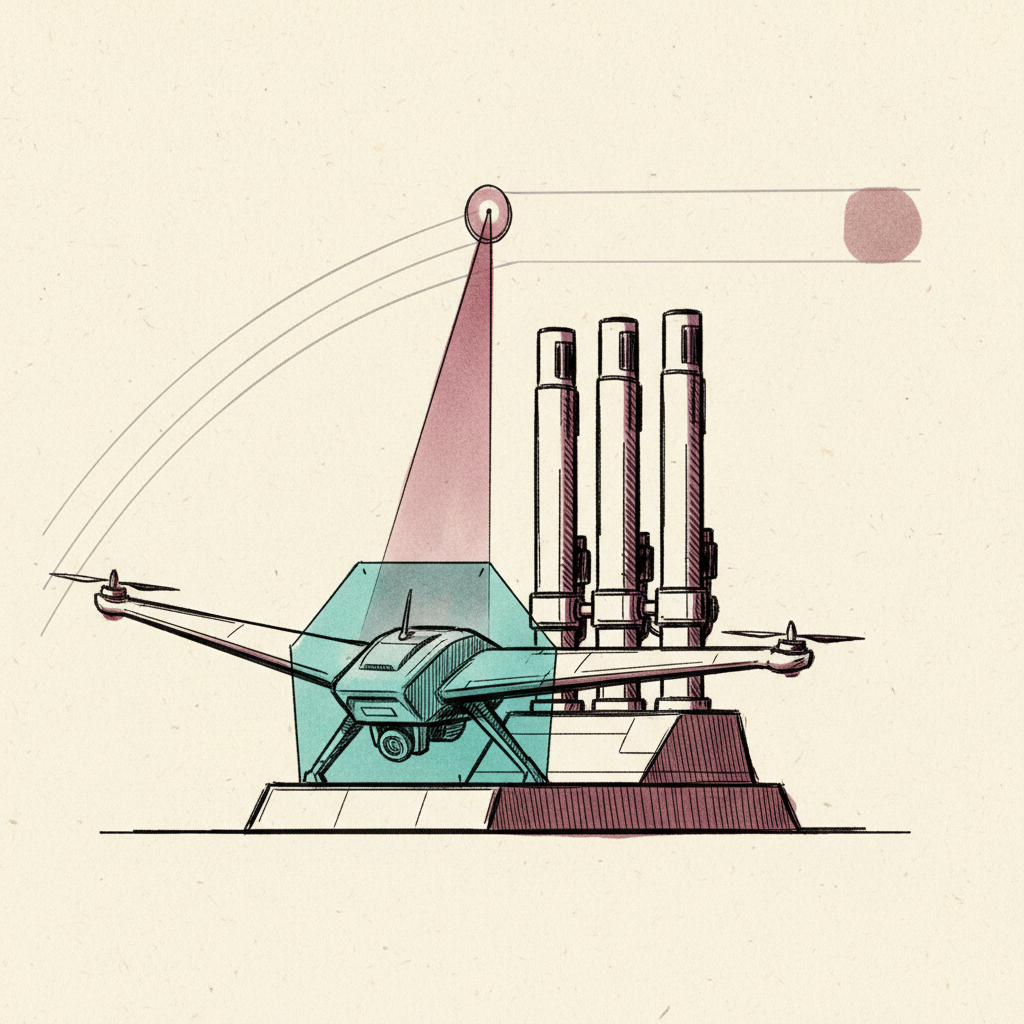
The Enduring High Energy Laser (EHEL) programme is the US Army's competition to select a high-energy laser system for counter-drone operations, targeting Group 1-3 unmanned aerial systems. The programme sits under the Army's efforts to find a cost-effective answer to drone swarms: conventional interceptors cost $4,000-6,000 per shot against threats that may cost a few hundred dollars to manufacture. Winner selection, originally planned for early FY26, slipped to Q4 FY26 following technical evaluations, creating a gap the Army has temporarily filled with the APKWS laser-guided rocket at approximately GBP 20,000 per shot.
EHEL sits alongside the Joint Laser Weapon System (JLWS), a separate $675.93 million Navy-Army programme through FY2031 targeting Cruise Missiles with a 150-kilowatt containerised laser scalable to 300-500 kilowatts. Defense News identified Lockheed Martin as the likely JLWS prime given its HELIOS and IFPC-HEL precedents. EHEL and JLWS address different threat tiers: EHEL against low-cost drone swarms, JLWS against cruise-missile-class targets. Both programmes emerged from the DAWG (Drone Augmented Weapons Group) line in Pentagon budgeting, which sits in a $54.6 billion FY2026-FY2030 five-year defence plan.
The EHEL winner-selection slip matters beyond the US: every NATO ally watching the Army's counter-drone programme draws its own procurement decisions from the outcome. A Lockheed Martin or Raytheon win would likely accelerate allied procurement of the same system; a smaller-prime win could open export pathways. Until EHEL fields, the Army bridges the gap with APKWS, Merops interceptors, and the Lattice c-UAS backbone.
