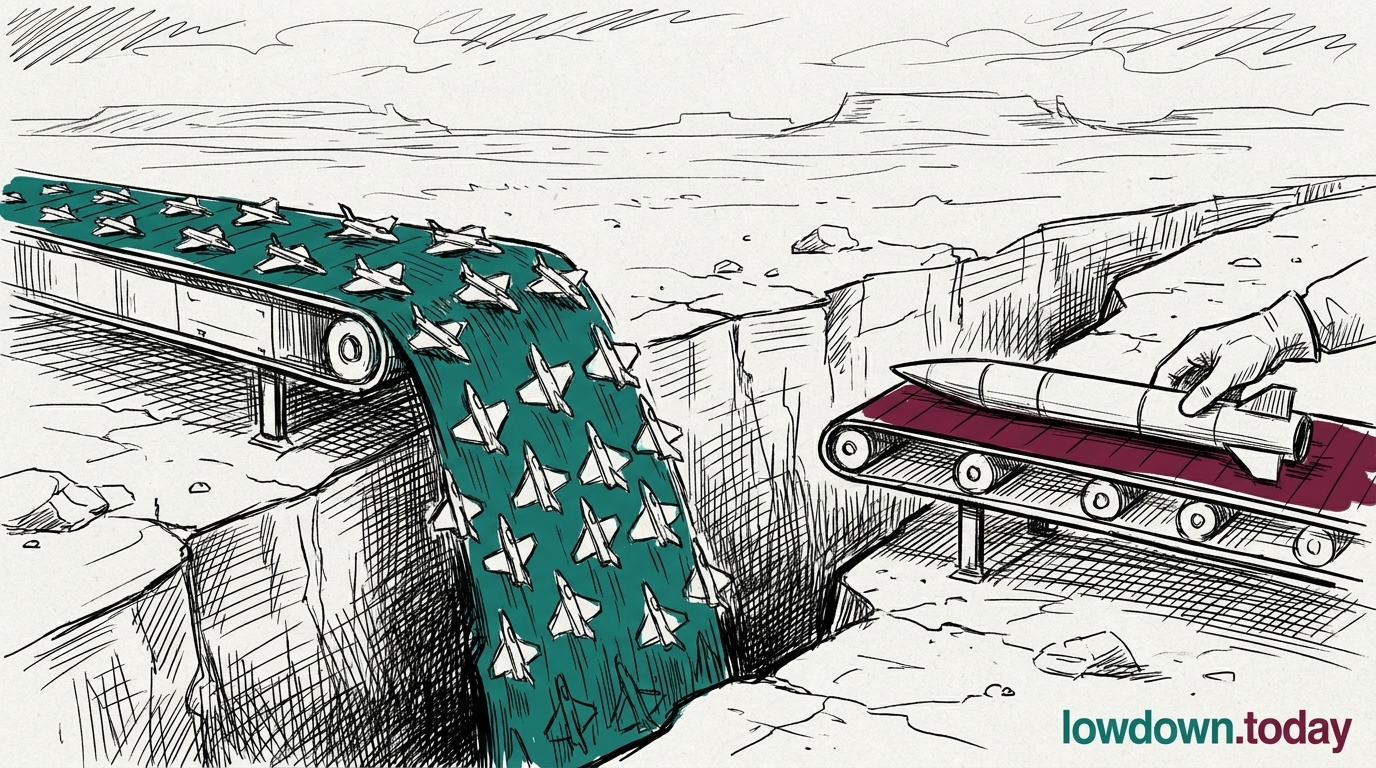
The US Army awarded Anduril a $16.8 million firm-fixed-price contract on 7 April for Ghost-X VTOL reconnaissance drones equipped with Trillium HD45LP sensors. Only one bid was received. The contract extends Anduril's monopoly pattern: the $20 billion Lattice enterprise vehicle consolidated counter-drone procurement, and the sole-source Ghost-X award now locks tactical ISR to the same vendor. The completion date is 1 May 2026.
A sole-source award on a tactical ISR requirement that multiple firms could theoretically fill indicates that the procurement structure has been shaped around the incumbent. Ghost-X was selected for the Army's company-level small UAS directed requirement in September 2024; this contract converts that selection into a production order without competitive pressure. The pattern mirrors the Lattice task order and its parent enterprise vehicle: each award is structured to prevent parallel competition.
Anduril now holds default procurement positions in three separate Pentagon programme offices simultaneously: counter-UAS command (Lattice), autonomous combat aircraft (Fury at Arsenal-1), and tactical ISR (Ghost-X). No single defence contractor has held monopoly positions across three drone programme categories before. The commercial consequence is that non-incumbent firms face a structural narrowing of addressable market that compounds with each contract cycle.
The broader question is whether this concentration is a wartime acceleration choice or a permanent structural shift. Competitive tendering was designed to prevent single-vendor dependency; its abandonment signals that speed-to-delivery has overtaken competition as the dominant procurement value.




