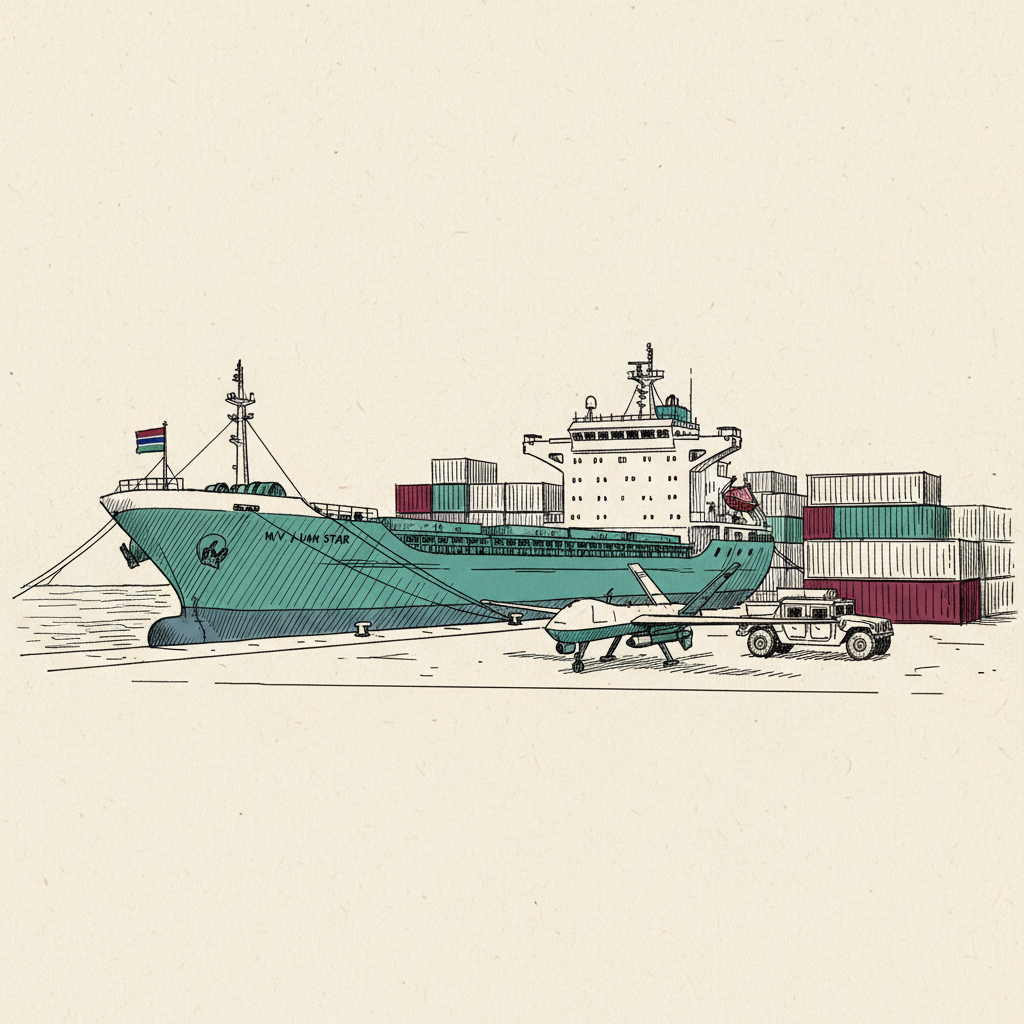
M/V Lian Star
Gambian-flagged bulk carrier disabled by a CENTCOM Hellfire missile in the Gulf of Oman on 30 May 2026 after ignoring 20+ blockade warnings.
Last refreshed: 31 May 2026 · Appears in 1 active topic
Why did the US military fire a missile at a civilian cargo ship?
Timeline for M/V Lian Star
Mentioned in: Blockade hits 121 ships, one holed
Iran Conflict 2026Mentioned in: IRGC hits Sirik base, vows sharper reply
Iran Conflict 2026Mentioned in: CENTCOM hits Goruk and Qeshm Island
Iran Conflict 2026Hellfire disables a cargo ship's engine
Iran Conflict 2026What happened to the M/V Lian Star?
Why did the US fire a missile at the Lian Star?
Is the Lian Star the first ship disabled by a US missile in the Iran blockade?
Background
The M/V Lian Star became the most dramatic escalation in the US naval blockade of Iranian oil exports when CENTCOM fired a Hellfire missile into its engine room on approximately 29-30 May 2026, disabling the vessel in the Gulf of Oman. The crew had ignored more than 20 blockade warnings before the strike. The ship was disabled but not seized; its civilian crew remained aboard a powerless hull. CENTCOM's cumulative vessel redirection count reached 116 with the Lian Star incident.
The Lian Star is a bulk carrier sailing under a Gambian flag of convenience, a common practice that obscures the vessel's beneficial ownership and trading routes. Gambia is a signatory to international maritime law and the UN Convention on the Law of the Sea, though Gambian-flagged vessels have repeatedly appeared in the Iran-linked shadow fleet attempting to circumvent sanctions.
The strike marked the first time the Hormuz blockade destroyed a commercial vessel's propulsion by munition rather than by boarding or redirecting. The incident sharply raised the legal and diplomatic stakes of the naval operation, setting a precedent for kinetic enforcement against non-compliant commercial hulls and drawing international scrutiny over the rules of engagement applied to civilian shipping.
Where was the Lian Star when it was hit?