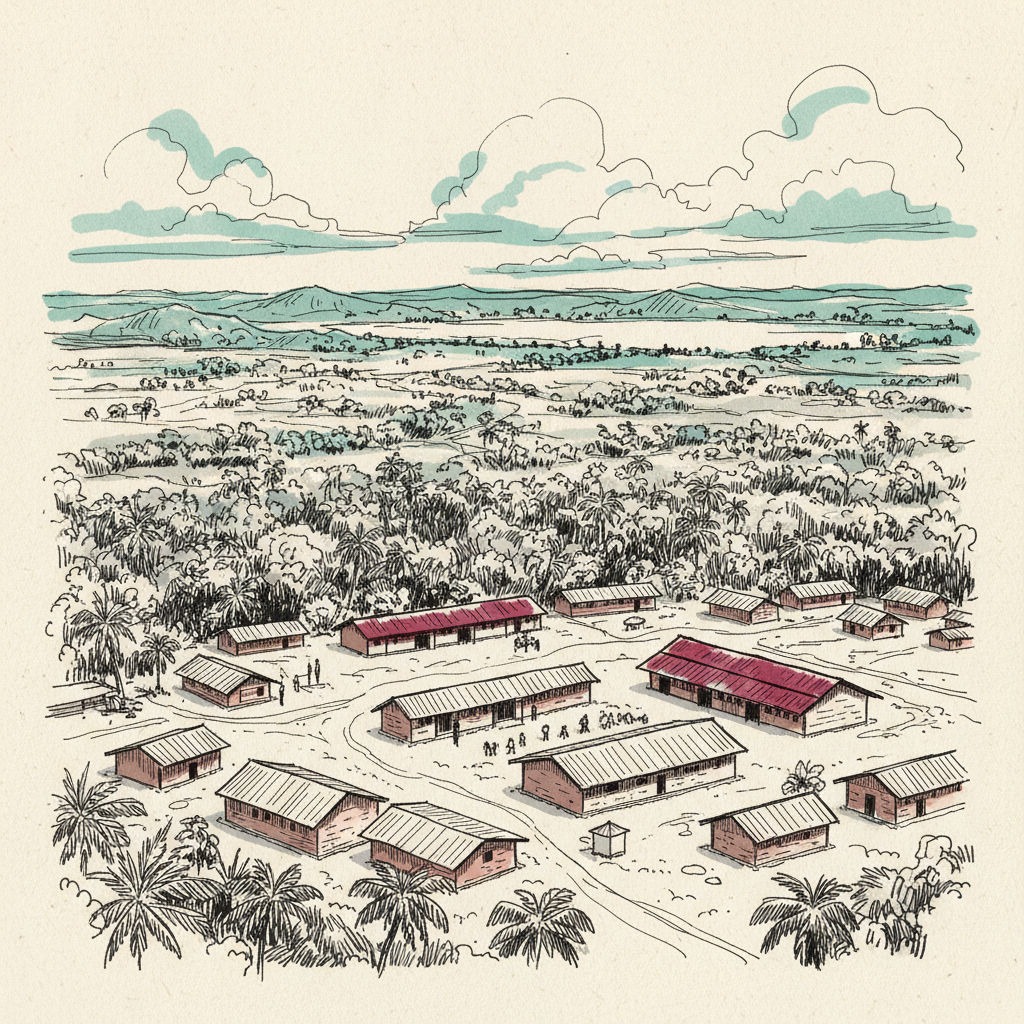
Ituri Province
Eastern DRC province; Bundibugyo Ebola outbreak epicentre across Bunia, Rwampara and Mongbwalu health zones.
Last refreshed: 17 May 2026 · Appears in 1 active topic
Why is an Ebola outbreak in Ituri Province so hard to contain?
Timeline for Ituri Province
Mentioned in: WHO declares Ebola PHEIC, no committee
Pandemics and BiosecurityIturi outbreak ran undetected for weeks
Pandemics and BiosecurityMentioned in: Kinshasa lab confirms species on 14 May
Pandemics and BiosecurityScience links USAID cut to violence
Pandemics and Biosecurity- Why is the Ebola outbreak in Ituri Province so hard to control?
- Ituri Province combines active armed conflict (ADF and community violence), gold-mining population movement, basic health infrastructure that cannot distinguish early Ebola from malaria, 1,700 km of mostly unpaved roads from Kinshasa, and a record of community distrust toward international response teams. These factors created a 4+ week detection gap before WHO received any signal.Source: RFI Afrique; Al Jazeera; Imperial College London; Craig Spencer, 15 May panel
- Where exactly in DRC is the 2026 Ebola outbreak?
- The outbreak is concentrated in three health zones in Ituri Province, northeastern DRC: Bunia (provincial capital), Rwampara (in Irumu territory), and Mongbwalu (in Djugu territory). Ituri borders Uganda to the east and South Sudan to the north.Source: WHO PHEIC technical assessment, 17 May 2026
- Has Ituri Province had Ebola before?
- Yes. Ituri was affected by the 2018-20 DRC Kivu Ebola epidemic, the second-largest ever, and DRC declared a separate Ituri sub-outbreak in 2020. The 2018-20 response in conflict-zone eastern DRC, including Ituri, is the direct operational precedent for the current response. A WHO employee was killed during that response.Source: WHO; CIDRAP
- How did Ebola get from Ituri to Kampala?
- The index case in Kampala was a 59-year-old Congolese man who travelled from Ituri to the Ugandan capital, a journey along transport corridors used by gold-mining migrant workers. He was admitted to Kibuli Muslim Hospital in Kampala on 11 May after developing symptoms and died on 14 May. Gold-mining-driven population movement between Mongbwalu, Bunia and the Uganda border is the primary vector for geographic spread.Source: Daily Monitor (Uganda); briefing body
Background
Ituri Province is an administrative province in northeastern Democratic Republic of Congo, bordering Uganda to the east and South Sudan to the north. Its capital is Bunia. The province encompasses roughly 65,000 square kilometres of equatorial Forest, savannah and highland terrain, crossed by unpaved roads that become near-impassable in the wet season. It is one of the most resource-contested areas of the DRC: gold mining drives constant cross-border population movement, and the province has experienced persistent armed conflict involving the ADF (Allied Democratic Forces, an Islamist armed group originally from Uganda), the CODECO militia and inter-community violence in Djugu territory.
Ituri was the epicentre of the 2018-20 DRC Ebola Kivu epidemic — the largest Ebola outbreak in DRC's history and the second largest ever, with over 3,400 cases and 2,287 deaths. That outbreak was centred in South Kivu and North Kivu provinces but spread into Ituri; a separate declared outbreak in Ituri in 2020 added cases while the North Kivu outbreak was still ongoing. The operational experience of managing Ebola in active conflict zones, including a WHO employee killed in 2019, was developed substantially in this geography.
The 2018-20 epidemic produced a body of tactical knowledge about contact tracing in armed-conflict environments and about community trust-building where foreign response teams are associated with security risk. Those lessons form the institutional memory INRB, Africa CDC and MSF are now drawing on for the 2026 response.
The 2026 Bundibugyo Ebola outbreak is concentrated across three health zones in Ituri Province: Bunia, Rwampara (in Irumu territory) and Mongbwalu (in Djugu territory). Both Djugu and Irumu have active armed-group presence: Djugu has ongoing community-tension violence and Irumu hosts ADF activity. Al Jazeera reported on 15 May that recent armed-group attacks in Ituri killed at least 69 people in the weeks immediately preceding the outbreak's surface.
Ituri provincial health authorities told RFI Afrique that the first haemorrhagic-fever deaths were recorded in April 2026, at least four weeks before WHO received its signal on 5 May. The time lag reflects a structural dynamic: health workers in rural Ituri present with fever are treated for malaria and sent home; the health systems are basic enough that haemorrhagic-fever markers are not triaged until patients are critically ill. With 246 suspected cases and 80+ suspected deaths by the PHEIC declaration, and an Imperial College-assessed 65% INRB positivity rate, the outbreak had a substantial head start before international response teams arrived.
Gold-mining-driven population movement between Mongbwalu, Bunia, the Uganda border and Kampala is the primary driver of geographic spread. The same transport corridors that brought the virus from Ituri to Kampala's Kibuli Muslim Hospital — a day's overland journey — connect Ituri to South Sudan, where refugee camps near the border create additional congregate-setting exposure risk.