Indian Ocean
Third-largest ocean, bounded by Africa, Asia, Australia and the Southern Ocean.
On 20 July, a vessel burned off Oman without a confirmed cause, showing that risks around the strait of Hormuz extend into the Indian Ocean’s approach waters.
Last refreshed: 22 September 2026 · Appears in 1 active topic
Can Russian and Iranian tankers both use the Indian Ocean legally?
Timeline for Indian Ocean
Mentioned in: Europe's West Nile cases reach 1,765
Pandemics and BiosecurityMentioned in: US flies its last troops out of Erbil
Iran Conflict 2026Mentioned in: Malaria at Frankfurt Airport kills three
Pandemics and BiosecurityMentioned in: UN Tourism cuts 2026 arrivals forecast
Nomads & CommunitiesMentioned in: Houthis take all of Yemen's Red Sea coast
Iran Conflict 2026Background
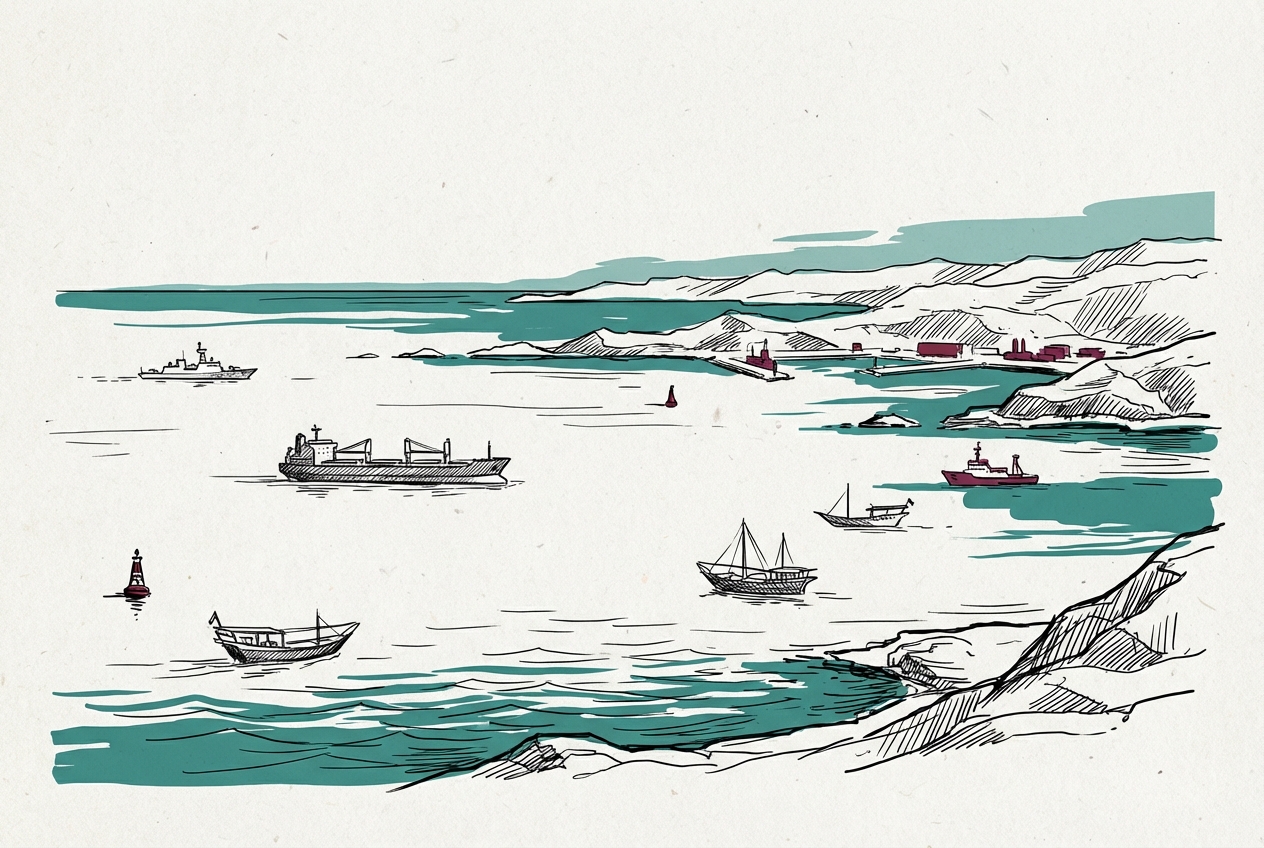
The Indian Ocean is the world’s third-largest ocean, bounded by Africa, Asia, Australia and the Southern Ocean. Its north-western waters connect The Gulf of Oman and Arabian Sea with routes towards South Asia, East Asia, Eastern Africa and Australia. That geography makes it a working corridor for Merchant shipping as well as a naval theatre.
The ocean matters most where Gulf exports enter it. On 1 April, the Habshan-Fujairah pipeline was carrying crude to the Indian Ocean coast outside the strait of Hormuz, illustrating the value of routes that reach open water without a strait transit. Fujairah’s role also links the ocean to Gulf Energy infrastructure.
Its scale means disruption near one approach can affect routes FAR beyond the immediate incident. On 18 April, damage to a container ship near Oman showed why security conditions in these approaches matter to shipping using the wider ocean.
Risk reaches the ocean approaches
On 18 April, a container ship was damaged by an explosive device 25 nautical miles north-east of Oman. Its CREW reached safety and the vessel made for port, but no attacker was identified. For the Indian Ocean, the incident placed danger beyond the strait of Hormuz itself, in waters used by ships entering and leaving The Gulf.
On the night of 20 July, UK Maritime Trade Operations reported a vessel burning off Oman without naming it or confirming the cause. The report did not establish a wider closure, but it showed that avoiding Hormuz did not remove exposure for traffic on the ocean’s north-western approaches.
What is the Indian Ocean?
Was a warship sunk in the Indian Ocean during the Iran conflict?
Did Iran attack Diego Garcia?
Why is the Indian Ocean important in the Iran war?
How does the Indian Ocean compare to the Arabian Gulf as a conflict zone?


