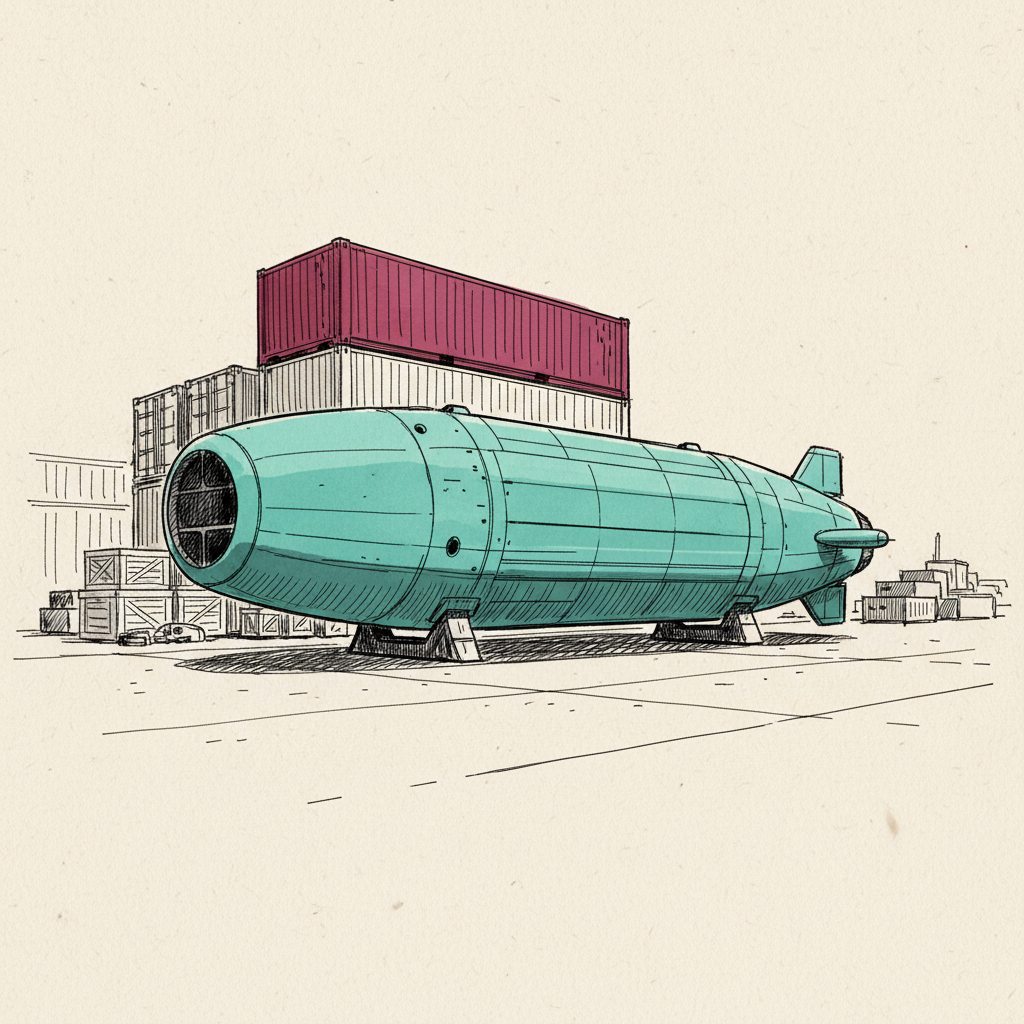
Herne XLAUV
The Herne XLAUV is BAE Systems' extra-large autonomous underwater vehicle, described as on track for Lloyd's Register certification and 2026 delivery as of April 2026.
Herne, BAE Systems' extra-large autonomous underwater vehicle due for Lloyd's Register certification in 2026, was left off the AUKUS Pillar II Signature Project's fact sheet on 30 May 2026, which named only two US-built platforms.
Last refreshed: 24 July 2026 · Appears in 1 active topic
Why was BAE Systems' Herne XLAUV left out of the AUKUS Pillar II Signature Project?
Timeline for Herne XLAUV
Mentioned in: A £6.68m trial holds the subsea money
Autonomous Systems: Land & SeaMentioned in: Europe bids for the AUKUS seabed
Autonomous Systems: Land & SeaAUKUS names two American sea robots
Autonomous Systems: Land & SeaBackground
Herne is a large-displacement autonomous submarine-shaped robot developed by BAE Systems in the United Kingdom, built for the Royal Navy under the extra-large unmanned underwater vehicle (XLUUV) category. Vehicles of this size sit between conventional torpedo-shaped AUVs and full-sized submarines, large enough to carry substantial payloads and operate for extended periods without surface support.
Lloyd's Register certification, the third-party assurance process Herne is working through, is a prerequisite for operational Royal Navy deployment. As the UK's principal sovereign XLAUV programme, Herne's progress is the benchmark against which Britain's undersea-autonomy industrial standing, relative to US primes such as HII and L3Harris, is measured.
Herne misses AUKUS's launch fact sheet
BAE Systems said in April 2026 that Herne, its extra-large autonomous underwater vehicle for the Royal Navy, was on track for Lloyd's Register certification and delivery within the year.
Weeks later, on 30 May, the AUKUS Pillar II Signature Project fact sheet named only two US-built platforms and no UK system, despite Herne's expected delivery in the same year. No official reason was given, leaving open whether BAE Systems' vehicle will secure trilateral programme status or remain a bilateral Royal Navy capability.
What is the Herne XLAUV and who makes it?
Why was the Herne XLAUV not included in the AUKUS Pillar II Signature Project?
When will the BAE Systems Herne XLAUV be delivered to the Royal Navy?
What is an extra-large autonomous underwater vehicle?


Written with AI from Lowdown's published reporting. Not individually reviewed by an editor. Updated 24 July 2026. Editorial standards.