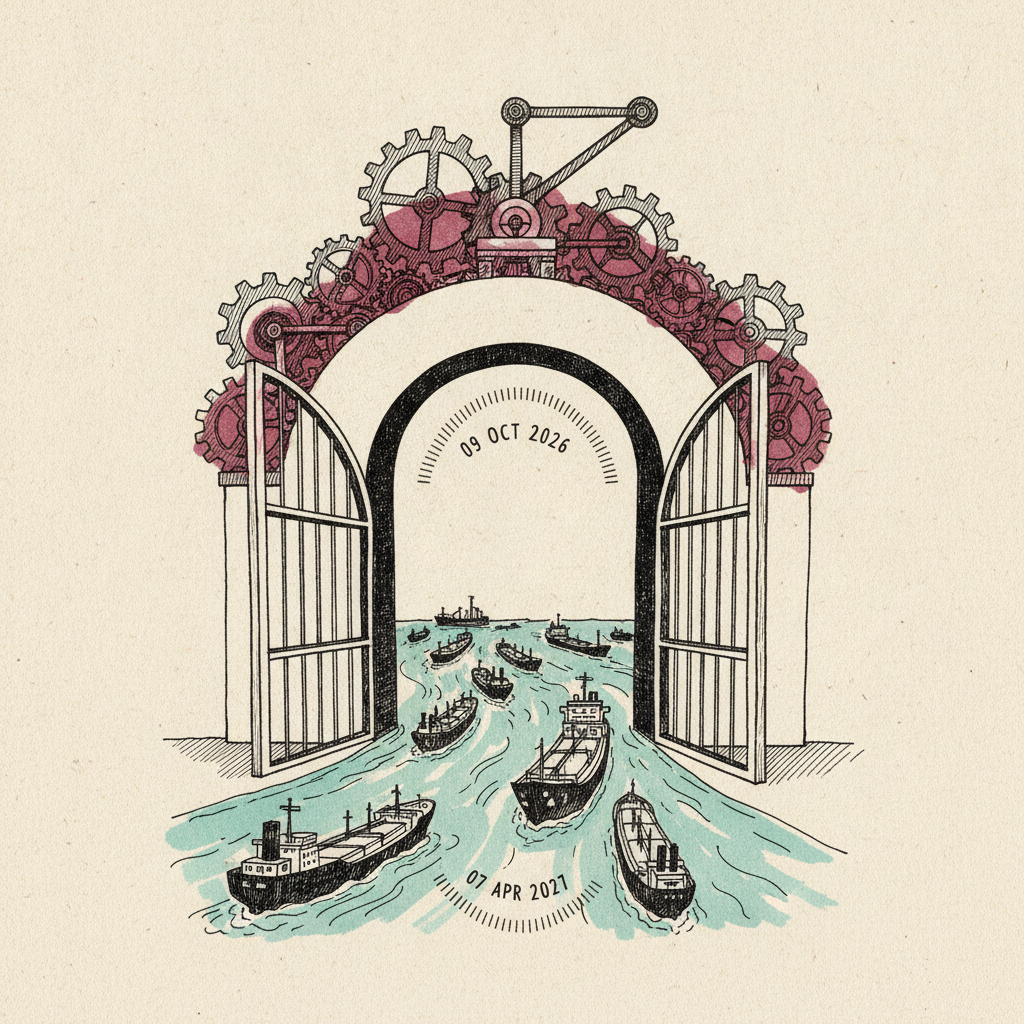
General License 135
OFAC licence authorising trade in Russian-origin diesel, issued 9 October 2026, expiring 7 April 2027.
OFAC issued General License 135 on 9 October 2026, the day Donald Trump and Vladimir Putin spoke by phone, opening sales and imports of Russian diesel into the United States until 7 April 2027.
Last refreshed: 12 October 2026
Timeline for General License 135
Mentioned in: Zelenskyy ties elections to a ceasefire
Russia-Ukraine War 2026Authorised sale and import of Russian diesel to April 2027
Russia-Ukraine War 2026: OFAC opens US market to Russian dieselBackground
General License 135 is a US Treasury sanctions licence that the Office of Foreign Assets Control (OFAC) issued on 9 October 2026, signed by its director, Bradley T. Smith. It authorises the sale, delivery, offloading and importation of Russian-origin diesel, including into the United States, until 12:01 a.m. eastern daylight time on 7 April 2027.
It is issued under OFAC's existing Russia sanctions regulations, 31 CFR parts 587 and 589. Paragraph (b) bars any debit to accounts at US financial institutions of the Bank of Russia, the National Wealth Fund and the Russian Ministry of Finance, so buyers can pay Russian sellers while the sovereign accounts stay blocked.
The licence came on the day Donald Trump and Vladimir Putin spoke by phone; Reuters reported the leaders agreed Russian diesel supplies to American and world markets. Its legal route avoided the Graham sanctions act's waiver, which requires a certification to Congress.
The licence opens America to Russian diesel
GL 135 authorises the sale, delivery, offloading and importation of Russian-origin diesel, including into the United States, so American buyers can now pay Russian sellers. Paragraph (b) keeps the Russian state's own money frozen: no debits from the US-held accounts of the central bank, The National Wealth Fund or the Finance Ministry.
The licence runs on OFAC's existing Russia regulations rather than the Graham sanctions act's waiver, which would need a certification to Congress. Kaja Kallas, the EU foreign policy chief, said Europe would not follow. Volodymyr Zelenskyy called the licence "an investment in a war that must be ended, not prolonged".