Can Russia win all of Donbas at the table after losing ground on the field?
Timeline for Donbas
Mentioned in: Russia fakes advance with AI footage
Russia-Ukraine War 2026Mentioned in: Front stalls as death toll climbs
Russia-Ukraine War 2026Mentioned in: ISW Logs Third Straight Net-Loss Week for Russia
Russia-Ukraine War 2026Mentioned in: ZNPP Day 50: nuclear alert sensors destroyed
Russia-Ukraine War 2026Mentioned in: Kyiv calls Putin truce offer theatrical
Russia-Ukraine War 2026Background
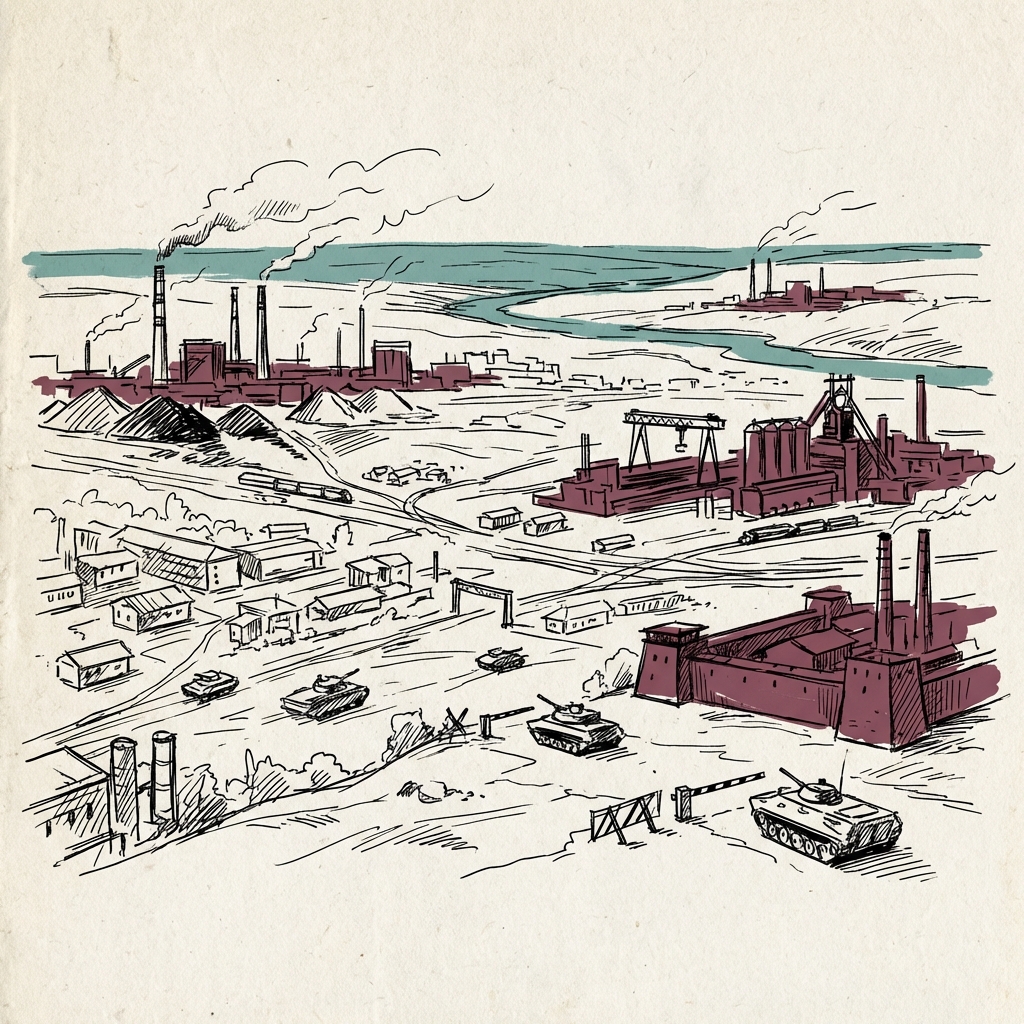
Donbas is the coal and steel heartland of eastern Ukraine, encompassing Donetsk and Luhansk oblasts. It has been a theatre of conflict since 2014, when Russian-backed separatists seized territory following the Maidan revolution; Russia formally annexed both oblasts in September 2022, though as of mid-2026 it does not fully control either. The full-scale invasion brought Russian forces deep into Donetsk Oblast, where advances around Pokrovsk, Chasiv Yar and the Fortress Belt have been contested for more than two years.
The region contains significant industrial infrastructure, steel mills, coalmines and chemical plants, much of it destroyed or non-functional since 2022. Ukraine retains the western portions of Donetsk Oblast, including Pokrovsk and Sloviansk. Russia's stated objective of full Donbas control remains the political frame around which Ceasefire negotiations are structured, and the Fortress Belt running through western Donetsk has held despite sustained Russian pressure.
Donbas remained the explicit price of any settlement in early June 2026: at SPIEF on 5 June Putin restated that a treaty ceding all of Donetsk must be agreed before any summit. Yet the battlefield cut against that demand. ISW recorded no confirmed Russian advances anywhere on 7 June, and Russia net-lost 14 square miles in The Week to 3 June, down from 38 The Week before, so the front is stabilising rather than reversing.
The one exception was a new directional threat toward Sloviansk, where Russia seized Lypivka and reached the Siverskyi Donets-Donbas canal. DeepState showed a small Russian net gain over the same four weeks, the widest divergence from ISW since the Kursk withdrawal, underlining how contested even the territorial-loss data has become as the central metric for Ceasefire leverage.
What is Donbas?
Does Russia control Donbas?
What is Russia's Donbas deadline in 2026?
Where is Donbas on a map?
How has the Donbas front line changed in 2026?
What is Donbas and why is it at the centre of the Ukraine war?
Is Russia gaining territory in Donbas in 2026?
Does Russia fully control the Donbas region?
What is the Fortress Belt in Donbas?
Why does Russia demand all of Donbas in peace talks?



