Will Dahej LNG Terminal reject further Russian LNG cargoes following the Kunpeng case?
Timeline for Dahej LNG Terminal
Rejected Kunpeng cargo over US Treasury sanctions designations
European Energy Markets: Kunpeng rejected at Dahej, LNG sanctions holdBackground
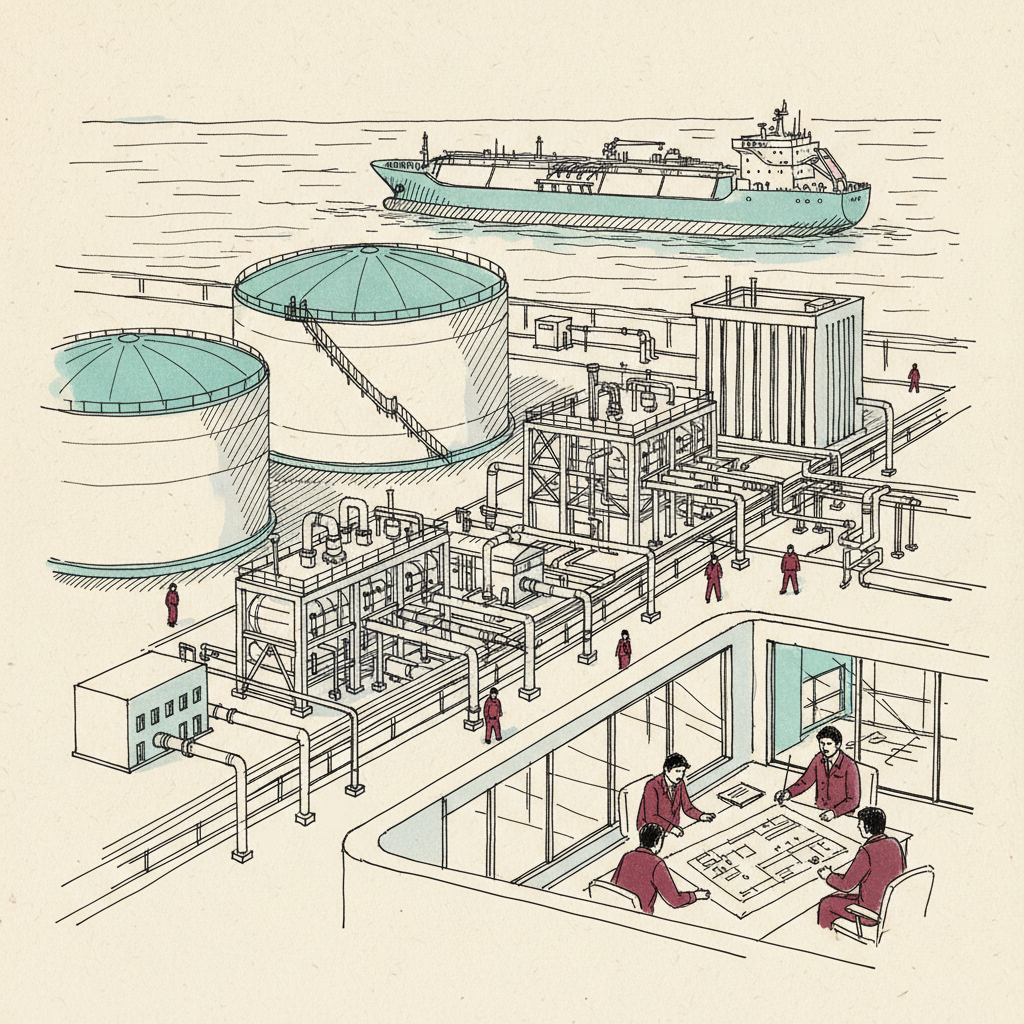
Dahej LNG Terminal is India's largest Liquefied Natural Gas receiving and regasification terminal, located on The Gulf of Khambhat in Gujarat state. It is operated by Petronet LNG, India's dominant LNG import company, which is jointly owned by GAIL, ONGC, Indian Oil, and BPCL. With a regasification capacity of approximately 17.5 million tonnes per annum (mtpa), Dahej accounts for the majority of India's LNG import infrastructure. In early May 2026, Dahej rejected the Kunpeng LNG carrier, which was transporting cargo from Russia's Portovaya facility, citing US Treasury sanctions designations associated with the vessel.
Dahej began operations in 2004 as India's first LNG terminal and has undergone multiple capacity expansions, handling cargoes from Qatar (the dominant source under long-term contract), the United States, Australia, and SPOT markets globally. Petronet LNG's contracts with Qatar's RasGas (now QatarEnergy) cover the majority of Dahej's throughput, with SPOT volumes supplemented as needed. The terminal's ability to reject a specific cargo based on sanctions compliance marks a meaningful shift in Indian LNG-market governance, given India's general reluctance to enforce Western sanctions on Russian energy.
Dahej's rejection of the Kunpeng is the first publicly documented case of an Asian LNG terminal turning away a Russian cargo on sanctions grounds. The terminal's decision, whether commercially or politically motivated, sets a practical precedent that other Asian terminals face as secondary-sanctions pressure from the US Treasury intensifies. India continues to purchase large volumes of Russian crude oil; the Kunpeng rejection suggests Indian LNG market participants are applying a more cautious posture to LNG than to oil.
What is the Dahej LNG Terminal and who operates it?
Why did India's Dahej terminal reject a Russian LNG ship?
How big is the Dahej LNG Terminal and how important is it to India's energy supply?
Does India normally import Russian LNG and is this rejection unusual?

