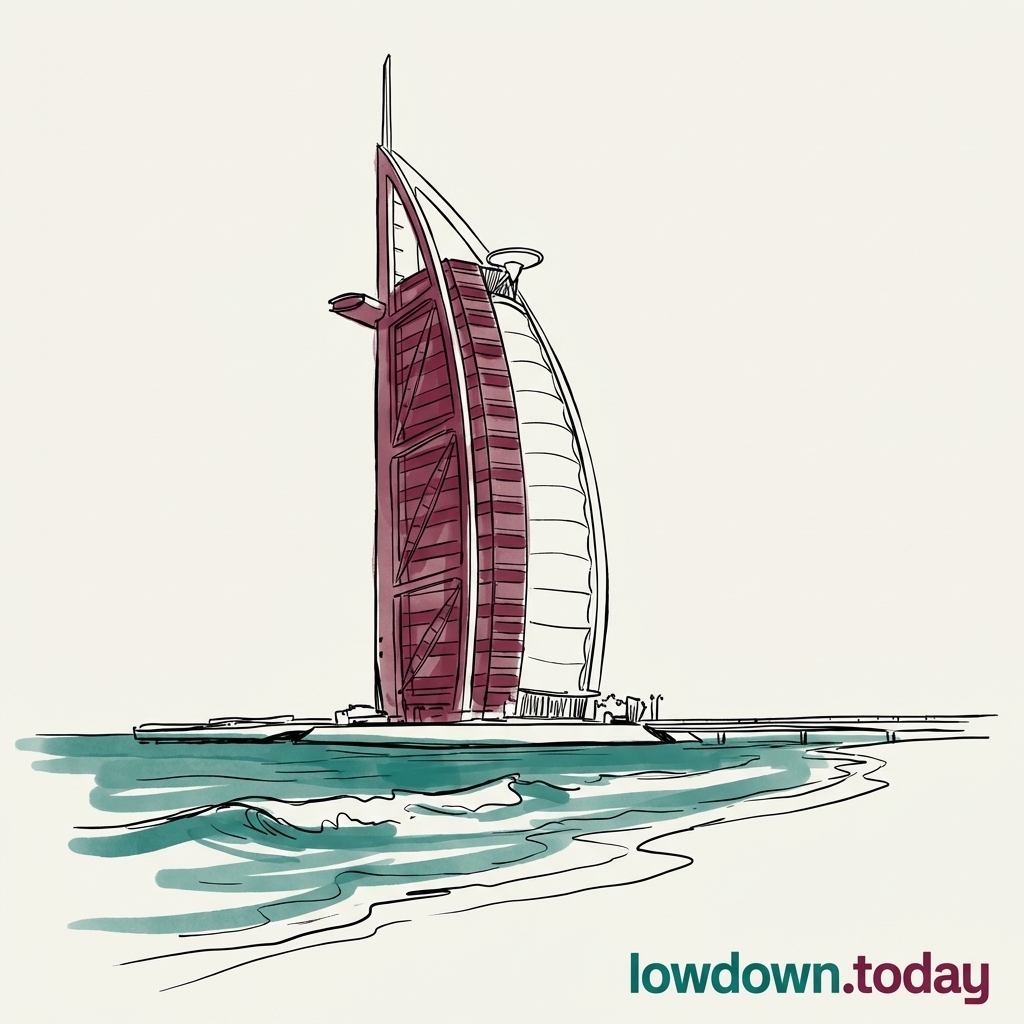
Burj Al Arab
Iconic luxury hotel on an artificial island in Dubai, UAE, opened 1999. Its 305-metre sail-shaped silhouette is a symbol of Gulf wealth. Struck by interceptor debris during the 2026 Iran conflict — the first confirmed damage to a major civilian landmark in a Gulf financial centre.
Last refreshed: 29 March 2026 · Appears in 1 active topic
How did debris from a shoot-down scar the world's most photographed hotel?
Timeline for Burj Al Arab
Mentioned in: US destroys Iran's satellite targeting
Iran Conflict 2026Mentioned in: WHO Dubai hub halted, 75 nations hit
Iran Conflict 2026Mentioned in: One Iranian missile lands inside UAE
Iran Conflict 2026Mentioned in: Missile debris hits Dubai's Burj Al Arab
Iran Conflict 2026Mentioned in: Seven Gulf states back offensive action
Iran Conflict 2026Background
The Burj Al Arab opened in 1999 on an artificial island off Jumeirah Beach. Designed by Tom Wright of Atkins, its 305-metre sail-shaped silhouette is the defining image of modern Dubai and of Gulf economic ambition. Operated by Jumeirah Group, it is widely cited as the world's first self-described seven-star hotel.
Fragments from intercepted Iranian missiles damaged the Burj Al Arab hotel in Dubai in 2026, marking the first confirmed strike on a major civilian landmark in a Gulf financial centre. The UAE Ministry of Defence confirmed that one Ballistic missile reached Emirati soil in the same wave, the first ever to land in the UAE, while 125 of 131 drones detected were intercepted.
The damage exposed the limits of Dubai's neutrality. Its status as a financial hub and luxury destination sits in tension with proximity to an active theatre; debris from interceptions produced visible damage that the UAE could not contain as a media story, forcing a public reckoning with a war it had not chosen to join.
What is the Burj Al Arab?
Was the Burj Al Arab hit in the Iran war?
Who owns and operates the Burj Al Arab?

Written with AI from Lowdown's published reporting. Not individually reviewed by an editor. Updated 29 March 2026. Editorial standards.