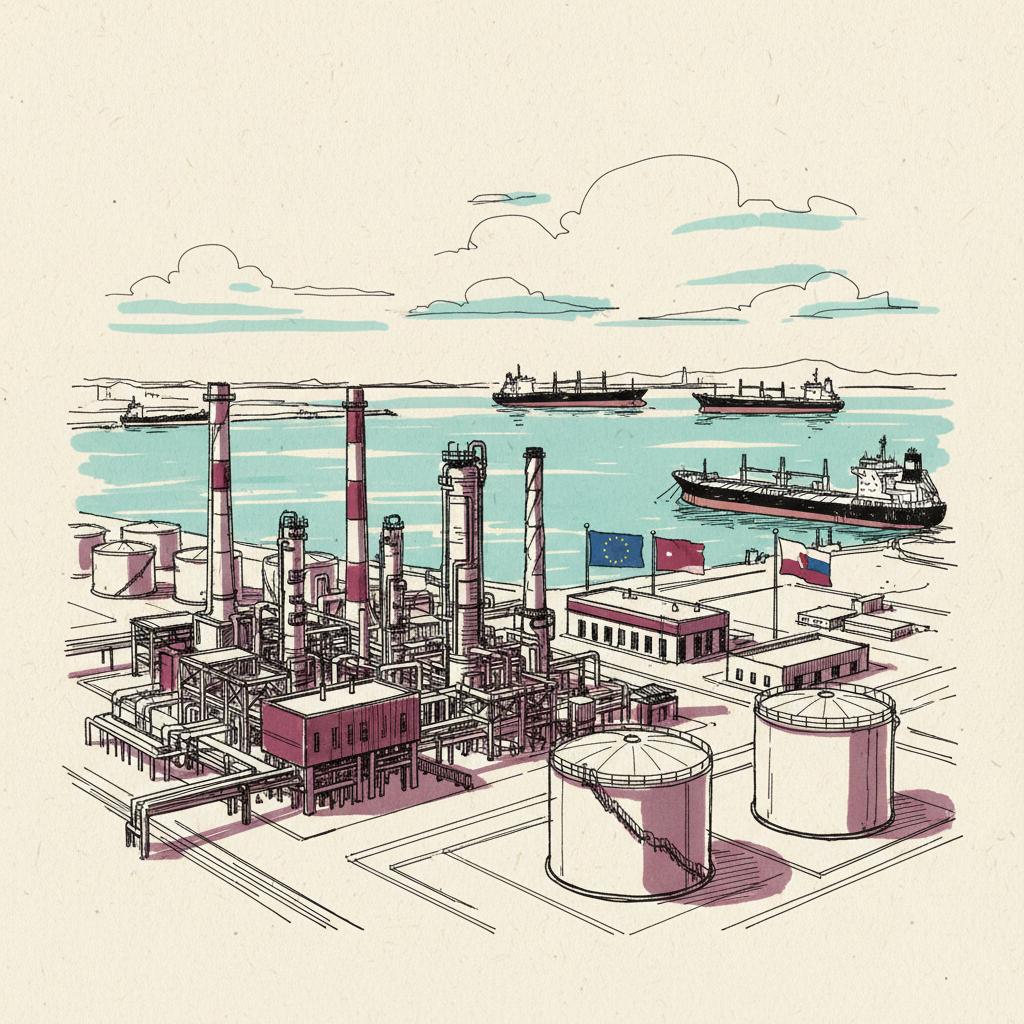
Bulgaria
EU/NATO Black Sea member; hosts Lukoil's Bulgarian refinery and the EU's leading digital-nomad Schengen-reset permit.
Since 10 April, Bulgaria's digital-nomad residence permit has offered non-EU residents a legal route beyond the Schengen 90-day clock. Its €27,533 annual income floor was confirmed on 1 May.
Last refreshed: 22 September 2026 · Appears in 7 active topics
Is Bulgaria's €27,533 nomad permit now the best way round Europe's new entry clock?
Timeline for Bulgaria
Mentioned in: Cambodia confirms sixth human H5N1 case
Pandemics and BiosecurityMentioned in: Six states name no AI Act regulator
European Tech SovereigntyMentioned in: Europol sinkholes Sality after two decades
Cybersecurity: Threats and DefencesMentioned in: AI Act fines land on a stale register
European Tech SovereigntyMentioned in: Kenya sets a $50,000 insurance floor
Nomads & CommunitiesBackground
Bulgaria is an EU and NATO member on the Black Sea. Its present relevance rests on two durable links: it is an eastern member state with a digital-nomad residence route, and it hosts the Neftohim Burgas refinery. The permit was authorised on 20 December 2025, giving Bulgaria a specific role in long-stay access for non-EU residents.
The country also sits where European sanctions, Russian-linked energy assets and domestic fuel security meet. Bulgaria's intervention over the Lukoil founder in July showed that the refinery's legal and ownership position can affect Sofia's stance inside EU negotiations. Its EU membership makes both questions wider than domestic policy: residence rules affect movement within Europe, while refinery decisions carry consequences for regional energy supply.
Bulgaria's permit opens a legal route
On 10 April, the Entry/Exit System began recording non-EU travellers' arrivals and departures across Schengen. That made Bulgaria's residence permit more important for people who need a lawful base beyond the 90-day visitor allowance, rather than another short reset outside Schengen.
Bulgaria launched the permit on 20 December 2025. On 1 May, immigration-law sources corrected its annual income floor to €27,533, equal to 50 times the monthly minimum wage. The correction placed Bulgaria below Greece's €42,000 equivalent, giving the country a distinct role in the European long-stay market.
Bulgaria protects refinery exposure
On 23 July, Bulgaria secured the removal of Lukoil founder Vagit Alekperov from the EU's 21st sanctions package. Sofia cited Lukoil's €3bn compensation claim over the 2023 nationalisation of the Neftohim Burgas refinery, linking sanctions policy to the country's direct legal exposure.
The refinery gives Bulgaria a concrete stake in decisions affecting Lukoil's European assets. On 28 May, the US Treasury extended the sale deadline for those refineries to 27 June, its sixth extension in the licence series. For Bulgaria, each delay prolonged uncertainty around a strategic domestic fuel asset and its prospective ownership.
Recently resolved
Why is Bulgaria now the top Schengen reset base for digital nomads?
How does Bulgaria's digital nomad permit compare to other EU countries?
What is Bulgaria's digital nomad visa income requirement?
Does Bulgaria get visa-free entry to Thailand as an EU country?
Does Bulgaria still receive Russian gas via TurkStream?
Why did the US give Bulgaria a special exemption from Lukoil sanctions?
Did Bulgaria have an election in 2026 and who won?
What is Bulgaria's position in NATO and the EU on the Ukraine war?
Is Bulgaria dependent on Russian energy?

Written with AI from Lowdown's published reporting. Not individually reviewed by an editor. Updated 22 September 2026. Editorial standards.