Skip to content
Drones: Industry & Defence
4APR

DroneShield Adds Kinetic Kill to Its Platform

1 min read
20:57UTC

A new partnership with Origin Robotics gives DroneShield something it lacked: the ability to physically destroy a drone, not just detect or jam it.

TechnologyDeveloping
Key takeaway

BLAZE integration gives DroneShield a full detect-to-destroy counter-drone capability on one platform.

DroneShield signed a memorandum of understanding with Origin Robotics on 31 March 2026 to integrate the BLAZE kinetic interceptor into its DroneSentry-C2 command platform. 1

The partnership addresses a gap in DroneShield's existing product line. DroneSentry-C2 detects, tracks, and electronically defeats drones, but it could not physically destroy them. BLAZE adds that capability: a kinetic intercept layer controlled through the same command interface. For military buyers, a single platform handling detection through destruction simplifies procurement and reduces integration risk.

Deep Analysis

In plain English

DroneShield currently makes systems that can detect a drone coming and then jam its signal so the operator loses control. What it could not do was physically destroy the drone. This deal with Origin Robotics adds that final step: once DroneSentry-C2 detects and tracks a drone, it can now command BLAZE, a small interceptor drone, to physically hunt it down and destroy it. The whole sequence, from detection to destruction, runs through one system.

What could happen next?
  • An integrated detect-to-destroy platform will strengthen DroneShield's positioning in European military tenders that require full-spectrum C-UAS capability.

First Reported In

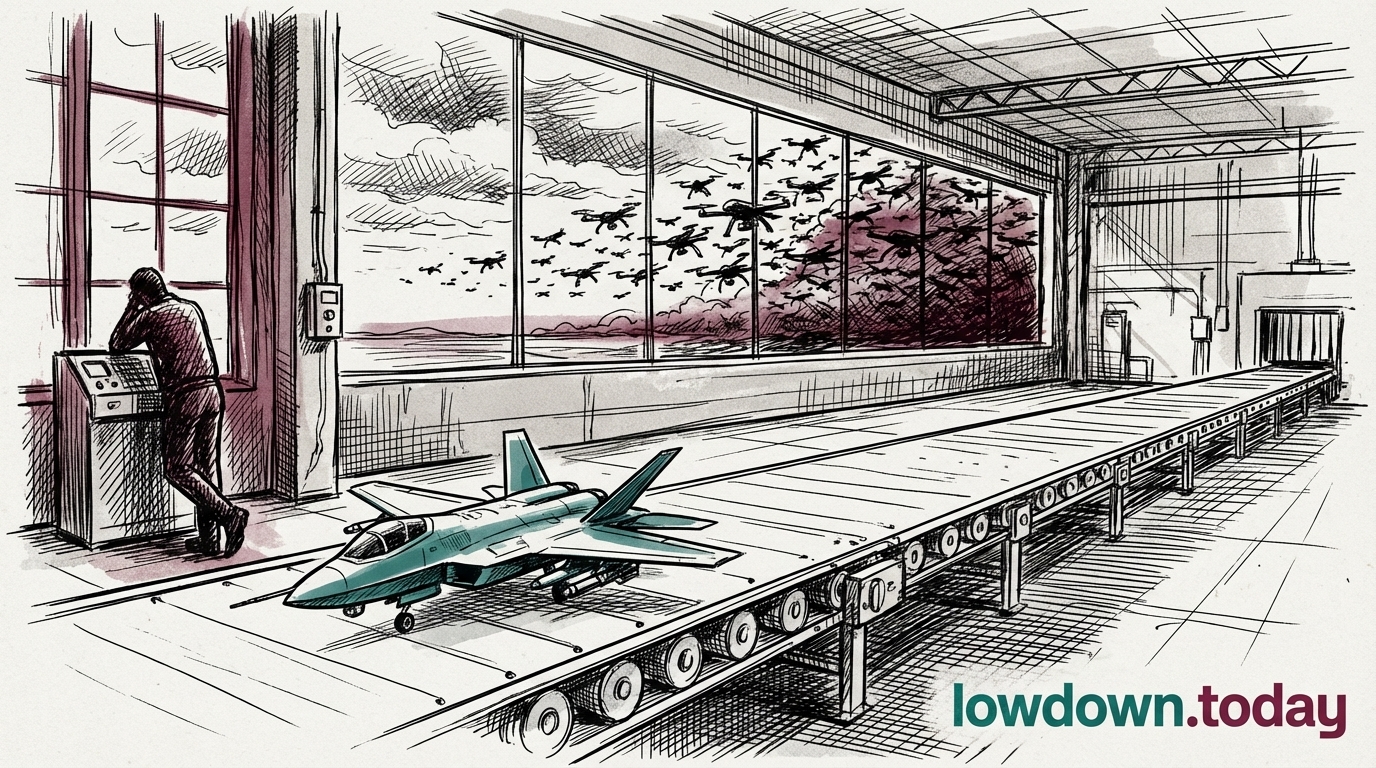
Update #4 · Factories Under Fire: America's Drone Gap Meets Reality

Breaking Defense· 4 Apr 2026
Read original
Different Perspectives
Anduril
Anduril
Anduril views consolidated procurement as enabling rapid scaling — the $20 billion enterprise contract replaces 120 separate Army contracts with a single vehicle. Arsenal-1's early opening positions it to argue manufacturing readiness that CCA competitors cannot yet demonstrate.
Ukrainian drone manufacturers
Ukrainian firms have battle-tested interceptors priced at $2,100–$2,500 per unit and demand from 11 nations, but the wartime export ban forces partnerships with Western firms rather than direct sales.
IISS
IISS
IISS characterises drone innovation in the Russo-Ukrainian war as adaptation within existing military paradigms rather than a transformation of warfare — a more cautious assessment than the Pentagon's procurement urgency suggests.
US Pentagon, Anduril and Shield AI
The Pentagon awarded Anduril a $20 billion enterprise vehicle and confirmed Gauntlet II's live EW red team, prioritising procurement speed over competition; Anduril began YFQ-44A production four months early. Shield AI countered by raising $2 billion and validating Hivemind on a European airframe, betting multi-platform interoperability hedges against Anduril's platform lock.
Volodymyr Zelenskyy / Ukraine
Zelenskyy publicly disclosed that 10 shadow drone factories have been built abroad to circumvent Ukraine's wartime export ban, signed 10-year defence deals with Saudi Arabia and Qatar, and deployed 228 specialists across five Gulf states. The disclosure is a calculated signal that the ban is fracturing and Kyiv is seeking revenue structures independent of Western aid.
Saudi Arabia
Saudi Arabia
Saudi Arabia signed a 10-year defence deal with Ukraine and accepted the deployment of Ukrainian counter-drone specialists the US declined to partner on in August 2025. The Gulf pivot reflects Riyadh's assessment that Ukrainian combat-proven doctrine at $2,500 per interceptor is more cost-effective than Patriot-dependent air defence.
