Skip to content
Briefings are running a touch slower this week while we rebuild the foundations.See roadmap
US Midterms 2026
28APR

Virginia map vote passes, then voided

3 min read
16:18UTC

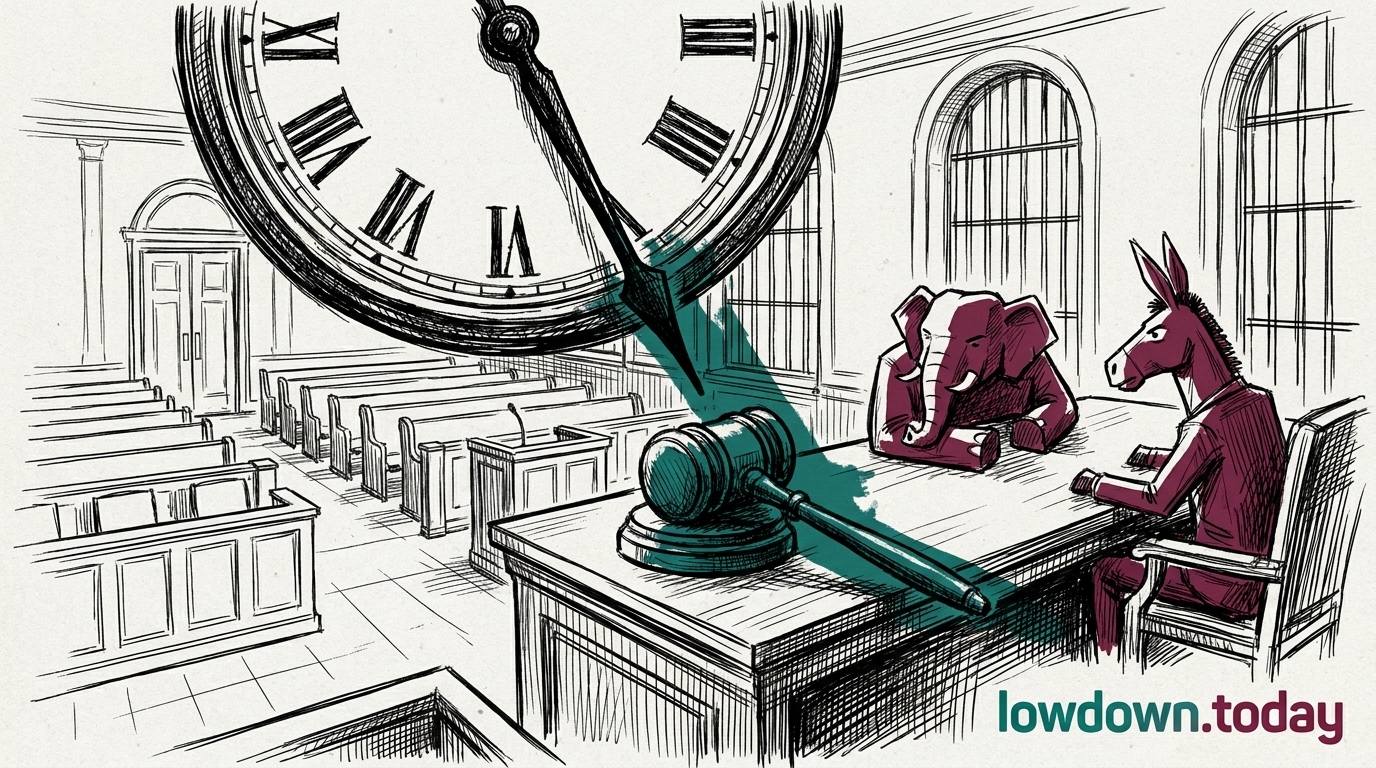
Virginia voters approved mid-decade redistricting 50.7-49.3% on Tuesday 21 April; Judge Hurley nullified the result the next morning, ruling the authorising House bill void ab initio.

PoliticsDeveloping
Key takeaway

A voter-approved referendum was nullified within 24 hours on procedural grounds, not on the substance of the vote.

Virginia voters approved a mid-decade redistricting referendum 50.7 to 49.3 percent on Tuesday 21 April, with roughly 2.5 million ballots cast 1. Within 24 hours, Judge Hurley ruled the authorising House bill void ab initio and permanently enjoined the State Board of Elections from certifying the result. The referendum had been scheduled by the General Assembly to authorise redrawing Virginia's eleven congressional districts; pre-vote polling had run 52 to 47 percent in favour .

The mechanism matters because Virginia is the last live state track for Democratic mid-decade redistricting this cycle. Maryland's bill died on 14 April when the state Senate ended its session without a vote . California requires an independent commission. Florida is Republican-controlled. The injunction does not strike the referendum on substance; Hurley voided the legislative procedure that put the question on the ballot in the first place, leaving the vote itself technically valid but unable to take legal effect.

Virginia Attorney General Jay Jones intends to defend the referendum on appeal in Scott v. McDougle, the Virginia Supreme Court case heard at oral argument on Monday 27 April. Counter-view from Republican-aligned plaintiffs: the procedural defect is real, the injunction will hold, and a voter-approved redistricting referendum can be nullified on legislative process grounds without re-running the vote. That posture is now precedent in Virginia state court whether or not The Supreme Court agrees, because the trial-court ruling stands until reversed.

Deep Analysis

In plain English

Virginia voters narrowly approved a plan to redraw the state's congressional map, shifting seats toward Democrats. Within 24 hours, a judge blocked the result, saying the law that put the question on the ballot in the first place was legally invalid from the start. This is not a dispute about how people voted; it is about whether the legislature followed the correct procedure to hold the vote at all. The Virginia Supreme Court heard the appeal on 27 April without ruling. If it upholds the block, the existing map stays in place and Democrats lose their last chance to redraw congressional lines before November.

Deep Analysis
Root Causes

Virginia's constitution gives the General Assembly substantial control over its own procedural rules, but the redistricting referendum was authorised through a special session whose scope, notice period, and timing were all litigated before the vote.

The structural cause is Virginia's ambiguous constitution on what a special session can authorise: unlike a regular session, special sessions are limited in scope by their authorising resolution, and Judge Hurley found the scope here insufficient. Virginia has never definitively resolved this ambiguity through statute or earlier precedent, leaving the question open to exactly the kind of challenge that has now succeeded at trial court.

What could happen next?
  • Consequence

    If the Virginia Supreme Court upholds the injunction, Democratic candidates will have filed under the existing post-2020 seven-to-four Republican-advantage map and the mid-decade redistricting window closes for this cycle.

    Short term · 0.8
  • Risk

    If the court reverses before 25 May but without time for orderly candidate filing, Virginia faces a scheduling crisis: existing candidates may need to withdraw and re-file in new districts, potentially disadvantaging incumbents in newly drawn competitive seats.

    Immediate · 0.65
  • Precedent

    A Virginia Supreme Court ruling upholding void-ab-initio application to referendum-authorising legislation would make similar future redistricting referenda harder to organise in states with comparable procedural limits.

    Long term · 0.6
First Reported In

Update #4 · 189 Days to Go: Calendar versus court

Virginia Mercury· 28 Apr 2026
Read original
Different Perspectives
EU trade and sanctions policy analysts
EU observers are tracking whether a larger Republican House majority after November 2026 reduces domestic pressure on the White House to negotiate tariff relief. Redistricting-locked Republican committee majorities have historically resisted rollbacks framed as concessions; a Democratic House flip, if the wave overcomes the maps, would restore committee leverage on Financial Services and Ways and Means.
Canadian USMCA trade watchers
Canadian trade observers track House committee composition because the Ways and Means Committee processes USMCA tariff schedules. A net Republican redistricting gain of 12-15 seats would consolidate Republican committee chairs through 2028, reducing bipartisan leverage on the 2026 USMCA review window Canada's government has flagged as a priority.
V-Dem Institute and Chatham House
V-Dem's Anna Grzymala-Busse assessed Callais as completing a 13-year constitutional rollback: Shelby County removed preclearance, Brnovich narrowed vote-denial claims, Callais retires the affirmative duty, leaving the VRA practically inoperative in states where all three mechanisms operated together. Chatham House analysts are logging the judgment-forthwith mechanism as a qualitative escalation in procedural acceleration.
Democratic opposition and civil rights plaintiffs
House Minority Leader Hakeem Jeffries named New York, Illinois, and Maryland as retaliation targets; the structural problem is that New York requires court action or a constitutional referendum, neither compatible with November 2026. Brennan Center plaintiffs whose Callais forthwith application was rejected around 6-7 May now face a Court that has already declined to stay its own order.
WSJ editorial board: conservative backfire warning
The WSJ editorial board warned that aggressive Republican redistricting in a D+5.9 generic-ballot environment risks backfiring: maps that eliminate competitive districts can energise the opposing base beyond what the drawn-in margins absorb. The warning is the cross-ideological dissent the broader conservative consensus on Callais is not publicly engaging.
Trump administration and Republican state executives
The White House signed zero election-related executive orders between 28 April and 7 May; presidential influence ran through the Supreme Court majority, the DOJ voter-data litigation, and Article III confirmations. DeSantis, Lee, and Reeves called redistricting sessions within 24 hours of Callais, each acting on executive timetables requiring no referendum or bipartisan agreement.
