Skip to content
Welcome, thoughtbot's Giant Robots listeners!Start here
US Midterms 2026
11NOV

Maryland's Own Senate Blocks Its Map

2 min read
18:10UTC

Maryland's House passed an all-Democratic congressional map 99-37, but Senate President Bill Ferguson refused to hold a vote, blocking his own party's gerrymander.

PoliticsDeveloping
Key takeaway

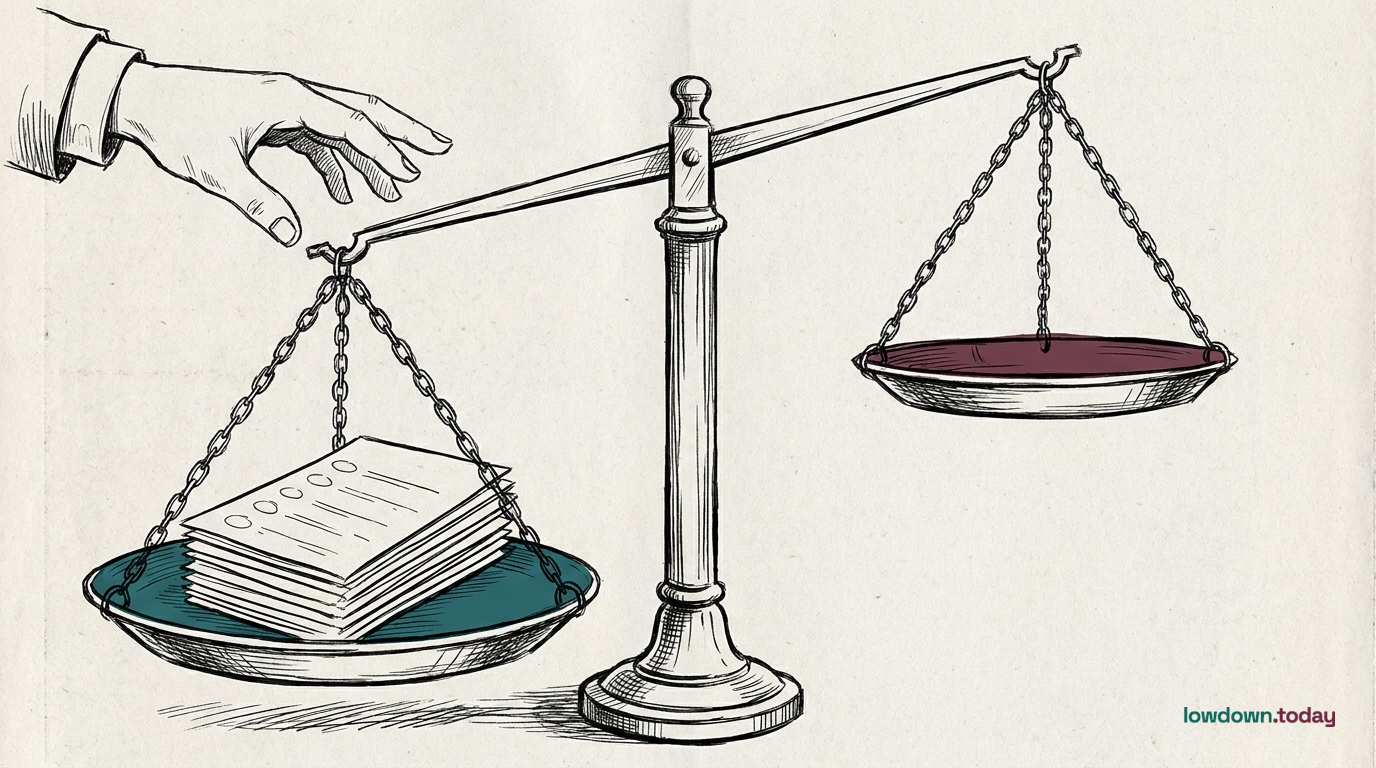
Democratic redistricting is blocked by internal resistance in Maryland and supermajority rules elsewhere.

Maryland's House passed an all-eight-districts-Democratic congressional map 99-37 on 2 February. Senate President Bill Ferguson refused to hold a Senate vote, effectively blocking it⁠1. Judicial Watch analysis characterised the proposed plan as replicating a gerrymander previously struck down as unconstitutional. Republican Representative Andy Harris, who would be drawn out under the new map, has threatened federal and state court challenges.

The Maryland block is self-inflicted. Ferguson, a Democrat, stopped his own party's map, a decision that has no equivalent on the Republican side this cycle. DeSantis in Florida is using executive coordination to accelerate redistricting; Maryland's Democratic leadership is using institutional prerogative to stop it. Washington State's constitutional amendment for mid-decade redistricting also lacks the two-thirds supermajority needed and requires Republican votes it will not get.

The net effect reinforces the redistricting asymmetry identified in the prior briefing. Republican states are redrawing maps; Democratic states are blocked by courts, their own leadership, or supermajority requirements. The structural seats that redistricting adds or subtracts operate independently of the voter sentiment visible in polls and special elections.

Deep Analysis

In plain English

Maryland's House of Delegates voted 99-37 in February 2026 to adopt a new congressional map that would give Democrats all eight of the state's congressional seats. To become law, the same map would need to pass the Maryland Senate. Bill Ferguson, the President of the Maryland Senate (the equivalent of the Speaker for the Upper Chamber), simply declined to schedule a vote on the map. In most legislatures, the chamber leadership controls the calendar, so Ferguson's refusal effectively killed the bill without a formal vote. Republican Representative Andy Harris , whose district would have been eliminated under the proposed map , has threatened legal challenges. A conservative legal group called Judicial Watch characterised the map as a copy of an earlier Maryland gerrymander that federal courts had already struck down as unconstitutional.

What could happen next?
  • Consequence

    Without a Maryland redistricting map, the current Republican incumbent (Andy Harris) retains a safe seat that would have been eliminated, leaving the Democratic mid-decade redistricting effort in the mid-Atlantic region at net zero.

First Reported In

Update #2 · First votes exceed every forecast

Ballotpedia· 12 Apr 2026
Read original →
Causes and effects
This Event
Maryland's Own Senate Blocks Its Map
Maryland's intra-party block on redistricting demonstrates that Democratic map-drawing faces internal resistance absent from the Republican equivalent in Florida.
Different Perspectives
University of Florida Election Lab
The lab, run by Michael McDonald, estimates about 124.3 million ballots, a raw midterm record, and turnout of about 49.4% of eligible voters, second to 2018's 50.05%. The raw record reflects population growth more than a record rate, so the late count is working through a near-2018 electorate.
Thune's critics on the right, including Senator Ron Johnson
Ron Johnson backed the failed 31-15 motion to delay Thune's re-election, after activists such as Mike Cernovich blamed the leader for the defeat. Their complaint is that Republicans could have passed the SAVE Act; in January it meets a Democratic Senate instead.
Senator John Thune
Senator John Thune
Thune was re-elected Senate Republican leader by acclamation on 10 November after a motion to delay failed 31-15. He kept the filibuster that stopped the SAVE Act, the choice his critics on the right blame for the defeat.
House Republicans under Jim Jordan
House Republicans elected Jordan minority leader by 106 votes to 73 over Steve Scalise on 10 November, after Speaker Mike Johnson declined to run. They replaced the leadership that lost the majority, while Senate Republicans kept theirs.
Donald Trump
Donald Trump
Trump asked on Truth Social on 9 November whether anybody believed the election "was honest" and blamed the machines, having told The New York Times on polling night he would accept the results. No Republican campaign had sued over a 2026 result by 10 November, so the claim has no case behind it.
Judge David O. Carter
Carter closed the Justice Department's suit over about 20,000 California mail ballots on 10 November after the department withdrew it, writing that the suit "attempted to disrupt an ongoing election". The closure leaves the department with no court order touching a 2026 California ballot.

Written with AI from Lowdown's published reporting. Not individually reviewed by an editor. Editorial standards.
